Visiting a city for the first time, getting used to its systems and rhythms is always a fun proposition.
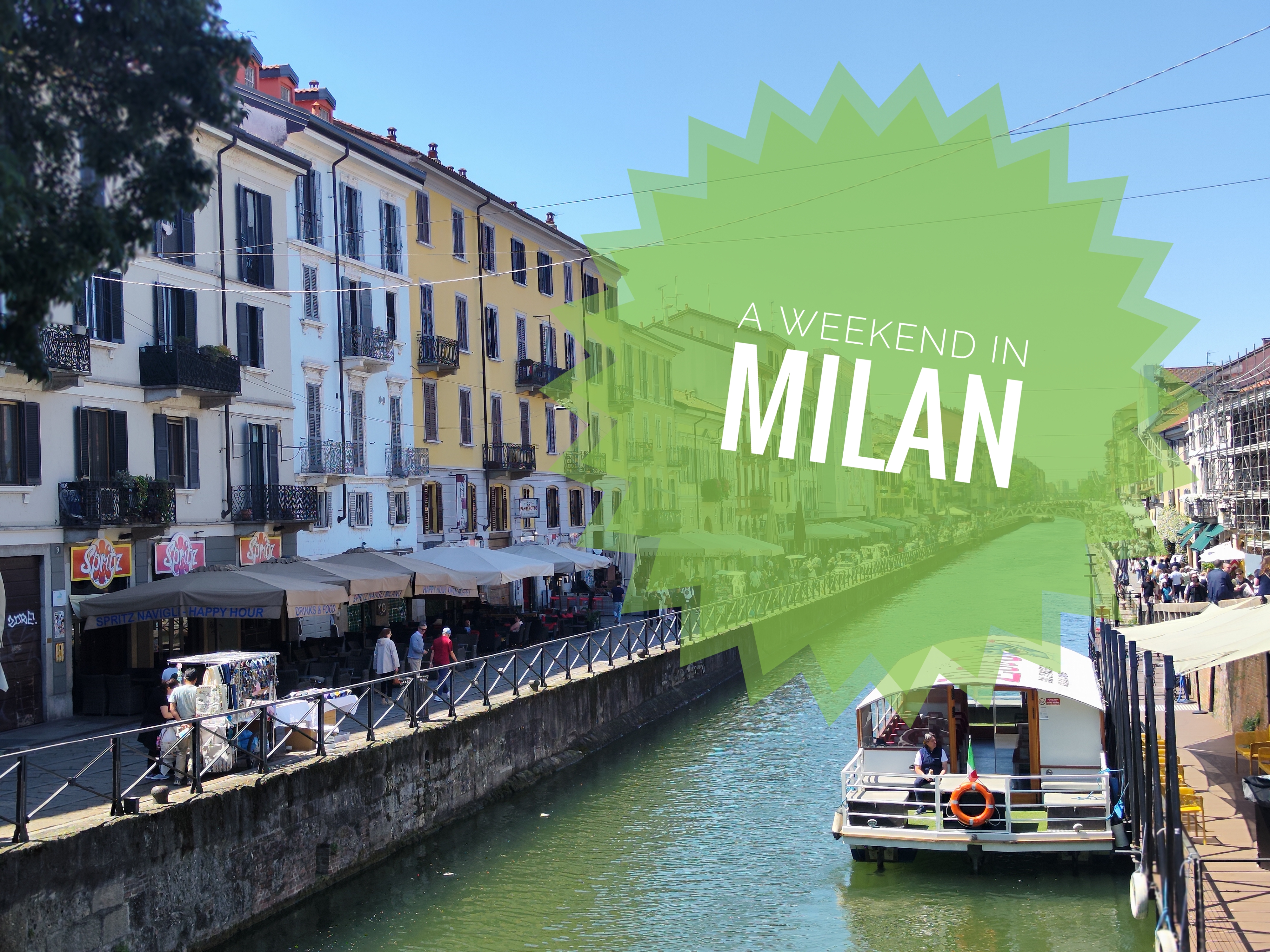
Spending a weekend in Milan to -among other things- find its best bars also became an exploration of the city’s culture; its etiquette and formats.
Milan is vast, without many green arteries (only 2 central parks) or visually distinctive neighbourhoods ringing the city centre, other than the canal-lined Navigli. It’s also flat. As a result, rows of apartment blocks stretch onwards as far as the eye can see. It isn’t a walkable city either. Buy a public transport pass, then use everything on wheels or rails you can find in order to get around swiftly.
Outside Navigli, the clear nightlife hub in Milan, the districts of Chinatown, Isola and Porta Venezia contain some clusters of bars you can combine together. The centre? Home to some high-flying, elite cocktail bars or simply famous venues such as Bar Basso (home of the Negroni Sbagliato), Camparino (no prizes for guessing which drink here), and Jamaica whose qualities vary considerably. But honestly, given the size of the centre, interesting, distinctive or superior bars are thin on the ground in Milan’s core. Head instead into the city’s districts which are after all, where ordinary people live.
Milan is not known as a pretty city, so dispel any notions of encountering gleaming ancient stonework or cooing over grand vistas of Cypress-line valleys and streams. Go to Bergamo for that. Nevertheless, Milan is as Italian as anywhere else and fascinating in other ways. The Milanese mindset is functional, adaptable, progressive and work-obsessed. Aperitivo time provides a joyful pause for social space and post-work relaxation. Around golden hour masses congregate, usually on the terrace, to enjoy Aperol Spritz, Campari, Negroni, a bottle of beer or glass of wine with bars offering free snacks and small plates, some increasing the offer to straight out buffets. Because aperitivo is a cultural staple, you’ll find the majority of pubs do not open their doors until 6pm in the evening, with 2am closure pretty standard. Planning for day drinking should be done carefully as a result, because you won’t be able to combine great bar after great bar before 6pm without doing some significant travel and walking.
Italian Tabaccheria culture also provides something you just won’t find in much of Northern Europe. Similar to the French ‘PMU Tabac‘ system, these are places to buy cigs, gamble, but also read the news, grab a beer and a snack and socialise with friends. These vary from the unreconstructed to some real gems which have pivoted to provide good quality modern wares and amenities without losing their soul. This has helped reconnect the younger generation with the old.
La Darsena “Peppucino”Bar Picchio
Craft Beer, well, you’re generously served in Milan. Brewing is widespread and beer culture occupies a strong minority and point of difference you can’t help but notice. The average offering has been transformed virtually everywhere in the last 15 years, even at the Tabacchi, while stalwarts like the excellent Birrificio Lambrate are complimented by new developments all the time. Be careful not to simply surf from one beer bar with a big tap-list to the next. Firstly, you will miss out on a lot of venues with more good selections that offer much more than a sterile empty taproom, but secondly because you’ll fail to experience the rest of the city’s culture and offerings. Try and dip your toe into something different.
LambiczoonBirrificio LambrateLambiczoon
Despite Milan’s endless churn, there are some historic survivors maintaining businesses from the 20th century. The sign of a kindly old lady at the till is both reassuring and slightly worrying to think what may come next. However, some old timer venues such as the wonderful Latteria Carlon appear to be thriving under the wind of being rediscovered. This is now one of the in-crowd places to go, believe it or not.
Latteria Carlon
Milan’s reputation for expense is possibly overstated. I remember as far back as 2008 being charged 4-6 euros for pints of bad lager across Italy. At the time of writing it’s perfectly possible not only to buy good beer at that price in Milan, but get some free food with it at certain times of day. The same applies to wine. You can certainly find bars where you’ll be charged 10 euros a glass without flinching, but you can similarly find Bottega bars like La Coloniale which is pretty central where it’s 5 euros a glass – and not for trash! They offer 20-30 wines by the glass. If anyone speaks English in these places then mine them for good tips and advice!
Cantine IsolaNombre D’Vin
For cocktails, simply go to Navigli for dozens of options: some on the trashy side, others much more ambitious. We were lucky to get a reservation at the longstanding Backdoor 43, which still claims to be the world’s smallest bar. The owners also run nearby 1930, Iter & Mag Café, just a selection of what’s on offer in this lively district.
Backdoor 43Nottingham Forest
Lastly, don’t forget about the kinds of bars that usually fall into the gaps between these different formats and focus. These are the types we try and champion as they always seem to get left off listicles and hype trains. Funky evening spots like Union Club, atmospheric original cafés like La Belle Aurora, out of the way late spots, punk and alternative bars, humble but charming corner cafés.
Union ClubLa Belle Aurore
Final tips: While anyone aged under 40 in Milan seems almost guaranteed to speak excellent English, we’d encourage any visitor to make an effort to converse in some basic Italian and show gratitude, which is just a social lubricant that makes the world go round much more pleasantly here. It’s an expressive culture and a good attitude is frequently paid in kind. As for cash, we didn’t need to pay in cash in a single venue, so unlike Germany and Czechia we are confident enough to say than other than keeping a reserve note in your wallet, do not bother carrying wadges of notes around which could only get lost/stolen.
Milan is very easy to reach and well served by affordable, frequent offerings from a number of airlines and airports across Europe. Although the more distant Bergamo and Malpensa airports are not exactly close by, (which should be factored in when planning a visit), they are a simple connection. In Bergamo’s case it makes a an excuse for a delightful day trip or afternoon there.
Happy New Year! As we wake to a bright dawn on New Year’s Day 2024 we can’t help wondering what’s around the corner this year. But first, let’s draw 2023 to a close with a roundup of our activities, travels and the best new finds of the year!
January
Places visited: 🇫🇷 Rennes, Césson-Sevigné, St. Malo, Paris, Vitré 🏴 Leek, Macclesfield, Manchester
A first trip to Brittany on Eurostar proved a fascinating one with Breton Celtic culture influencing the pub and bar scene, the ubiquitous Blé (Black wheat) sneaking into some of their beers too. Rennes was a very lively young feel city with an old centre that spans the gamut from tasteful to tacky, St. Malo was probably the standout of the trip for its austere militarism, skyline and sea views, as well as hosting one of the bar finds of the year, the dazzling, idiosyncratic La Java Café, otherwise known as the bar with the longest name by the port opposite the street next to the butchers round the corner above the church etc, etc, etc…
The small preserved Medieval town of Vitré was the scene of a crisis as an ATM swallowed my sister’s debit card, then, bafflingly, it happened to me hours later in Rennes leaving us surviving on online purchases and a dwindling cash reserve all the way back to London via Paris. The time in Paris was far more fraught than we’d have liked. Both of us have since acquired new credit cards as a backup – don’t let that ever happen to you! Also, pick a bank with international branches if you travel a lot.
A long weekend with friends to Prague 🇨🇿 began in Bratislava 🇸🇰, discovering a very quirky brewery tap, Muzejny Hostinec in revivalist First Republic era style. A night out in the usual haunts was followed by a few hours around the pubs in Brno 🇨🇿 and an afternoon wander around Kolín, our first visit. A nicer place than immediately meets the eye but not a pub town at all.
By evening time we’d made it to Prague and had an evening out in Nusle, for my money one of the more underrated neighbourhoods – no problem as far as I’m concerned, as that keeps the area less touristy with more local life! It was apparent some of my friends were far further gone than I, and by the time we were finishing up they were falling asleep at the bar.
During the trip we met up with members of Czech Beer Fan Club which is an excellent way to make friends and drinking buddies and explore new venues in Prague.
The second trip, also a long weekend was to icy Romania, arriving in the dead of night to Cluj-Napoca 🇷🇴 ahead of a 5AM 3 hour 30 minute train to the city of Oradea 🇷🇴 in the far North West. It seems somewhat insane to think about in hindsight but these are the decisions that seem to make sense at the time. This was a solo mission so I had no guilt to carry except for myself!
Oradea is one of those border cities with very quirky secessionist architecture and well-meaning spurts of EU funding which means a lot of the centre is in a surprisingly good condition. Like most Romanian cities, pub-life during the day is sleepy to non-existent and there really is almost no point even starting until after 6 in the evening. Several cool alternative hangout spots repurposing old buildings made a distinctive impression.
Back in Cluj-Napoca, the options really hadn’t moved on much since our last visit in 2018, and where they had, mainly for the worse. However, trying the door to a dark, quiet and seemingly closed Heltai Folkcentar 🇷🇴 ended up being one of the finds of the year. Raw, totally unpretentious Hungarian culture club with raucous live folk performances, dancing and dirt cheap booze. Highly recommended.
Our return to Andalusia after November 2022’s trip to Málaga, Cordoba and Granada finally won us over to tapas culture. An intimidating and ultra-informal setup makes it less suitable for the uninitiated, particular for solo missions, but experienced as part of a group, it can really work. The intimidating aspect is not having much of a menu, not knowing what half the dishes are called, and not being able to speak much Spanish, while being surrounded by people who do in close proximity. I would advise those of a nervous disposition to steer clear. However, once you get used to the rhythms, you’ll always have a few backup options. Standing and chatting with a caña and something to nibble on in such a casual environment is really something not to be missed.
Seville ties together all of the charms of the other Andalusia cities while also being for a city of its size ridiculously untouristy and un-commercial overall. The old centre is extensive and arch-traditional – while it may not have the range of show-stopping architecture as some, the ensemble and the wider culture is what leaves the impression. We discovered 20+ high quality tapas bars, non-corporate Flamenco venues and some quirky one-offs.
Catholic kitsch can be a treat for the senses and at late-opening Garlochí it was like stepping into a shock exposure therapy version of it!
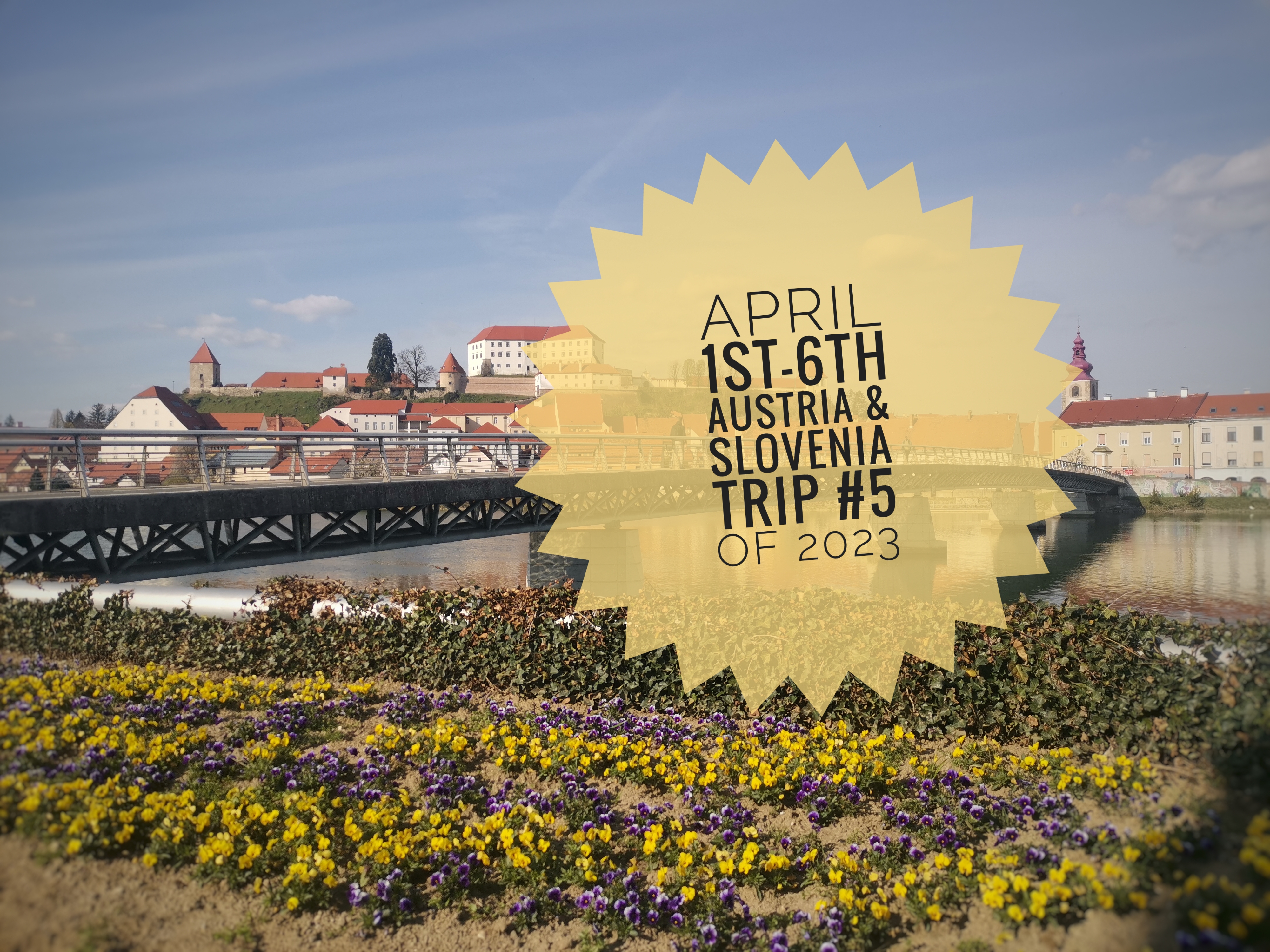
Easter is always the time for our big trip away of any year, extended this time to 24 days in a sprawling trip across central Europe that started by dipping south from Bratislava to Zagreb before loop-the-looping back to Bratislava working North through Czechia, Germany and exploring Poland.
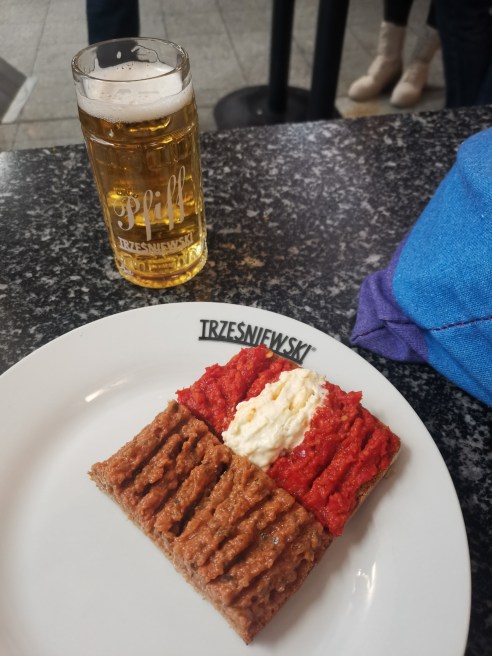
The first half of the trip was memorable for pleasant spring weather and exploring, from Arnold Schwarzenegger’s museum in Thal to Ptuj Castle and Zagreb’s monumental Mirogoj cemetery. However, while the quantity of good to very good bars piled up, by the half way stage we were left scratching our heads why there hadn’t been a real standout. Normally by that point we’d have discovered a Top 50 contender or two. The best were probably nearer the beginning in Vienna, with the iconic Loos, Trzesniewski & Jazzland 🇦🇹 that had been on the radar for years but only just got to visiting.
The second half of the trip turned bleak with the first full day in Prague being the most continually wet I can remember on my many days spent there. Still, I could think of a few indoor activities, I’m sure you can too.
Turnov was “an experience” of provincial Czech life, a town around the same size as my home town Barton-upon-Humber, which allowed for some interesting juxtapositions. It has an excellent brewery but no good pubs to speak of. The main reason to visit was for the spectacular hiking in ‘Bohemian Paradise’ on the doorstep.
Liberec ended up being another damp squib really, and with it being a Monday, the first ever visit to Zittau was even worse, without even a pub-restaurant open when we visited mid-afternoon. Things picked up in misty Görlitz however, returning to the genuinely lovely Bierblume a wonderful place to while away a couple of hours before the train.
The last leg in Poland was a series of ups and downs – nothing to report in Bydgoszcz or Legnica (pretty shocking given the size of those places) and Poznan was ruined by bad weather with the whole city centre being roadworks, but the city of Torun was marvellous with some interesting bars and breweries too. Warsaw was obviously going to be a tough nut to crack in 3 nights but we managed a very good effort, and Łódź had a novelty factor even if it did lack a standout pub.
After 24 days on the trot of bar exploration it was time for a break of…*checks calendar*….5 days.
Read more about our April travels in our blog entries:
The fixation on Bratislava and Vienna was not by design, it just so happened there was a Saturday morning flight out to Bratislava virtually any time I wanted it for a good price. Over the course of the year that proved too good to resist.
A weekend in Bratislava and Vienna is never going to tire, and combining a family & friends trip worked out nicely. Vienna has proven one of the toughest cities to crack, one where you really need to know your stuff to get the best out of it, and so the earlier visits this year helped pick out the best bits within the limited timeframe. We also got to visit eye-popping little pub Bockshorn, another iconic central Vienna institution, for the first time.
The next visit simply used Vienna as a launchpad to get to Serbia. Our last trip there was in 2013 – where does the time go? It felt right to return but also to see more of the country. A flight to the southern city of Niš was the starting point. Here is where to go to feel a long, long way from home. The classic harsh juxtapositions of dilapidated towerblocks, tacky post-communist capitalism and badly maintained ancient fortress say ‘Balkans’ loud and proud. Nightlife in the centre is loud, fairly unabashed – not particularly interesting or sophisticated but at least people are out enjoying themselves. A brewery taproom in the residential area proved the highlight.
A long trip to Belgrade followed, somehow still being better served by bus than train. Aching limbs as I exited the bus to steamy temperatures and the view of really one of Europe’s mind-blowingly ugly cities. One thing Belgrade does have going for it is a diverse range of bars – from the Cetinjska semi-ruin bar type complex in the centre, the sprawl of brewery taprooms and craft beer venues in Dorćol, the revived ex-industrial chic of Sava Mala, and Vračar the ‘Vinohradsky’ of Belgrade, if you like. Be prepared to do miles of walking if like me, navigating the public transport and tipping proved impossible.
Ironically, the two closest cities are best served by train, an implausibly space-age, smooth and lightning fast trip to Novi Sad felt almost underwhelming after the Balkan autobus epic between Niš and Novi Sad. I’d only passed through Novi Sad once before in 2013 and it looked an absolute sh*thole, but careful research since showed that was simply first impressions left by the bus station area (and aren’t they nearly always like that). Novi Sad was the standout of the trip with a more progressive vibe, proper alternative hangouts, a friendly low-key atmosphere and – if you include Petrovaradin fortress across the river, an impressive overall ensemble of monuments and architecture. It won’t be on many people’s to-do lists, but it should be. Some great bars in the shape of Graffiti,Crni Ovan and Foxtrot to name only the real standouts.
I ended up stuck there an additional night by accident due to there being no buses or transport of any kind between Novi Sad and Osijek in Croatia, highlighting the economic futility of nationalism. Osijek is a large city close by yet has two buses a week. Embarrassing. Left at the bus station in a comically apt thunderstorm getting soggy and trying to use the spots of good wifi to work out what to do, the obvious answer was stay in Novi Sad until the next bus out of there.
After all that effort to reach Osijek I actually left straight away to Pécs in Hungary – accessible via two connecting trains – not that difficult but definitely out in the middle of nowhere if anything went wrong. Pécs is a historic city with Roman and Eastern influence and for a brief 10-15 minute walk you’ll be very impressed by its centre. As with most Hungarian cities these days you’ll find some good quality courtyard and quasi-ruin pubs and a couple of craft beer venues. The flipside, you’ll also find a couple of really old-school surviving outfits that have barely changed since the 1950s. Enough to keep you going.
The trip ended back in Osijek – a weird city with two centres – a historic centre and a downtown – separated by a long walk, neither of which feel like they’re quite active enough to justify that. However it also has a tram system and you’re scratching your head trying to work out whether it’s an important place or not. Bar options are limited but some pricey craft beer bars will keep you afloat.
I reached a ‘what to do/where to go’ state of boredom in June and decided to return to Kraków yet again because frankly, why not when there’s Kazimierz, the neighbourhood with the highest density of good bars in Europe, and a city that’s in my top 3 all-round European destinations anyway.
To apply at least some novelty to the visit I took the train to Katowice for the afternoon, playing on retro PCs at their incredibly good volunteer-led computer museum and then heading to their bars. There’s a pretty predictable Polish spread of craft beer venues (including cask options) and those stylish vintage/antiquey bars.
Back in Kraków, staying near Błonia gave opportunity to try a few new bars out near there, the best of which was the terrific Café Szafe which was having some bizarre summer festival celebration with hay on the floor and partygoers wearing meadow flowers and hats. It is one of their almost permanently open bars which is sleepy 85% of the time before bursting into life in the small hours of the morning. This blurry shot I took seems to sum up the experience.
July
Places visited: 🇨🇿 Prague, Kutná Hora, Karlovy Vary, Cheb, 🇩🇪 Weiden, Windischeschenbach, Neustadt an der Waldnaab, Neuhaus an der Waldnaab, Falkenberg, Nuremberg, Bamberg, Dörfleins, Forchheim, Erlangen, Munich, Freising
Venue of the month: Beim Käck´n, Neuhaus an der Waldnaab
What were intended as two trips morphed into one as personal plans and friends collided, so a voyage through Bohemia and Bavaria ended up as a summer holiday of sorts.
Prague was Prague – different experiencing it in mid-30 celsius temperatures, but the core appeal is the same. We had a wonderful time and expanded the guide further. Tourist trips to Kutna Hora and Karlovy Vary were necessary – they are not great pub towns though. Likewise a lunch stop in Cheb, somewhere I’d last visited in 2016 was a stop along the way.
The German leg of the trip was going to feature something totally different. Our first visit to the Oberpfalz to experience Zoigl culture. Wonderful rural hospitality, communal brewing and cheap prices characterise the Zoigl experience which is not to be missed. These venues open their doors on rotation only once a month, so you have to consult a calendar to avoid disappointment. It was well worth the effort. For any beer fans particularly, this should go down as a bucket list experience.
On the flipside, the much-vaunted Annafest in Forchheim’s Kellerwald proved to be a let-down. I had hoped it would be a smaller scale, less tacky and palatable Oktoberfest. Wrong. Price-gouging, an almost total absence of the supposed folk-culture underpinning the festival, and corporate crap all the way didn’t justify the toll on your body of swigging 1l steinkrugs of Festbier. The only notable element was going on a tour of Neder‘s centuries-old Keller dug under the hill, where the medieval breweries used to store their beer. If you want my advice, visit Forchheim itself and do so any other time of the year where you can find better beer for literally half the price of Annafest in good pubs with good cheer, likewise to visit the Kellerwald on a sunny day outside festival season.
We returned to Bamberg where we ticked off a few more breweries and explored the scene behind the scene – excellent bars that are mentioned only in passing after the beer halls. We also returned to Nuremberg, however there has not been much development in its bar scene in the last few years outside of Tucher’s revival of Opernhaus restaurant and the former Bar Fusser. A day in Erlangen, our first trip there was predictably low-key, however it is not without its charms.
The trip ended in Munich – a stay not long enough to justify getting too adventurous while simultaneously long enough to become bored by the central options. Remind me not to go back to that Tegernsee beer hall again.
Read more aboutZoiglkultur in our feature article on the subject, very much a passion project of ours now.
Venue of the month: The Pineapple, Kentish Town, London
The only month in 2023 without taking a trip to continental Europe, which always seems fair enough when the weather’s better in England anyway and prices skyrocket in tourist season abroad.
London gave us a chance to explore two neglected areas – Camden & Kentish Town, and Borough where several pubs were long overdue a visit, and nearly all were standouts. What really surprised us, even closer to central London is how overstated the old chestnut about London’s beer pricing is. If you steer clear of certain chains and certain areas we found many pubs still serving cask ale at well under £5 a pint which is not too much more than you’d pay in other major English cities including in the North.
We also visited our first Desi Pub, The Glad which had been in the news due to David Jesudason’s guide published by CAMRA. A friendly, inclusive pub with good ales, cricket on TV, and very tasty food. Throw in the terrace and live music events and you’ve got yourself a cracking boozer.
September
Places visited: 🇵🇹 Funchal, Foz do Douro, Lisbon, Porto
Hiking is one of our other major interests and a trip to Madeira offered excellent hiking (unfortunately not so excellent public transport). Funchal is a compact and reasonably fun city beyond the crowds of pensioners that it is stereotyped for – however don’t expect Ibiza style parties. The nightlife is split between new wave craft bars, bland café terraces and old-school tapas joints – the kind where there’s one weather-beaten dude trundling back and forth with cheap booze and snacks. Madeira is also famous for its eponymous fortified wine and Poncha, a sweet boozy concoction that leans towards its sub-tropical fruit. Both can be experienced at two of its better venues.
Lisbon was a first visit since 2014! Can you believe that? Possibly the highlight of the year, we had the best night out with first time experiences at bars possibly since our first ever visit to Bruges or Kraków – that good. The Luis Pinto Coelho bars are incredibly good and unmissable, A Ginjinha is a ritual and an institution, there are some nice brewery taps in the suburbs and that’s before you get to the music of the Alfama district – which at least we had experienced before. Lisbon’s nightlife really is one of the highlights of being a European, I cannot say anymore high praise than that.
The visit to Porto was the first since 2018. What a distinctive city it is, and I’d be happy with it even if the bar options were wretched. It isn’t Lisbon, but you’ll find enough to keep yourself occupied if not in depth then in variety.
The first of three very similar trips treading along a familiar route. Svitavy was the only new place visited, an attractive town on the train route between Brno and Prague. Do not go there for pubs though – offerings are thin on the ground. After visiting a quiet neighbourhood pub near closing and the town brewpub, we ended up in a basement Herna bar off the main square playing pool with the remaining night hawks!
In Prague we explored 6 years ago’s bright young thing, the district of Vršovice, particularly the pubs and bars around Krymska street. Lots of decent bars, although perhaps lacking that ‘iconic’ one to underpin a night out there. What’s pleasing is you can still find a few rough-and-ready boozers as well as the arch-hipster Kavarnas and craft places all in the same area.
The following day, we returned to the classic iconic pubs of central Prague…
Back at home we explored the inbetweeny bits in the conurbation between Bradford and Leeds, particularly Ossett Brewery’s pubs, while a trip to Newcastle and Whitley Bay provided pleasure in old classics and new finds. We also took a trip to Wigan for the first time to its 2 excellent station pubs.
November
Places visited: 🇸🇰 Bratislava 🇨🇿 Brno, Tišnov, Prague, Zlín, Malenovice, Olomouc, 🏴 Manchester, York, 🇮🇪 Dublin 🇪🇪 Tallinn
Two further trips to Czechia/Slovakia followed in November, the more notable being to the southern city of Zlín, a city more or less built from the ground up at the beginning of the socialist era, with a layout that you’ll find vastly different from Czech towns you’ll be used to. There are some lovely pubs scattered around though, and if you want a tourist-free experience, you’ll find one here.
We squeezed in tours around Manchester and York before an exciting first time trip to Tallinn, Estonia that had eluded us for years due to a lack of options from Northern airports. We managed it by flying to Dublin on Friday night, then getting a 5am flight out to Tallinn.
Arriving in snow and -8 degrees Celsius conditions was great for me – honestly I love winter weather, and this turned Tallinn into an icy, dreamlike wonderland. Tallinn’s bar scene is diverse – something for everyone, but missing what you’d call a continuing theme. Valli Baar is a perfect starter – you’ll make friends with whoever’s sat next to you, while there are several adequate modern brewpubs of varying shades of familiar cookie cutter interiors, none of which have really caught alight from a social scene point of view. Prices are virtually identical to England these days – it has long ceased to be a cheapo Eastern Europe destination and I bet in 5 years time it will be closer to Scandinavian prices while people will be visiting England for a poverty pint. A wonderful long weekend, I can only recommend going to Tallinn.
Discussions about the final trip of 2023 reached a compromise. I was keen to take friends to Tirana 🇦🇱 but settled on Gdansk. Although I’d been to Poland a lot this year (too often really) I hadn’t been to Gdansk since 2015 so it justified another visit.
The snow hadn’t yet cleared so it was a wintery, Christmassy arrival to the city. I must say the centre remains wonderfully atmospheric and something I probably didn’t take in or give enough credit to back in 2015.
Gdansk’s pub situation isn’t like Kazimierz in Kraków where you’re invariably within spitting distance of the next great pub, but the centre has a handful of more than tolerable options, most of which have either great craft beer or superior lager available. What people overlook is the development of bars in the Tricity area. A 10 minute suburban train to Wrzeszcz (Say it like Vrr-jesh-ch) unlocks a host of new bars to explore which are not exactly next door to each other but show a young local population enjoying their own scene away from tourists. It really is worth checking out.
Cities With Most New Guide Entries: Seville 🇪🇸, Zagreb 🇭🇷, Prague 🇨🇿
Best value drink: 0.5l Zoiglbier for 2.50 euros at Beim Käck´n, Neuhaus an der Waldnaab 🇩🇪
Cheapest drink: 29 crowns for Staropramen at Hospudka U Baby in Prague 🇨🇿
Award for Most Things Crammed Into A Room: Tie between La Java Café, St. Malo 🇫🇷 and Bockshorn, Vienna 🇦🇹
Nicest Surprise: Novi Sad 🇷🇸
Biggest Letdown: Bydgoszcz 🇵🇱
Worst Product vs Experience ratio: Põhjala Brewery & Tap Room, Tallinn 🇪🇪
In Summary…and hopes for 2024!
Of the possibly 450+ venues we visited in 2023 for the first time 256 were worthy of an addition to our guide. This expansion has required a lot of work to add to our maps and profiles, but it really fleshes out our offer to become arguably the single best resource on the internet to find the best of the best pubs and bars in Europe. That’s something to be proud of.
Our profile has also grown: for instance we were invited to be interviewed by Evan Rail for VinePair in an article considering the distinctive curio that is the Station Pub.
We’ve also featured in many local newspaper websites, one recent example being during our visit to Sunderland earlier this year. We’re hoping that will continue.
Site traffic came close to tripling in views and visitors versus 2022, which are all good signs leading to 2024.
Our biggest ambition for 2024 is to finish two e-books we’re working on, and to cover a few glaring holes in our map. So far we can confirm we’ll be visiting Strasbourg, Edinburgh, Finland, Salzburg, Passau and rural Czechia in 2024, but that really is just the start.
We hope we’ve given you assistance and enjoyment, as well as inspiration! All the best from here at EBG towers for a Happy New Year!
You are reading Part 4 of 4 on April’s trip around Europe’s best bars! If you want to start reading at an earlier part in our journey please backtrack to:
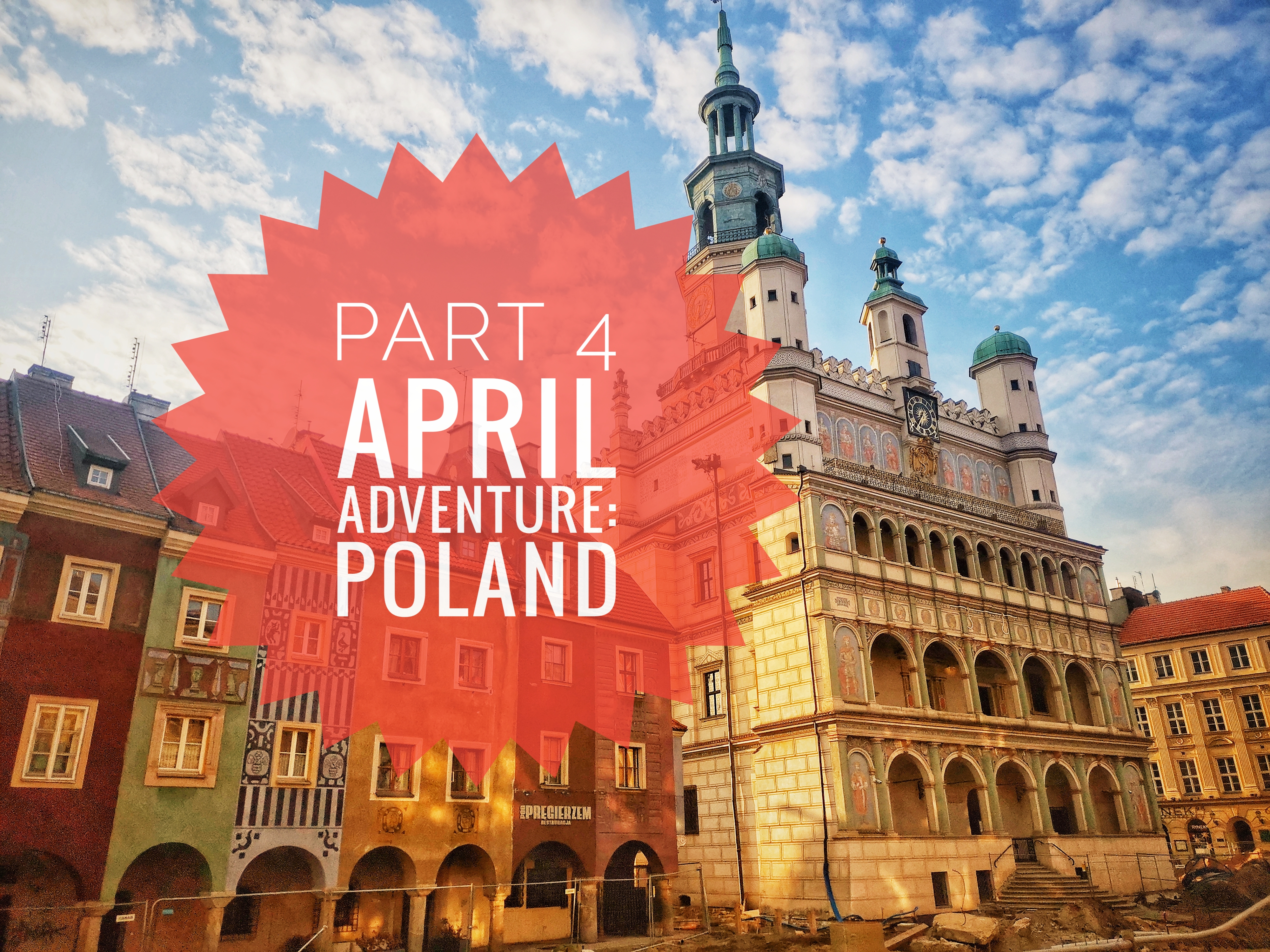
In this final part we travel to several of Poland‘s 🇵🇱 central cities: Wrocław, Poznań, Bydgoszcz, Toruń, Warsaw and Łódź!
Day 1: Wrocław & Poznań
Due to frequency of flights and affordability I’ve spent quite a lot of time in Wrocław since my first visit in 2016. It belongs among a handful of cities where I could be dropped anywhere and roughly know my way around. Due to perhaps no more than its unfamiliar looking name, UK tourism really hasn’t taken off there in the same way as Kraków, even though many of its main features – castle aside – are actually reasonably comparable. A beautiful old town, network of waterways, visible heritage stretching from the middle ages to the 19th century connected by a modern tram system – sound familiar? It also has hundreds of little gnomes – that part is different, but I thought you’d like to know about it.
It would only be a fleeting visit on this occasion, but that wasn’t to say we wouldn’t be going to any bars! An early visit to Literatka 🇵🇱, a café bar on the central square gave a glimpse of what the evening atmosphere would be like, but for late morning visit I didn’t get enough of an impression to say for sure. There’s a backroom used for smoking and I understand it is popular with local functionaries and for a while the artistic crowd. Service was friendly and it’s somewhere we’d return to – much later at night.
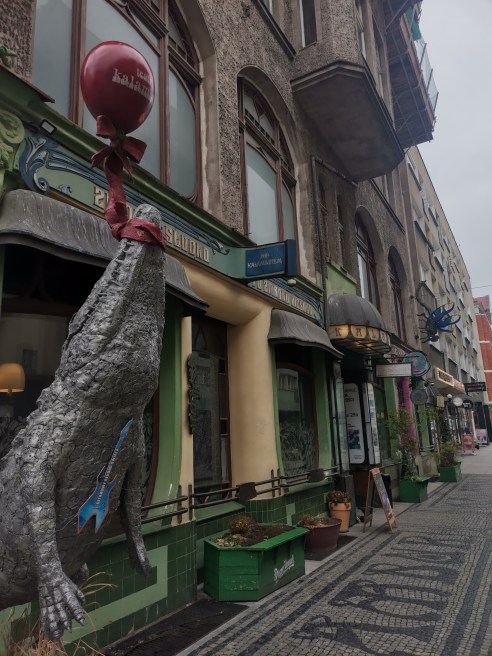
After lunch at a nearby Bar Mleczny, I had a walk to the cathedral island, market hall and park, before returning to one of our Top 100 Bars in Europe, Art Café Kalambur 🇵🇱. While it’s a shame to not have been able to visit later at night (when the atmosphere is electric it is a beautiful environment to be in at any of time of the day, with its art nouveau stylings and funky adornments. A cinema, café, snack bar and later club/dance hall, this is a versatile, brilliant venue.
I drifted towards two other Wrocław classics, the first being the town square Brewpub/Ratskeller, Spiż 🇵🇱. Calling the venue iconic seems an anodyne description these days, devalued with overuse. It undersells just what a fixture this place has been in the lives of local residents. A cellar venue with huge terrace on the square, allowing for a great experience in summer or winter. Their own brews are last-generation and focus on Polish/German styles, but are not without merit. The beer is often served with bread and home-made bacon lard.
Moving to an altogether more sensual experience, a café bar that for all the world could fit in among the many antiquey, olde-world bars in Kazimierz, in Kraków. After nearby Graciarnia was ruined by some idiots and turned into an ineffective and overrated pizza joint, Mleczarnia 🇵🇱 has carried the flag for this style of bar in Wrocław. Candlelight, vintage furniture and low lighting effectively moves forward time, so while it may have been early afternoon, you can easily feel you are approaching early evening. You lose track of time. Have a beer, take a look at their cakes and pastries. While away the hours in a bubble of relaxation of harmony.
Breaking the spell was the thought of needing to catch the train toPoznań. Fortunately the walk takes you past one of the city’s key nightlife areas, a series of bars built under the railway arches on Wojciecha Bogusławskiego, for a while one of the seedier areas of the city. There are still a couple of sex shops and the occasional dodgy character around but these days it is leaning towards becoming gentrified. One of these bars, Sielanka 🇵🇱 is on our guide, but we decided to try somewhere else, and Cinema Paradiso 🇵🇱 looked worth a try. Part of the decision making came down to the fact people were inside unlike virtually all of the other dozen bars. On entry we discovered a tidy little pub which will prove a convenient stop off/fallback option before a train or tram, or even when going for a night out. The beer selection is a step up for this sort of place with Czech options on tap and a few Polish craft cans in the fridge. Didn’t make the guide but definitely pause for thought. Here are the two duff photos I took of it:
Poznań, by contrast is a city we hadn’t visited since 2016. We were assured by local residents that it was easily the equal of Wrocław. That remains to be seen – but it does nevertheless have an attractive city centre. I wasn’t to know but on arrival that city centre was a building site. Every lane, main road, side alley was surrounded by metal fencing and the paving had been removed. It made getting around a real pain in the arse and of course spoiled the views. This is as good as it got as when we returned the rain turned it into a quagmire:
From a bar going perspective, I was excited return to some of our favourite haunts. Alas, Za Kulisami 🇵🇱 was closed on a Wednesday, but it would be only a 2nd visit to a Top 100 Bar In Europe, Piwna Stopa 🇵🇱. This pub (English name: Beer Foot) is simply superb in everything it does. Melding top quality Polish craft beer with a well-tended garden, a truly cosy, convivial and social interior, and stonking pub grub. It is one of those places that’s painfully far from home, one that I’d make my local within 5 minutes of moving to the area.
After a rest at the apartment we tried a couple of venues for the first time. One, Dragon Social Club 🇵🇱 has gained some level of reputation at home due to it being the local pub for Ben Aitken, author of ‘A Chip Shop In Poznan‘ when he lived in the city. The interior has a purposefully colourful, collegiate feel with some niches that will appeal to different groups and that is perhaps its strength, turning what is in places a quite flowery, loungey venue into somewhere you’d still find punks hanging out. It made our guide, first and only inclusion of the day!
Final stop of the evening (remember this had been a seriously long day out) was at Na Piwek 🇵🇱 , a basement bar and craft beer joint. The combination of the two ought to have worked, yet while it was hardly a disaster, something about the shape of the venue, furniture choices and general ambience failed to fire, despite several groups of people being there. Photos may make it look better than it actually was.
That was the end of the evening, and we woke up ahead of our first ever visit to Toruń, where we would find the best bar of our entire trip.
Day 2 – Toruń – Gingerbread, Copernicus and Brick Gothic
Imagine a country with affordable first class rail travel, where you look at the uptick in price and think – ‘You know what? Yes.’ You’re thinking of Poland, where premium train travel can be obtained very affordably – on its own merits too, not just in comparison to Western nations. I arranged mine and headed to Poznań station, stopping along the way at Fort Colomb 🇵🇱, a bar set in the limited remains of an old Napoleonic fortress. As well as being extremely convenient, it is a nice little pub too, with the vaults of the building on show, a fire installed and little niches. Most of the furnishing and product is regular and mainstream but it just inched over the line by our reckoning.
The weather improved over the course of our journey to Toruń and on arrival rail passengers were treated to the splendid sight of its UNESCO world heritage city centre from the bridge passing over the Vistula river. Of all the new places I visited this made the strongest positive impression. While it can’t beat Kraków or Gdansk for scale, it is a beautiful old place with a set of attractions that make it an ideal stop-off. A night or two here will be very well spent, trust me on that.
Our first move bar-wise was to check out the city’s central brewpub, Jan Olbracht 🇵🇱. This well-financed operation in a historic old town building has been carefully designed to exhibit the historical features of the building, give some hints to the glory years in its Hanseatic era pomp and show off some seriously impressive modern finish too. The exposed brick, black wood, copper brewkit and yellow neon signage is really complimentary, with some flair applied too, booths set into what seem to be the inside of huge barrels. The complex is sprawling and perhaps the only real criticism is that they could have made the central bar room more communal and pubby. Their regular beers are competent rather than spectacular, although they have a creative side-line in more adventurous brews too. It deserved an inclusion to our guide.
Next stop was one of Toruń’s craft beer bars, Deer Bear 🇵🇱. This is connected to a brewery of the same name who have a national reputation. The focus is – predictably – on IPAs and sours which were all hitting the mark. The interior was pleasant with some exposure of the historic beams and brick, but the layout slightly lacks a social focal point. That said, the actual people in the bar were chatty and it had a friendly feel. If you lived here you’d find yourself in this bar a lot. Overall it just sneaked an inscription on our guide.
The next venue was a way west of the city centre with no alternatives nearby, making it a risky all-or-nothing endeavour. However, from our advance research I had to try. And boy, was it worth it! En route, a sudden thunderstorm boiled up and I was hopping between tree cover for the last 15 minutes before reaching our destination, the fantastic Czarny Tulipan 🇵🇱 (English: Black Tulip). I hadn’t expected the building itself to be so striking, a brick turn of the century effort which had taken on an almost haunted house quality. On approach two windows were gleaming with warmth and light, and it suddenly looked far bigger than the images online had suggested. You walk up the porch stairs to be greeted by a supremely cosy, characterful and aged bar with a quality of light that places you in an instant feeling of ease – not just ease but a bond to the place. The side rooms were actually filled with 2 pool tables in use – not what I had expected for a vintage type bar, but it is clear this neighbourhood pub is versatile and accommodates a range of needs well. This is also seen in the pricing which was among the lowest anywhere we visited in Poland. At this stage we will let the photos speak for themselves:
How do you follow that? Well, thankfully with a walk to burn off one of the two strong beers I had sunk. On returning to the centre the pace had picked up in town seemingly, so decided to visit two basement bars for some lively atmosphere. One, Przepompownia 🇵🇱 was a nice battered old hangout but lacking customers, the other, Kredens 🇵🇱 was kind of the other way around, a little tacky and full with a young crowd.
It’s annoying when you arrive at a venue and it’s closed when the information published says it’s open, but occasionally leaving it too late to arrive can be no-one else’s fault but yourself. The next, final, unsuccessful effort was a mixture of the two. I arrived at Tutu Jazz & Whisky Club 🇵🇱 with around 40 minutes before the scheduled closing, but it was emptying out and the guy at the bar apologised as he was closing it up. I should have left a bit more of a margin, really. The frustrating thing is, it looked pretty decent.
Day 2 – A day in Bydgoszcz
With Bydgoszcz and Toruń only 45 minutes apart by train, there was no urgency to get up and about so after a lie-in I explored more of the gorgeous old town – soon to be improved with a renovated riverside/promenade area. The Town hall tower, Copernicus exhibition and Gingerbread museum were all well worth doing and the hour hand reached over the yardarm to – yes, you guessed it – bar time!
The first stop was a survivor, an old local’s hangout stretching back to the 90s (maybe longer), U Kaduka 🇵🇱. Whatever else you may say, it’s an honest operation, clearly somewhat of an institution but lacked some personality. Décor was non-descript and it didn’t give off the impression I was hoping it would.
This left room for just one more venue before getting the train. A better outcome, Krajina Piwa 🇵🇱 was a really nice place blending all aspects of pubbage well. A strong selection of Polish craft on tap and in the fridge, a nice, not overbearing seafaring theme, featuring a piano, upturned barrels at the bar top and a link to a restaurant – they may even be owned by the same operation. Service was friendly and helpful, and with the station only a few minutes walk away, it was ideal. It’s now on our guide.
Bydgoszcz (pronounced Bidd-Gosh-tsch) appeared to have a modest hitlist of a lot of what you expect from historic Polish cities. The reality is it is quite low key and understated with a nice, if slightly under-exploited riverside area, a nice, if slightly under-exploited market square and a funky little cathedral with colourful painted interior. There was no way a city of 350,000 people was not going to have a few great bars, until we discovered that actually, no – those bars don’t exist.
Somehow I ended up getting pointed to Pub Parnasik 🇵🇱. It was unbelievably drab as well as towny, getting things off to a pretty terrible start in Bydgoszcz.
After check-in and a rest, we headed out hoping for at least something a little better. That emerged in the shape of neighbourhood craft beer bar Kraftodajnia 🇵🇱. On arrival it seemed like a pretty safe bet, if a little unimaginative. The beer selection was very decent and hopes were high until my choice – a hefeweizen was undrinkably bad. The staff took a little persuading but agreed and I switched to a beer which was thankfully fresh as a daisy. The pub was near totally absent of people but even with an evening crowd I’m not convinced it would quite pass the threshold.
I assumed the next venue, Prolog9 🇵🇱, a rock/punk pub with craft beer would be likely to have at least a couple of groups hanging out. Not only was it dead, but the service sucked and the furnishings inside looked more like the locker room of a goth football team than somewhere you’d want to spend time. I like rock pubs, but not this one. The Black IPA was all kinds of meh, too.
With things going from bad to worse, and no sign of a let-up, I reluctantly headed to Piwo – Ty nalewasz 🇵🇱. I wasn’t expecting it to be guide worthy, but this bar has a sampler format where you load a card with money then pour your own beers. Half the taps were not overly interesting, however several were, and I at least got to have some fun, even in what was mostly a typical mainstream towny bar. It’s a good gimmick and so long as there are 4 or 5 beers worth trying, you can sit back and just about forgive everything else. It won’t make our guide though.
This was the 20th day of the trip, and I have to confess I threw in the towel after one final try – OGIEŃ Craft beer & pizza 🇵🇱. Neither bar, nor pizzeria, a typical hybrid place. Good beer, good food, middling value, but so little to write home about I didn’t even bother taking a photo, it seems.
If you find any great bars in Bydgoszcz then firstly, congratulations – you did a better job than me, but secondly, please let me know!
Day 3 – The capital city Warsaw beckons
The journey from Bydgoszcz to Warsaw is pretty straightforward – the train is modern, and the route is flat and boring, enlivened only by the odd sight of a deer, hare or kestrel in the field. Excitement was building though, as I had never visited Warsaw before though was well aware of the attractions in the capital and the differences between it and other Polish cities.
Due to an absence of affordable accommodation more centrally I was booked in right at the end of the line, so decided to break up the transfer, walking to the restored (rebuilt from scratch) old town for lunch, then a tram to Praga, Warsaw’s alternative end, to the first venue, W Oparach Absurdu 🇵🇱. A bar fitting for Kraków’s Jewish Quarter Kazimierz, this felt familiar and instantly likeable, if not perhaps as dramatic mid-afternoon. It was nice to see a healthy beer range, not only Browar Amber on tap but a big fridge of craft beer too. Vintage furniture, fairy lights and Persian rugs. You’ve seen it before, but it’s well done.
There was a bit of time available to check out another bar in the area before check in at 3pm and I spotted a craft beer bar not far around the corner, the supremely generic titled Beer Station 🇵🇱. With a range of Lithuanian options and a few Russian voices, I didn’t get the impression this was a Polish outfit. A neighbourhood multitap bar created on a budget, in a strange way the lack of finesse actually improves it and gives it a tiny bit of personality. There wasn’t much else to report though. It will do the job if you’re in the area but needs another dimension to be worth considering for an inclusion.
Based in Gocławek, literally the end of the tramline, it was about half an hour there and back from downtown Warsaw, so every decision had to be made with that in mind. After a rest I emerged, visiting the very cool Neon Museum before a park walk to Fregata 🇵🇱. Reportedly a survivor pub from well before the fall of the Iron Curtain, this supposedly offered retro vibes, good value and neighbourhood life. It did, but all of you will have felt the difference between a vibrant old survivor and a dog-eared one. This rather fell into the latter camp. It was also possibly too foody to really consider either.
The theme of feeling vaguely underwhelmed persisted at the next stop, Kicia Kocia 🇵🇱. It came highly recommend and had an interesting brutalist entrance but inside the vibe was a colourful café trying to be all things to all people, with the inevitable feeling of dilution – not a strong ‘bar’ feel. It feels harsh to criticise an operation not doing anything actively wrong, but a vague sense of cynicism to the whole thing dragged it down. It was at least busy and it serves a neighbourhood that isn’t brimming with alternatives.
I thought it best to head towards the city centre, so stopped off at Pardon To Tu 🇵🇱, a high-ceilinged modern bar on the corner of an intersection. Busy with a mainstream crowd, there was something distinctive to the décor, but perhaps the sum was less than its individual parts. Further underwhelming vibes, but the black IPA was very tasty. The bar was a lot busier than the photos below make it look, with a large busy terrace full of people.
Changing style and tempo after these slightly underwhelming (or is it over-hyped?) venues, I went to downtown Warsaw aiming to find a speakeasy cocktail bar named BackRoom 🇵🇱. There are well-hidden ‘secret locations’ and those hiding in plain sight. The unmarked entry to this bar looks identical to any of the other apartment doors you’ll find in this complex and eventually I co-opted the help of a local resident. On entry, the bar was over-stocked with staff versus customers. I’m not sure how many moustachioed bros it takes to say Hi to one person, show them a menu and then rustle up a cocktail but apparently the answer was north of 6. All the same, the cocktails really were excellent. Décor fairly good, the back-room seemed to me the nicest part, bookish study type surroundings but without a reservation I had to settle for a space at the bar itself, which was still good to see the staff at work.
Staying on the cocktails for now, I walked across a few blocks to a much more open, neighbourly venue, Aura 🇵🇱. Far smaller than any images really show, this is a corner bar with a wall of booze from floor to ceiling, (accessible via a ladder), Persian rugs on the wall with arched mirror. Quite odd. A duo of hyper, possibly dosed-up guys exchange banter and do everything at a manic lick. This does give it a much more informal, fun atmosphere and I quite liked it – cocktails are very decent too. This is where I suddenly noticed myself having a profuse nosebleed which was quite embarrassing for 5 minutes or so.
The evening ended somewhere unplanned. I walked past Armand 🇵🇱, only to be impressed by what I was seeing inside. You have to give these things a go and not just remain fixed on an on-rails itinerary. For all my careful research, this impromptu bar I chanced upon was better than the 6 previous bars I had swotted up on – it just goes to show. An atmospheric place, the gilded Deco signage outside doesn’t quite fit the interior which is more pleasingly bohemian. Colourful but brooding, each little vintage table is cute and dinky with its own lamp, and the vibe had reached that lovely buzz of happy, spirited conversation. The bar serves up a decent modern range across the board – it’s unlikely anyone, even craft beer or whisky specialists will be disappointed.
Stalked by the fear of missing the last tram to Gocławek, I set off earlier for home than had I been based more centrally – a lesson to learn for next time perhaps. It had been an interesting first day, even if it hadn’t hit the top heights.
Starting the day with culture before fun, the Warsaw Uprising museum was as good as hoped. Thought provoking, sprawling, and placing a snapshot in time in its wider context without losing the poignancy of individuals or moments. If you just want to look at a big plane, you can do that too. I also wanted to visit the Fotoplastikon, the oldest stereoscopic theatre in Europe, but I, and others, failed to gain entry despite stalking the courtyard and ringing the bell over and over. They also weren’t picking up the phone. A trip up the magnificent Palace of Culture and Science would do instead, and afterwards I found myself near-ish another starred drinking venue on my map –Karczma 🇵🇱.
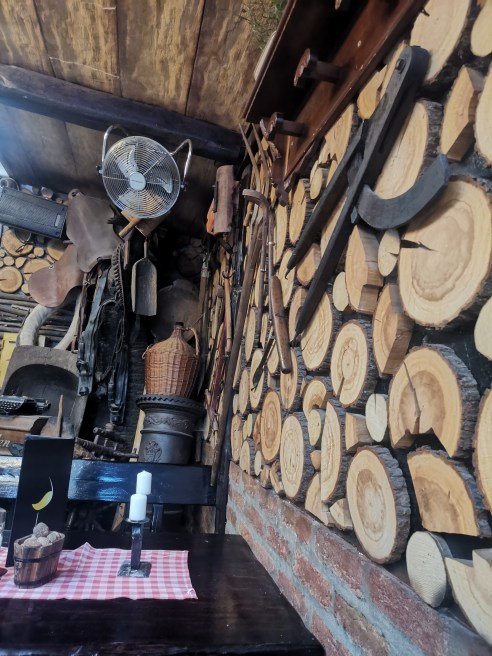
Karczma – a throwback rustic country diner – by the main station in the capital city seemed perversely backwards enough to hold some interest, and on approach I could barely believe this surviving shack, no doubt an eyesore to the property developers whose apartment blocks dwarf it, still stood, let alone a business operating in it.
With kindly service, basic Polish pub grub and very well tapped beer (if still macro industrial Polish lager) at a very good price, this venue was naturally charming in its refusal to bend or break. It really delivered and I could see why it has attained almost cult status locally.
Shortly after I left it was apparent the future remains uncertain for the business, which is a small tragedy. A venue like this will not be returning to Warsaw, that’s for sure.
The closest place nearby was the flipside of the coin. Uwaga Piwo 🇵🇱 was meticulously clean, modern and with a range of cutting edge craft beers, making use of the ex-industrial space creatively with a series of machines you could wander around to look at. It was also empty, soulless, sterile and fairly unfriendly/disinterested. Attached to a shopping mall, it felt more like drinking in the bar of a bowling alley than a pub. No doubt some readers would still rather come here. Dare I say it’s less good than these photos make it look?
Revamped market halls are often good spaces to find bars/drinks businesses when they are on the up, and for a change of scene we decided to visit Niewinność Wine Bar 🇵🇱 in Hala Gwardii, one of at least 3 branches of this business in the capital. The friendly welcome was appreciated, really helpful, personal and curious too, making me feel right at home and helping me decide. This business serve several wines from the barrel, all of which were well outside the UK’s normal distribution and ecosystem. The stall has been made more bar-like with plants, bunting and an extension from what is a tiny little retail unit. While overall it didn’t quite meet the criteria for our guide as a venue, any wine buffs could do a lot worse than popping here.
The whole day so far had been schizophrenically changing styles and vibe so why stop there? Our next venue, back into downtown, was Café Paragraf 🇵🇱. A survivor from the socialist era, purposefully pickled in aspic, 6 decades and counting have passed as fashions have swung away from their favour and back again. An intriguing narrow venue with a smoking room behind the bar and strong ‘1990s high street solicitors reception area’ vibes, a glass of ‘Belfast’, a nitro keg dark beer (brewed in Poland) was the ideal retro choice. I was unaware this beer had such cult status in Warsaw as it is barely visible in any other city I have visited in Poland (which at the current count stands at 19). While there was a lurid appeal, I don’t think I would return here unless I was with friends to hangout and chat with.
After a break and a rest, it was time for a final evening in Warsaw. I took a 2nd trip to W Oparach Absurdu 🇵🇱 to see what it was like at night. The answer? Very nice.
The next venue was a little out on a limb, always a chance of adding further mileage for little reward, but you have to try these things. Or maybe I just have to try these things then tell you about them? To się wytnie 🇵🇱 is a genuinely alternative venue that is part of the arts and cultural scene with live gigs (including an ambient act who were playing when I arrived) and community events. When I arrived at this unmarked venue which more resembled a squat, I tried the door (which was wedged open with a mat) to find a busy bar room with people sat around the live act, and a small bar to the back. Friendly and welcoming, there was a spread of drinks and snacks for guests, but I thought it best to actually invest in the business and went to the bar.
During my research I also discovered a courtyard cluster of vaguely alternative leaning bars in the Praga district along 11 Listopada. Several bars including a club share outside space meaning there is a fairly open atmosphere of mingling and wandering which I personally really like.
The first bar of these was Skład Butelek 🇵🇱, one of those sepia-toned vintage places with first floor clandestine rooms and a cool ground floor bar area. This got the evening off to a great start. I was surprised at the time of night there were still some families knocking around, who presumably arrived earlier and had forgotten to leave.
Things were really hotting up now after a vaguely underwhelming previous day, and peaked at Chmury 🇵🇱, the neighbouring bar to Skład Butelek and Hydrozagadka. Chmury ticks so many boxes. It’s fun, it’s cool, there’s a great outdoor area and a funky, distracting interior of lampshades and Twin Peaks décor, street food, surprisingly good range of craft cans and far more besides. The atmosphere was bubbling up nicely as there was an event coming up next door, so this was the pre-club drinks spot. It was my favourite venue in Warsaw and it looked like I’d saved the best til last.
Our next stop, Łódź, isn’t a long trip away from Warszawa Zachodnia station, so after a lie in we got going in a leisurely fashion. This proved a decent decision as Łódź didn’t exactly prove a showstopper of a city. Unlike most of the historic cities which are based around a central square, Łódź is based on one huge, long thoroughfare, Piotrkowska over 4km from end to end. Low-rise and actually not particularly modern/industrial, the city has an inheritance of 19th and early 20th century architecture that is crumbling away. On arrival not many bars were open yet, but we started at the retro nostalgia bar 07 Bar 🇵🇱.
This is a trend lots of businesses have tried to seize on, but this one did a reasonable job, particularly upstairs where there are views of the main streets and a nicely curated selection of vintage furnishings.
The next stop didn’t exactly fill us with huge excitement in advance, but ended up being an enjoyable visit, PiwotekaNarodowa 🇵🇱. On entry the impression was ‘so far so craft beer bar’, a large venue with spacious seating widely set apart from each other, and a good selection to choose from. On further inspection I noted 2 cask handpumps and inquired if either was in business – yes! This is a moment of excitement as true cask beer is very difficult to come by on the continent, but Poland has more than most, a positive cultural exchange from the influx of Poles in the mid-late 00s to the UK, many of whom came home with a taste for the stuff. After enjoying that I was invited by a group a girls to hang out with them for a couple of hours which was a really nice was to spend the afternoon.
After a break (needed after working our way through the menu), I emerged fresh(er) to explore the evening bar scene, beginning at the basement venue Biblioteka 🇵🇱. One of those decent cellar venues with exposed vaults, and the predictable quasi library décor. Mainstream but welcoming and versatile, really the only shortcoming was the last generation choice of drinks. Improve that and you’ve got a very strong venue on your hands.
Next up, an unfortunately pretty quiet bar Chmielowa Dolina 🇵🇱. It wouldn’t be uncharitable to say it hasn’t got what’s necessary to produce a sense of comfort and atmosphere in the absence of people. What’s worse, the service was pretty surly too, as though I’d offended them by walking in the room.
Still, some people seemed to be having worse evenings than me:
Running out of options, we tried Jabeerwocky 🇵🇱, which I really didn’t like. Grey, start, bad acoustics, really nothing to get into at all.
To inject some fun into proceedings I ended the night at Pijana Wiśnia 🇵🇱 🍒 This chain bar has become a bit of a cult venue, specialising in cherry liqueur. Well-financed with eye-catching décor – barrels and textures made from glass and red lights accentuating. If you have a group of friends together it’s a very good venue.
Day #5 – The trip comes to an end in Poznań
It was April 24th and with over 3 weeks away and 150+ venues visited it was time to draw things to a close. A long train journey retracing steps to Poznań where we revisited Piwna Stopa 🇵🇱 and Dragon Pub 🇵🇱 before heading to the airport.
There we go.
8 new cities covered in 24 days, 54 new entries to our guide across 7 countries!
Following 6 days in Austria and Slovenia as covered in Part 1, the next 6 days of our Big Trip of 2023 were spent in Croatia – firstly in Varaždin then the capital Zagreb!
Day 1 – Ptuj 🇸🇮 to Varaždin 🇭🇷 – Rail Replacements on Good Friday?
Unlike the almost seamless border transition by train between Graz 🇦🇹 and Maribor 🇸🇮, crossing the border from Ptuj 🇸🇮 into Croatia 🇭🇷 looked wooly to say the least. One of the spectacularly pointless elements of nationalism is making larger settlements that are in close proximity poorly connected – the Balkans is a particularly bad example. A 7am train from to Čakovec 🇭🇷 looked like the only option. Then, on inspecting the information online it appeared the train would go no further than somewhere called Ormož 🇸🇮 due to staffing issues and Good Friday. Unfamiliar with the reliability of Croatian rail replacement services, but aware all our eggs were in one basket, we had to try it.
In the end, the switch to the replacement bus was well choreographed by the train conductor, but the bus trundled along, getting us to Čakovec later than planned. A connecting train to Varaždin appeared to be horribly delayed, and the passengers listlessly kicking dust around the station concourse didn’t seem promising. The ticket officer also assured us it wouldn’t be coming and we could only get the next train 2 hours later. Resigned to that, we set off into Čakovec centre to have a look around and kill some time. Except – what is that on the horizon? As the station disappeared behind us, a train emblazoned with Varaždin approached. Running full pelt with full rucksacks, we got back to the platform in literally the nick of time, as the guard was about to blow his whistle. Off we went to Varaždin!
A northern city with an impressive central castle and beautiful Austrian-era old town, we first visited Varaždin in September 2014 where a 10-day festival Špancirfest was in full swing. Memories of cheerful crowds, bunting, huge barbecues, live music on the street and magical courtyards like Julijan’s Apartment 🇭🇷 left rose-tinted spectacles.
It is to be expected that any town goes through its highs and lows, and perhaps being Easter we could hope for something similar. We were wrong – on this year’s visit. Grey, quiet, with a hint of rain in the air, the experience was initially like after the Lord Mayor’s show, the air had been sucked out of the balloon somewhat. Still, after a café stop-off, castle visit and lunch, it was time to inspect the bars – bars we resolutely failed to visit in 2014, 3 years before this site was founded.
The first stop off, one we had recommended to us, was south east of the old town near the park. Medina Škrinja Pub 🇭🇷. Tucked around the rear of the building, you’ll find a pretty unremarkable set of patio furniture used by smokers, and uPVC type entrance, none of which sets off any great vibes. Hang in there though as the interior space opens out into a historic vaulted room, vast and dark. The ‘Bear’s Chest’ is decorated with a large ceiling centrepiece, the eponymous bear with a chest of treasure chained to it. Around the brick interior there are medieval sigils and a general acknowledgement that this is a very old building. The bar enjoys a decent beer selection – only a few that would get any beer geeks purring, but still clearly above average, and even during the afternoon there was a decent clutch of people and plenty of activity at the bar to create adequate atmosphere. We are confident the evening would be even better, and it was an easy inclusion to our guide.
Finally, it had rolled around to 3pm allowing us to check in our apartment, drop off our luggage and have a rest. Our next stop was on the fringes of town, around 25 minutes walk, Picabia Pub 🇭🇷. One of Croatia’s persistent issues is a lack of a pub type feel to its communal social drinking venues. While this place wouldn’t make our guide, it was pleasingly pubby in feel and appearance, the complimentary nuts made it reasonable value and it is basically a spacious neighbourhood hangout of a kind that are in fairly short supply in provincial Croatia.
After a stop for dinner, we looked around the centre in efforts to find Julijan’s Apartment 🇭🇷, only to find that it was closed (for the day, not permanently). Pretty gutting when you average 1 visit to Varaždin every decade.
This left 2 venues remaining, the first being only a semi-promising looking bar called Medonja🇭🇷. Some places perhaps don’t photograph well, and this is one of them. It is true that the main lounge is unnecessarily green, and the bar area is pretty unremarkable. And yet two elements entirely compensated for that. Firstly the surprisingly good beer selection – you are not starved for decent choices, both Croatian and International. Secondly, it is a very effective social space that was on our visit buzzing with people.
A last stop of the evening was to the imaginatively titled Craft Beer Bar 🇭🇷. This guesthouse has converted its entrance hall into a café bar. It’s all done on a budget, with portable keg machines lined in a row below the stairs, the 1 member of staff gamely trying their best to cover orders, but nevertheless a long wait on a Friday night. There is a good social scene here, some interesting local craft beers on offer too, but the bare bones of the bar are somewhat lacking.
Day 2 – Arrival in Zagreb 🇭🇷
Varaždin to Zagreb by train involves a scenic, but very long journey around the villages, so we made the call to get a coach (not exactly quick either). The bus journey, mainly along single lane roads passes along rolling hills and villages, many of which have simple little farmsteads, a few chickens, goats, the odd pig here and there. It’s a good reminder of how fast the Balkans slides into simple rural life outside of the cities.
We spent 3 days in Zagreb on our previous visit, mainly staying rigidly around the old town and the boulevard towards the train station. It is curious looking back how much more closed and conservative our urban exploration was. This time, 5 nights would allow us to explore the city’s suburbs and its different sides.
As per usual, the dead time while waiting to check into our apartment was filled by bars – firstly Swanky Monkey Garden 🇭🇷, a hostel with an attractive modern tiered courtyard and bar – a fairly well executed bit of funkiness.
After that, a beer at the Ilica branch of Pivovar Medvedgrad Illica 🇭🇷 Tucked away off the street in a shopping mall, this is more of a traditional beer hall, with a large garden at the back. It had been a while since our last beer of theirs, back in 2017. What is noticeable is what strides forward they have made with both the traditional and modern beers. This operation is equipped and future-proofed, as far as beers go. In terms of the venue, it is a little too drab in terms of décor and atmosphere, not a place I would want to spend a long time in unless I was eating.
After check-in and a rest, we visited the fun, tragic, disturbing and amusing Museum of Broken Relationships which is worth a first time visit for any tourists.
The evening started with a walk along the Strossmayer boulevard, a treelined route overlooking central Zagreb with a great view of the cathedral at one end, through the old town to Tolkein’s House 🇭🇷, which was shut. We learn it has been closed a while, but may reopen soon. Oddly, the extension to it,Veliki Tolk 🇭🇷 was open. A little sparse on decoration and people, the drinks were fine, service also friendly enough, but we didn’t linger long.
One of the joys of exploring European cities is the prevalence of trams. Zagreb residents seem rather modest about their service. Perhaps theirs may seem inferior to some neighbours but trust the view of this English person with our generally awful urban transport: it’s still damn good. Affordable and comfortable, allowing to whoosh around the city. The pink line heads into the hills, and halfway up towards the cable car is the pubby mini-brewery Pivovara Mlinarica 🇭🇷 (possibly translates as Miller Brewery?). This roadside pub isn’t typical of Croatian drinking venues, with an interior similar to some English or American pub-restaurants. Their beers are really nice, the food and service seems appropriately pubby and my partner really liked it. I’d say it was decent, but it just misses something. We returned later in the trip for a second try, and it still just didn’t cut it. One of the clear disappointments is that the bar area, which should in theory be a social magnet, is far too small. Being tucked away from the main seating areas loses whatever atmosphere it may generate. Yes, these are the careful considerations we make when reviewing bars.
Seeing as we were taking a tram back down the hill, we allowed it to drop us off in the commercial centre, which is a largely familiar, unremarkable set of shopping streets you could place anywhere on Earth. There are plenty of bars and eateries of course, most of which are unremarkable so far as the bar guide is concerned, but we had passed one by chance that looked very different. Another venue we hadn’t found on our research but found out in the wild! Orient Express 🇭🇷 has an eye-catching train theme, a small narrow bar you enter straight off a shopping street. Wood fittings, leather upholstered seats and booths, golden age ephemera on the walls, this is noteworthy, particularly in a country with a famously ‘who cares?’ approach to decorating its caffe bars. Drinks are fairly stock and predictable, but complimented with some local craft beer options. Service is very friendly and used to touristic custom, and the place does a familiar kind of city centre trade, perhaps not a place with regulars in the evening as such, but well worth a look while in Zagreb given it goes the extra mile.
Back in 2014 we may have visited this place (but there is no evidence to prove it) – Čeh Pub 🇭🇷. This very directly-named pub is situated on the run between the station and central square, and has been a fixture of the city nightlife and social scene for a long time. Very smokey, noisy and vibrant venue with layers of event posters plastered along the wall and, it must be said, excellent Kozel and Pilsner Urquell on tap. It remains one of my favoured spots in the city. Yes, your clothes will end up stinking of smoke and your eyes streaming, but that applies to the majority of Zagreb bars anyway, in a nation where smoking inside pubs is still permitted.
There was time for a last stop of the night, and this was a place I remember we attempted to visit in 2014, but being timid little… *checks* 29 year olds, weren’t brave enough to explore. Bacchus Jazz Bar 🇭🇷 . This was a time when we may have still relied on paper maps, I can imagine us missing this place, tucked around the corner inside an alleyway. Neon-signage beckons you through but you still have to keep going until the stairs to the basement are visible. In summer months the courtyard is a popular place, but the weather was still a bit iffy so there was only the usual few smokers outside chatting. Indoors, you’ll find a cosy little underground bar with curved ceiling and warm lighting. They host occasional live music events but it is very much an attractive, social venue regardless of if an event is taking place. Some of the drinks options may be a little last gen, but this is also one of Zagreb’s longer-running city institutions, so deserves a bit of leeway. Even if they still hadn’t taken the Christmas decorations down! After an enjoyable nightcap it was very much time for bed.
Day 3 – Easter Sunday In Zagreb 🇭🇷
Croatia is a religiously observant country and there was a good chance Easter Sunday may have been a washout for bars. In reality, there was a very slow start with a lot of closures before the nightlife gradually got going in the evening time. An appropriate activity, and largely chosen because nearly everything else was shut, was the incredible Mirogoj Cemetery. Yes, spending time in a cemetery is not everyone’s holiday activity, but this is a colossal site with a mile of domed towers facing the street, and inside rows of porticos and beautiful headstones. Easily worth the tram ride and 15 minutes walk out.
After some lunch we returned to town to Carpe Diem 🇭🇷, which is one of those versatile café/bar/pub/anything tourist places with an uncanny valley appearance between Czech pivnice and English theme pub. Despite these sneery remarks, that’s not such a bad thing, and with a reasonably interesting drinks menu you could do far worse. It is versatile for a reason and does a good job, as reviews will attest to.
Next stop in the old town was our only surviving Zagreb inscription, Pivovara Medvedgrad’s old town pub Mali Medo 🇭🇷. On a sultry summer evening in 2014 we were treated to live music from the upstairs window onto the street and a great terrace atmosphere. Inside was the typical trad beer hall look. A refit has spoilt the interior which lacks a focal point, while it wasn’t exactly buzzing so early on an Easter Sunday. Still, it is a typically reliable option.
Another open attraction was the 80s Museum. Most Eastern-Bloc countries have their own version of these, and this leans straight into nostalgia and interactive exhibits rather than torturous captions about ideological repression. A fun time exploring Yugoslavian commercial and domestic life. Kudos to whoever donated the pornography.
Quite a few recommendations had come in online to visit Valhalla 🇭🇷 which was our next stop. One of Zagreb’s strongest beer specialists, combining a great range on tap and in the fridge with a venue that is itself worth hanging out in even if the beers weren’t there. A pubby understated space just off one of the main tourist streets, the Nordic signage is unmissable, though not over-the-top and leads into a two room pub with a mixed crowd. While this isn’t somewhere you’d go for a wild party, there is a social atmosphere around the bar and in the backroom, which all combines effectively to make this somewhat of an obvious choice.
After a rest and dinner (Sri Lankan food – go out with a vegan, interesting things happen!) we visited another old town circuit pub we had walked past the previous evening, Kvazar 🇭🇷. This small bar picks up the pace a little, with sport on TV, free popcorn, louder music and a younger crowd, but it’s a pretty well put together pub with some nice music memorabilia, leather upholstered bench seating, and a range of Croatian craft beer that goes beyond the norm too, a nice surprise. The atmosphere is friendly rather than brash, and it’s good enough overall to warrant an inscription to the guide. As we left, walking to the centre we noticed a man shouting, repeatedly, seemingly trying to get our attention. Then, as he approached he signalled, and we noticed a dog he was trying to chase down. The dog seemed to think this was a game so would wait until he got close then run away again. This scene continued to the central square, by which point it had descended into farce. Did he eventually grab his dog? Who knows!
I remember the day really sliding away, and somehow we ended up back at Swanky Monkey Garden 🇭🇷 barely getting in a round of cocktails (which are not amazing) for last orders.
Day 4 – Monday, Monday In Zagreb 🇭🇷
On the continent nearly all museums and attractions close on a Monday, so it is worth targeting what to do in advance, as neurotic as that may seem to some people. Zagreb Zoo, in Maksimir Park seemed a nice Monday morning activity, particularly as the weather was beginning to improve. Very good value for money attraction (for context about 15% of the cost of Chester Zoo with about 80% of the contents). Another opportunity for a tram ride, and to see Dinamo Zagreb’s battered stadium en route.
After that we paid a visit to a suburban pubPivnica Budweiser 🇭🇷 which promised – and delivered – lots of chunky wooden rustic furnishings and a Krčma pub-restaurant experience. Not overly distinctive enough to be worth including but not an unpleasant experience either. The Budweiser was Budvar, not the US tosh, btw.
As we were in the vicinity, we paid a visit to neighbourhood pub Legend Riders 🇭🇷 On approach, it was one of those slightly intimidating ‘Am I really going in here?’ moments, and on entry we found a small pub with a large friendly dog blocking the path to the bar. Distinctly local, we expected a Hell’s Angels type theme, but instead it was classic rock with guitars on the wall, TV churning out rock videos and enough Eric Clapton memorabilia that it moved from a feeling of ‘that’s quaint’ to ‘that’s slightly disturbing’. Well reviewed, and you can see why, because this is unpretentious, local, has far more to the décor than the average Zagreb caffe bar and a bigger surprise, has decent beers – including local craft on tap from Nova Runda. It wouldn’t make our guide but it sticks in the memory, and is a good indicator that if craft beer has permanent taps in a place like that, it is making a breakthrough in a land dominated by Karlovačko, Ožujsko & Pan.
Running out of Monday activities, a trip to Muzej Marmaluka, aka Hangover Museum (yes, Zagreb’s speciality is wacky museums) killed an hour, with anecdotes and props – some hilarious, some moronic about drunken escapades with possibly ankle breaking tests for you to conduct, followed by a shot of herbal liqueur.
We returned to the city centre for a rest before any evening activities, but would be targeting the bars dotted along the epically long Savska cesta, which is also frequently serviced by passing trams. Running from south west towards the city centre north east, this is a transect of regular Zagreb life. Hi-rises, arcades, precincts, mainly dated, but life goes on.
The first target venue goes by a few names, but Hendrick’s Garden 🇭🇷 seems to suffice. Images of a fairylit treehouse and painted frontage are eye-catching, particularly given how few places are remotely like that. On arrival anticipation rose, only to find it wasn’t open. Everything shut! At least there was time to return.
Fortunately it wasn’t far to the substitute venue, Vintage Industrial Bar🇭🇷. Modern, with a typical enclosed courtyard area with tactical graffiti and festooned lights, with a repurposed interior. Most Westerners will be familiar with this format. Given this is less usual here, I was confident this would be an inclusion to our guide, but somehow it managed to miss the mark. The seating is not very collected and communal at the bar area, everything feels overly dispersed, and there is an absence of something lovable, something quintessential about it that would have got it over the line. Oh well. It’s there if you fancy it.
With an appetite for something less corporate, the next stop delivered. Woody Beer Bar 🇭🇷 is everything Vintage wasn’t. Ad hoc, honestly priced, free of beer tie, neighbourly and local, raucous and generous. Unvarnished, but packed to the rafters with people visiting for the live music and deli spreads put on by the owner. The beer options were very good with a well chosen balance of Czech lager, Croatian craft and some international classics. We can’t guarantee it will be like this every time but it provided what we were looking for and deserved an inclusion.
The next choice, buried in Zagreb’s labyrinth of hi-rise, was Sunshine Inn 🇭🇷. Following on from the unpretentious experience in the last place, this was local, busy and considering how far off the beaten path – quite friendly too. More of a retro café with parquet floor, but music memorabilia and a pool table in the backroom underlined that it is still ‘a local’. It didn’t do enough to merit and inclusion but was worth visiting as a sample of real life.
If only there had been any life, real or otherwise at Medvedgrad’s 3rd venue, Fakin 🇭🇷. Well-financed, this large venue is built for volume, but didn’t have any. No-one was there. Given the array of beer taps including guest options (in this case Garage Brewery 🇪🇸 from Barcelona ) a lot of beer was going to waste, but if so many people prefer the likes of Woody and Sunshine, that should probably set off some soul searching. A venue without an audience, seemingly.
The evening ended where people actually were, underlining a distinct pattern for the evening, the corporate venues shut, quiet or dead, the neighbourly down to earth venues lively, vibrant and raucous. Take note, craft beer world. Krivi put 🇭🇷 is a large venue with huge courtyard hangout in summer and a barn like interior. Smokey, lively, another venue showing how frequently in Croatia there is little division between where the alternative crowd and the posers hangout. It ended up being a great choice to end the evening, concluding with the classic Imbiss kebab by the tram stop!
Day 5 – And then there was one. Zagreb 🇭🇷
My partner was due to return home mid-afternoon, leaving me (how dare she!) to myself for the rest of the trip. The flight was not until the afternoon though, and we had pencilled in a trip to The Garden Brewery 🇭🇷 around lunchtime. Way out of town, you’ll need a bus or tram, which takes around half an hour each way, dropping you off on some industrial scrubland. A major, well-funded operation with an international distribution network, this is no tinpot operation, but it does do legit craft beer, focusing on porters, pales and sours (quelle surprise). Enormous premises with a greenhouse type building housing the brewkit, large beer garden, tall plants and street food vendors. There’s something obnoxious about its utter predictability (although for some reason they don’t offer a taster set) but you can’t quibble with the quality of produce and amenities available. We’re sure it’ll continue to be an appealing venue for many and it just squeaked onto our guide, all things considered.
As we said our goodbyes I found myself just south of Kvaternikov trg, which wasn’t all that far from Caffe Bar Croatia 🇭🇷, a venue I’d researched in advance as it appeared to be a tiny old battered bar that had virtually fallen off the map. It felt like the ultimate counterpoint to the demographic led corporate brewery tap we’d visited. On entry, that classic head-turning as a stranger arrives occurred, but the young bar staff didn’t bat an eyelid and that gave me sufficient welcome. With basic drinks and zero glamour, the experience of visiting this pub is about authenticity. Local life, way, way off the tourist trail in Stara Peščenica, an old working class district near the railways. Smoking, drinking and banter at the bar in surroundings more personalised than most, with wood fittings and unexpected nautical nik-naks.
Rather than heading home to the safety of the old town, we kept going further out to try Hub Cooltura 🇭🇷. A neighbourhood café bar, versatile hangout spot with pleasant beer garden and vintage furnishings in the interior, this attracts a young boho crowd. It’s a likeable place with a very snug backroom, a bit of a diamond in the rough.
It was time to return to the apartment and sleep off some of that booze. On the route back we popped our head in a bar we would return to later. The evening started with a return to Mlinarica 🇭🇷 to try and understand why we hadn’t given it an inscription on the guide. One lovely beer later, we still weren’t fully sold on it. Not that it’s bad, it’s just that our inscriptions need to possess a certain something. The challenge is to reach 7.5/10. This is the most 7.4 place we’ve been to. Maybe in a year or two this fussiness will seem mad.
Back down the hill to a 2nd stop at Kvazar🇭🇷 and found another busy, buzzy environment with a football game on, and then headed into the centre for a first visit to an intriguing venue, The Beertija 🇭🇷. A courtyard with a hint of ruin bar to the environment, ideal for lounging in summer, very useful in an area of the city without much outdoor bar space. However it is also a basement bar, reasonably mainstream and very ‘worn’, clearly hosting a few too many nights out for its own good. Overall though, it ticked plenty of boxes to warrant an inclusion.
The night ended with a 2nd trip to Čeh Pub 🇭🇷 which was starting to wind down for closing time, but that helped to appreciate another side to what had always otherwise been a bustling bar. Once the beer was sunk it was time to get some late night scran at Pingvin, a cult fast food kiosk in the centre.
Day 6 – The final day in Zagreb 🇭🇷
After a well-earnt lie-in, we rose to a warm, sunny day. It had been a while since one of those. Taking the tram out to Jarun with its swimming lake and park was a nice way to get ‘out of the city’ (while still essentially being in the city). The fresh air and sunshine was welcome, but as always, the next bar visit wasn’t far away. Jazz Café 🇭🇷 is set in a pleasant neighbourhood, and the interior is a labour of love from someone who appears to be a water polo medallist. We didn’t enquire further! Quite a way ahead of the typical interior décor you’d expect from a Caffe Bar, with a few nice bottles available to drink. It was too early for that business though, so we made do with the Balkans classic – Cockta!
In the vicinity of Hendrick’s Garden 🇭🇷 this represented the final opportunity. Google said it was open so this seemed an appropriate time to visit, with the sun blazing. Well, what a waste of time. A 15 minute wait in a near empty bar for the staff to take my order, and no sign of the drink 15 minutes hence. After sitting on the patio furniture clicking my fingers, the novelty of the treehouse was no longer enough, I just left. This venue had the biggest gap between expectation and reality.
Referring to the remaining venues we had yet to visit, the next nearest bar was Ero 🇭🇷, a knackered old wooden boozer in a square, fairly brutalist complex. The staff were friendly, it was fairly quiet, fairly priced and photographs reasonably, but let’s be real – there’s nothing much to the place overall other than basic provision for locals.
Working my way up Savska cesta, en route I was advised to pay a visit to Le Petit Belge 🇭🇷 This Belgian café in a modern complex is a very good option when in Zagreb and was instantly likable. While there’s no point going too over the top, it covers drinks, decor, atmosphere, amenities and reasonable value, the service was nice and the environment is friendly, day or night. Not the worst place to drink Czech/German lager or Belgian ales.
After a break, it was time for some final drinks in Zagreb before my flight onwards. One of our followers on Twitter invited me to meet up, which I eagerly accepted. It’s great to meet some locals and help understand the local scene. Better still, the place he chose was another first time visit and one that ended up on our guide afterward. Cajt 🇭🇷 is located a short walk from the old town and its unprepossessing exterior appears to successfully deter tourists. Inside, a typically battered café layout with wood partitions and old patterned upholstered seats are opposite the bar. This is a place where everyone knows each other, a pleasant feeling, rare to find in a city centre, and certainly not something you’d find so centrally in a city like London. Cajt’s big draw is beer, which covers local craft to international classics both on tap and in the fridge. We worked our way through several before moving on.
The final venue ensured that the wake-up for the flight the following morning would be hungover and unpleasant, but those are the sacrifices you make sometime. Modern bottleshop and taproom Ambasada 🇭🇷 was recommended by our friend, and is walkable from Cajt, if not exactly close by. The offerings here are not so much vast as extremely well curated, with each beer style represented by particularly strong brands. The atmosphere was also jocular, local, with plenty of banter between people that knew each other, and the fact they were willing to switch to speaking English was very generous too. The venue itself is painted in warm ochre and furniture is the typical ‘does the job’ utilitarian approach. So somewhere that is full of pretty familiar generic elements is elevated to an inclusion by virtue of its friendly atmosphere and excellent beer.
And that was that! The final stop, after which we staggered home to bed ahead of a 4.45am start to Zagreb airport.
Conclusions:
5 days is a pretty good amount of time to spend in a city the size of Zagreb and it would have been a poor performance by us if we hadn’t done a thorough search. After visiting 30 venues, we’re pretty confident there isn’t some world-beating bar that’s slipped our net. In truth Zagreb has a number of good, likeable if flawed bars but very few that breakthrough as being among the very best. You won’t run out of options, and nightlife is overall pretty lively too, with the old town, the commercial centre and Savska cesta offering three quite distinct districts to explore. Zagreb has a number of varied activities making the city well worth a visit in general, never mind the bars. We didn’t get time to head into the hills, which are full of other excursion possibilities. Aside of one or two streets in the very centre of the old town, Zagreb still feels refreshingly local and not over-saturated with tourists most of the year.
Where next? Join us for Part#3 – April 13th-18th as we journey to Czechia 🇨🇿 and the Borderlands of Germany 🇩🇪 & Poland 🇵🇱 !
You are reading Part 1 of our Big Trip of 2023! 24 days, 7 countries. In just over 3 weeks we visited 80+ bars and discovered 50+ new venues worthy of The European Bar Guide!
The plan for the first 6 days was as follows:
Fly to Bratislava, Slovakia🇸🇰 travel to Austria 🇦🇹: Vienna for 3 nights, Graz for 2, then cross the border by rail to explore Maribor and Ptuj in Slovenia🇸🇮.
Day 1 – Bratislava 🇸🇰 to Vienna 🇦🇹
With only 50km between them, flying into Bratislava can be a cheap and convenient way to get to Vienna, with a simple direct train to Wien HBF (central station). Before that we had only a small time in Bratislava, getting a cheap lunch at U Sedliaka 🇸🇰, a historic venue that churns out retro charms like Zlatý Bažant ’73 on tap and hearty home cooking such as the national dishes Strapačky and Bryndzové halušky. They even offer a couple of vegan dishes, quite a surprise. While the venue does have heritage, they haven’t really made the best design choices and it lacks a layout that produces a pubby enough social atmosphere.
That was soon due to change as we visited Bernard pri lýceu 🇸🇰, somewhat of a pilgrimage site for us in Bratislava. Tiny, cheap and completely shorn of pretence, this is a holdout boozer that has perhaps a minor cult reputation around the city. We found an article recently where it features on a list of ‘Pubs in Bratislava you need a lot of courage to enter‘. Part of that is to do with the service which, it would seem, is equally unfriendly to locals as it is to the very few tourists who wander in. This is self-service, not table service though, so if you come armed with basic phrases, you’ll be fine. Select the beer of your choice from a generous selection (including seasonal specials, this time a strong red/amber lager, the Easter Velikonoční Speciál on tap, and find a seat. The locals are not hostile and the atmosphere feels tolerant. After a short while of being sussed as English, we had a friendly chat about football with a few of them.
The train then beckoned and this concentrated hit of Slovakia had to suffice. Off we went to the station and to Vienna.
Vienna 🇦🇹
Travelling with my partner, Vienna was a first time visit for her, something like 6th or 7th for myself. I had found the city a tough nut to crack for bars, most of the best venues spread out geographically, some hidden behind opaque terminology and formats. Plenty are too foody, some leaning overly towards café culture to qualify. This is not like Prague where in some districts you have a genuine chance of finding a nice pub on any street corner. Gradually though, Vienna’s top quality options reveal themselves.
After visiting the excellent Third Man Film museum, checking in and a bit of a rest, we ventured out for the evening and to our first pub, the best in the city – Känguruh🇦🇹. One of those pubs that maintains low lighting throughout the day, once inside time appears to stand still. It could be 7pm, it could be 3am. A true refuge. It was also very busy, slightly taking us by surprise (though it was Saturday night, it tends to get going after 10pm) meaning the first 30 minutes were propped at the bar until a table became free. A compact space with muted lamp lighting, there’s a special atmosphere in the main and back rooms. A duo of servers go back and forth, the elder of which I remember from my first visit in 2015. There have been some changes though, with the Belgian beer bible cut back (although still extensive) allowing for a much bigger range of Austrian beers than previously. Tap options remain simple and straightforward, but the bottle range is among the best in the city. Accompanying this is topped toasties they cook themselves, and an Italian food connection which they ring in. After 20 minutes or so a delivery guy from the next door restaurant appears with your meal. It is a quietly quirky venue with bags of personality.
The plan was to work our way East towards the city centre and back to the apartment. A linear plan sometimes means you end up at bars at the wrong time. I thought our 1st visit to Tanzcafé Jenseits🇦🇹 may have come too early in the evening, but it was reasonably busy when we appeared. This former brothel has deliberately maintained a tacky boudoir type operation – most successfully in its decor and atmosphere, but the drinks choices and prices could do with an adjustment. Still, as a cult Vienna late bar and one-off experience it was well worth a visit, and no doubt we’ll be back.
3rd venue of the evening, Stehbeisl 🇦🇹 was already busy when we arrived. Our 2nd visit, and we weren’t surprised as it is a small and intimate bar. The VienneseBeisl is a curious term and can mean anything from the most down-at-heel venue, to a family run pokey eatery to a silver-service restaurant. This bar is a long, narrow but social space designed for evening meetups and socialising at a reasonable tempo. The drinks offering is decent with plenty more draft beers than you’d expect for a small space, and a backbar that ably covers cocktails, mixers, and shots. It’s up there as one of the best in the city.
The final stop, Café Bendl🇦🇹 was the big find of our trip to Vienna last September 2022. Merely yards from Vienna’s finest buildings, this bar has long since given up maintaining any sort of pretense of belonging to such high society, instead luxuriating and diving deep into becoming something else, a venue rich in nostalgia, characterful and peeling, the customers enamoured with the place not because of its sophistication but because of its survival, maintaining its operation in a welcoming, affordable way, weathering every challenge and hardship it faces. Perhaps people can see the truth of this reflected in their own lives. The kind of venue that some people will never understand but is immediately appealing to us. And that was that – away to bed!
Day 2 – All Day In Vienna 🇦🇹
“We shall strike a balance between culture and fun”
Ken, In Bruges
On top of the endless bar going, there is of course the sightseeing, the museums, churches and palaces, the parks, the wacky one-offs, the ice-creams and the meals that lay you low. In Vienna, this means the Hofburg, the Imperial Crypt, Stephan’s Cathedral, Schönbrunn Palace, the Museum Quarter – to mention just a few.
After the trawl around the remnants of the dead empire, a 2nd ever trip to Café Hawelka🇦🇹 felt appropriate. This almost deliberately dingy café remains largely unaltered since opening in 1939, attracting a literary and artistic scene in the 60s and 70s due to the bohemian atmosphere. These days it is firmly on the tourist circuit but its shape and rhythms are such that the Viennese still know when to pay a visit too. Service is jocular with some very well-dressed comedians popping back and forth. While it is clearly a Café, the atmosphere overall feels pub-like and social enough to qualify.
Combining bar and lunch atKaffee Alt Wien🇦🇹came next, also our 2nd visit. Another historic Viennese café, this is hewn into a bar with appealing features such as the many cultural event posters plastered on the wall, the pool table, the racy oil painting (you’ll see it) and the rows of bench seating that make it feel casual enough to drop by for socialising. While they could go further, particularly in respect of drinks, it’s still pretty good.
The weather was pretty changeable to say the least, so after looking at some dead Hapsburgs for an hour, we dived into one of Vienna’s most famous – perhaps notorious too – venues,Loos American Bar.🇦🇹 Unprepared for just how small it is, the design of this bar provides a false impression of space online. In fact, most of the space is above you with its high ceilings. The notoriety comes in two very different guises – the architect Herr Loos was later outed as a pederast, while the second is its dress code. Quite reasonably, they don’t allow customers wearing shorts/sandals and there is clear signage outside saying so. This doesn’t stop the hordes of entitled tourists moaning online that they were turned away. Their online score takes a hit as a result. A true one-off as a venue though, its modernist design decades ahead of time, well-preserved and never anything less than eye-catching and distinctive. Backlit tables contrast their cocktails in a quietly understated way, while a deliberately stripped back menu focusing on core components (for good reason, the bar literally does not have any space for more bottles) is creative in its sleight of hand. Expensive of course, possibly among the more expensive in the centre, but entirely worth it for what isn’t just a bar but a museum and experience.
The next stop was Trześniewski🇦🇹 a famous Vienna institution dating back to 1902. Our first visit here, interest was piqued when hearing about the Pfiff, a tiny beer pour (even smaller than Cologne’s 0.2l Stange glass. As you’ll gather from the name, the founder was Polish, and the format feels somewhat similar, a tastefully retro snack bar with casual tables, the premise is simple. Choose a few finger sandwiches and a Pfiff (In this case Ottakringer Gold Fassl), enjoy a quick chat with your friends and head back. I enjoyed how, similar to a tapas bar, you can be here for a good time not a long time. A truly satisfactory experience here can last no longer than 10 minutes! Something about it is peculiarly addictive. It’s also directly opposite Café Hawelka, so you can stumble out of one and into another (and back again – those sandwiches are good).
Somewhat of a tradition, a trip to Gösser Bierklinik🇦🇹 followed. A historic restaurant with a Schänke to the right as you enter. The best time to visit here is in the heart of winter, enjoying cosy surroundings in a natural atmosphere, with the occasional sound of horse clops hitting the cobbles outside. A rainy Spring day would have to do. Stiftsbräu Dunkel is the best beer on offer, a delicious rich dark lager.
It was time for a break after all that, and we took it easy in the evening, with food at Gürtelbräu🇦🇹. This pleasant multitap pub is based in railway arches and a nice modern venue, dimly lit and using the natural ambience of the space, but it was disappointingly not boasting any of its own beers. A reminder to never assume in Austria or Germany a place brews its own beer just because ‘brau’ features in the title. That said, Vienna’s best mainstream beer, Ottakringer Rotes-Zwickl is permanently on tap, so we got over that news pretty quickly. They narrowly missed an inclusion to the guide as it was ridiculously short staffed and the food was pretty mediocre for the price.
The penultimate stop for the evening was a 2nd visit to Mel’s Craft Bar and Diner🇦🇹. A central beer specialists in a modern, diner style room, we still found the environment oddly sterile despite the warm colours. Stuffy, overly lit, lacking charm and lacking an identity – something a large beer list can never compensate for. The fact we even returned was due to the unexpected closure on the day of Philosopher Bier Bar, an unpretentious little pub that adroitly drums up a comfortable, non-bland social atmosphere which we’d far preferred to have been in.
I thought it best to end the evening somewhere new. Perhaps not the most original choice, but we paid a visit toDelirium Café🇦🇹 a sort of franchise that has spread across Europe. A curved bar with plenty of space, but lacking atmosphere and perhaps importantly for a Belgian café, short on satisfactory drinks options. The glass of Tremens ordered was also comfortably the worst I’ve had on the continent. Online reviews seem to confirm our suspicions that it was all a bit mediocre. This is an ongoing problem with the very centre of Vienna where a couple of beer bars like the above can prove popular simply due to the absence of competition. Perhaps we learnt something that evening – to not settle for mediocrity on account of convenience.
Day 3 – Final Day in Vienna 🇦🇹
After a dollop of morning culture followed by a dollop of mustard on some Vegan Würst, a 1st visit to Café Sperl🇦🇹 kicked things off. A city institution, this was always likely to be more of a café than bar, and so it proved. We had hoped there may be a bar like atmosphere with the preserved 1880s interior, and its position as a social fixture, but the ceilings are too high, service is too formal, and the crowd too café like for it to be eligible. That is not to say I disliked it – an Einspänner (espresso with whipped cream) and slice of Sachertorte were delicious and the sense of institution was tangible. But it is a Café, not a bar, somewhere that feels rather like a treat to oneself, a private rather than a socially minded decision.
As we walked back into the city centre a quick search for potential bars uncovered a venue I had missed during cumulative hours of online trawling over the last 8 years. Amazed this slipped the net, Gutruf🇦🇹 was a wonderful experience! Family-run, a cult Beisl, small informal and preserved venue with a 1970s era appearance. Homely, personalised and distinctive, with a hybrid menu of Chinese and Viennese cooking. The place even hides in plain sight, the street frontage suggesting a barbers or clothes shop that shuttered decades ago. A place you can go for a drink and a chat just as easily, there is an easy informality that belies all preconceptions and lived experience of Vienna’s stuffier pub-restaurants. We recommend.
There must have been 20 minutes to spare in the centre – ah yes, a wait to visit the Cathedral and climb the tower – because our notes confirm we were back in Trześniewski🇦🇹 munching on sandwiches and sipping on the little Pfiff!
After a very active day out we went back for a rest to recover for the evening.
That evening we paid a 2nd visit of our trip to Känguruh🇦🇹 . When one of theTop 100 Bars in Europe is on your doorstep, you can’t waste the opportunity!
There was time to try one more venue for the first time – and it was a big one – Jazzland🇦🇹. A long-standing cult Jazz & Blues venue set in the basement of a 500 year old building, everything jumps out at you immediately to suggest this is going to work. And it does. Tucked around a side courtyard, descend stairs to a ticket counter and clothes room, paying the nominal fee (5 euros in our case) to enter a busy little theatre and basement bar in a warren of rooms. Brick vaults decorated with black & white photos of famous (and not so famous) performers that have appeared over the decades. Drinks are decent, all things considered, with Zwicklbier and Dunkel on tap – not the worst outcome for such a venue. The bar room does not allow for much viewing access, so try your luck in one of the niches or wait until a seat in the main room becomes free. An excitable crowd that sense they are part of the best thing going on in Vienna at that moment – a sensation that leaves a lasting impression. Mark this place on your map – we have.
Day 4 – Graz 🇦🇹
Graz in the southern Styria region is a pleasant 2 hour-something train journey from Vienna, passing by some steadily more scenic and hilly areas (still nothing like out West). With the highest peaks still snowcapped, there was plenty to look at on a pleasant sunny day.
Graz 🇦🇹
On arrival, the best way into the centre is via tram. Somewhat similar to Ghent 🇧🇪 in layout, the very centre is just distant enough from the station to warrant a ticket. The central Hauptplatz stop drops you off in the dead centre of town, with its beautiful pastel coloured buildings and the looming Schlossberg and clock tower overlooking the Altstadt.
Unlike Vienna and Linz, Graz’s old town is happy to wear its cracks and peeling plaster, adding to its sense of historic character, and is UNESCO-inscripted. A small centre, once there pretty much everything is walkable providing you’re relatively mobile.
Before our 3pm hotel check-in we started at Bierboutique🇦🇹, a bottle shop with some space for drinking in. Service was friendly and helpful, the selection offering a decent range of regional beers and plenty of pricier specialist mixed fermentation stuff. A Witbier dedicated to the Bosniaks was an unexpected and rather random find, but also a good one! As for the venue, it isn’t somewhere you’d go for an evening drink really, with it feeling more like a spot for a quick tasting than a social venue.
Up through the old town and through the city park to one of Graz’s Bauzatslokale. Let’s address what that is first. These ‘kit bars’ are owned by the same company and dotted throughout the city. The concept is that your food – be that pizza, salad, burgers, etc is completely customisable, and you fill out your bingo card according to your needs. Reasonably priced and therefore popular with the University population in the city, these breathe life – pub life – into Graz’s cultural scene. Of those concerned, some are better than others, and in our opinion Grammophon🇦🇹 qualifies as one of the most pubby, with a genuine ‘local’ feel, somewhere you could pop into to say Hi and relax with friends. A wooden interior natural communal seating around a central bar, and ‘worn-in’ feel that tells of many happy nights spent here. As with almost all pubs in Graz, the not-very-nice Puntigamer lager is available on tap, along with a host of other mid-brow options.
With good weather on our side, a walk up through the Schlossberg (yes, direct through the rock) to the clock tower with beautiful cities views followed, before dropping down back to the city centre.
Occasionally we will drop into businesses on a whim if they look good and today was one of them.Maggie’s Leberkas Stadl🇦🇹 a venue we were hitherto entirely unaware of, was full of locals mid-afternoon and it looked as though they were having a great time. With a meatloaf counter and stools opposite a bar you may begin to wonder if this is some arch hipster venue – far from it. Decorated in a slightly camp – but very Germanic – way, full of friendly – rather drunk – middle aged folk, here is where pretense – and perhaps decorum – goes to die. We both enjoyed the refreshingly no f’s given environment and the fact a pub was actually busy during the typically dead hours of the day, but can’t really justify its inclusion.
The next stop before a break for a rest + dinner was the inverse to the previous place. Thirsty Heart🇦🇹. Better beers, plenty of artifice and pretense, but no soul, and fewer people – sullen staff weren’t exactly filling the void either. A slate grey room, you look around for something to hold on to other than the glass of beer – and it isn’t there.
After a stomach-lining dinner we took a walk out to Graz’s University district, a pocket of nightlife around Zinzendorfgasse. Here, the best Bausatzlokale, Posaune🇦🇹 can be found. Another bar with a natural social shape that invites mixing and encounters, producing a dynamic atmosphere. The place is also a worn-in, homely sort of pub that you can hang out in at quieter times. Our 2nd visit here and definitely not our last.
Our next selection, back in the centre was a bar I had mulled over going to in September 2022 until I walked into the middle of a Pub Quiz and a crowded room. This time however, there was ample room in Hops Craft Beer Pub🇦🇹 which was a pleasant surprise – less of an ex-pat/tourist crowd than expected, and much less ‘crafty’. Instead a healthy mix of people that injected a good sense of social character in historic vaults that are tastefully decorated. It doesn’t hurt that there are several nice beers here – something that should never be taken for granted when you look around Europe.
Tiring but with enough in the tank for a nightcap, a 2nd stop at Brot & Spiele🇦🇹 an unusual venue. Large, with a pub room and games area, on my first visit I found the environment fell well short, but this was because I was hanging around the games area, having walked past where I should have sat. Walk left into the pub itself which is a pleasant enough place decorated with some classic breweriana and furnished with communal booths. The beer selection is atypically excellent for a games pub. While perhaps not cutting edge, plenty of better traditional options are on offer on draft and tap. Would it feature on our guide – no, that would be a bit of a stretch, but it is good enough to have in your pocket as an option while in Graz.
Day 5 – Graz and Arnold Schwarzenegger 🇦🇹
Arnie’s childhood home is in Thal, a picturesque village that’s a short bus ride and pleasant country ramble from Graz. After morning coffee we took a literally last minute decision to attempt to visit. This was a little reckless given the buses out there are very infrequent. But, as normally happens, everything turned out fine. The museum is small and the entrance fee a little steep, but when were we next going there? (never) And when are we ever going back? (Also never). Underplaying Arnie’s Dad’s far-right leanings with some expert deployment of euphemism, overall it felt more appropriate that the experience emphasises the general cheese and gurning, simple-minded good vibes Schwarzenegger delivers.
Our first visit of the day was an adventurous and novel one. Before now we had only read about Heuriger culture in Austria. These taverns are often family affairs, wine producers with a hospitality focus, often putting on spreads and buffets to accompany their wines. Normally these are based in the hills but occasionally some pop up on the fringes of cities. We were fortunate it wasn’t too difficult to visit Lucky’s Heuriger🇦🇹, a venue out in the suburbs but just about reachable via tram and bus after a walk. Completely local with a homely, pubby environment inside, full of personal touches that feels like being in someone’s lounge. Wines and the buffet were both simple but distractingly good quality and came in at good value. The cuts of meat were close to par with a meal I had paid over triple for the previous evening. Hospitality was as good as advertised, and the slight adrenalin rush of going somewhere largely untouched by tourists did the rest. An experience we will revisit as soon as we can.
Spring was finally arriving and we enjoyed spectacularly good ice cream from Die Eisperle in Jakobinplatz in the nearby Blumengarten, a little tulip-laden fountain square that begins the run from Herrengasse towards the Hauptplatz. The sugar rush sustained a trip around the Landeszeughaus, the biggest collection of Medieval European armor in the world. Afterwards, we took a walk up to Kaiser Ferdinand II’s mausoleum, a typically extravagant and hubristic affair, but at least such things are entertaining centuries on, better that than some dour alternative!
After a break from these cultural exertions it was time to venture out for the evening beginning with Bier Baron🇦🇹, our 2nd visit and the 3rd of these Bauzatslokale. This visit really showed off the pub’s charms versus a quieter afternoon last September. While it may be too mainstream for some, a simple versatile format shows why it’s a hit. A DIY pizza and Zwicklbier later, and we were fuelled for the evening ahead.
Our next stop was an intriguing cocktail bar named The Churchill🇦🇹, which fell somewhere in between student hangout and gentleman’s club (Oi – not that kind). Despite pretensions to exclusivity, the atmosphere was pretty informal and cordial with a mix of people, while the cocktail menu offered classics on top of their house specials. While there is some amusingly dodgy framed art, taking a balanced appraisal of the bar’s appeal overall, it deserves an inclusion to our guide.
Further down the hill in Graz’s attractive moneyed suburbs of Geidorf is Humboldtkeller🇦🇹, a surviving old family-run Beisl. Longstanding but with very little presence and recent reviews to suggest it was still open. We are glad to confirm it is going strong. Friendly service, Yugoslav pub grub (which is very much not the focus), candlelit tables and attractive curved ceiling is a flavour of what to expect at this quaint, atmospheric little hideaway that has deservedly become a cult hit in Graz over the decades for Jazz & Rock, and cosy atmosphere. We liked it.
Our last stop was back in town, a basement cocktail bar that was locked up on a previous attempt. Caffe Hallo Josephine, 🇦🇹 was a little short on online presence but with plenty of glowing reviews. In the end our experience fell below that hype. Kindly service in a tiny little basement, it was not without charm but lacking a few flourishes in the décor, while the cocktails appeared to be constructed without much assurance.
So there is Graz. Our 2nd visit to the city, this is not a place lacking in decent options for both beers, cocktails, music or community events. It lacks that one killer venue I suppose, though that is no great crime. After a night’s sleep it was time to move on and visit Slovenia for the 1st time since 2014!
Day 6 – Slovenia 🇸🇮 – Maribor & Ptuj
The journey to Slovenia from Graz is about as straightforward an international crossing as you can find, without much delay or bureaucracy, you will land in Maribor train straight around an hour after departure.
Maribor 🇸🇮
Maribor is a nice little town – particularly its unheralded central square and riverside – and will make an acceptable half day/evening for tourists interested. After a look at its modest, vaguely unwelcoming cathedral, we were quickly en route to Pub Gambrinus 🇸🇮, a little place that specialises in Czech 🇨🇿 ales and lagers. Noticing our conversation in English, the owner introduced himself and explained his connection to a roster of beers that are frankly extraordinary to find outside Czechia – and would be pretty damn good to find in Czechia too. Aside of that aspect, it’s a characterful little knajpa, clearly inherited from a previous operation, worn wood, raised seating area and street terrace. While some of the signage veers towards those inane beer sayings and even worse, ‘Live Laugh Love’ type stuff, that is ignorable.
Before moving onto Ptuj there was time to visit Kavarnica Rokaj 🇸🇮, a very down to earth Caffe Bar by the river, currently engulfed in building work. With a surprisingly good beer selection – including local craft, I couldn’t fault the produce, or the soundtrack, but unfortunately the venue is the typical awful Balkans café bar mess.
Following a minor train delay, we even had time in a 3rd Maribor venue,Shakespeare Pub 🇸🇮. A battered old theme pub with wood fittings, it at least vaguely resembled a pub. Staff who appeared to be about 16 years old churned out the typical rubbish lagers, so it was time to get a bottle of Laško, as vile as I remembered.
The journey to Ptuj takes a frustrating L-shape, and a delay backing our of Praguersko ended any prospect of reaching Ptuj castle before closing time. This just left us with a wander around, and it is a very pretty little town.
Ptuj 🇸🇮
A wine producing region, we had hoped to go somewhere to try local wines, but unfortunately none of the cellars were open. We were invited to have some wine at the bar at Hotel Mitra, 🇸🇮 one of the potential wine tasting venues in lieu of their cellar tastings, but it was a drab experience and one of the real wastes of time of the trip.
Ptuj is home to the Kurent, a mystical character who chases away winter to beckon in spring, and it certainly felt like they had paid Slovenia their annual visit on this warm sunny April day. One of Ptuj’s cultural centres is Muzikafe 🇸🇮, a historic building and one that enjoys minor national fame. The interior is a warren of rooms in a café lounge style, warm 1990s type hues with sofas you can sink into and large books to lose yourself in. So far so normal – but the venue is brought into interest with its courtyard area with creative metal art installations and seating niches, which comes alive in the summer months – it is worth mentioning a few superior beer options in the fridge too. Certainly in a small town like Ptuj it shouldn’t be overlooked.
After a meal and a rest we ventured out to a pub we were confident would deliver – we had researched it in advance but it was also mentioned by the bar guy at Gambrinus in Maribor. In the commercial centre of Ptuj you’ll find Kavarna Bodi 🇸🇮 occupying a tall Austrian-era building. This cultural centre, bar and café similarly lays on the amenities for the public, but has more of an edge and relevance. On arrival we were nearly turned away after the limited seating at the main bar was taken. Staff explained a live performance was ongoing in the main room with a 15 euro entry fee, however after some negotiation we were allowed to enter, and enjoyed the last half hour or so. The main room with its tall ceilings and eclectic furniture and installations is cosy, instantly likeable and obviously one of the region’s best social spaces. The experience was accentuated with a very decent beer selection that will keep most tastes satisfied. After the gig and a little exploring of the premises we returned to the bar room to find an available table, and had a 2nd drink in the fairylit surroundings of the bar – a nice place indeed.
A drunken walk home allowed just enough time to visit local’s bar Orfej. While the other venues have their particular charms and audience, this was clearly the pub where the Ptuj residents, those with a stake in proceedings perhaps, hang out. We got the predictable few looks on our entry and were almost caught out by their closing time. Busy and bustling, it had plenty of atmosphere but overall was lacking a little in a distinctive appearance, and perhaps a little in terms of hospitality. We were ushered out pretty promptly at last orders.
Conclusions – and the road ahead!
Visiting Graz and Vienna relatively soon after our last visits in September 2022 was a good opportunity to reaffirm some initial impressions and build on our exploration of their bar scene. Vienna ended up being a success with some excellent bars added to the guide, whereas with Graz we mainly built on breadth rather than depth.
Slovenia is, as always, strikingly beautiful and it is nice to see most venues we visited going beyond the Union and Laško beer options. It feels like we missed out on some of Ptuj’s best bits, which is a source of regret when you may not return for 10 years, but at its bar scene was certainly not neglected.
In the next 6 days we would cross over to Croatia 🇭🇷, visiting Varaždin for a night and the capital Zagreb for 5 nights, both places we had not visited for 10 years. Would they yield the next great inscription on The European Bar Guide? Watch this space!
Hot on the heels of November’s trip to Andalusia covering Malaga, Cordoba and Granada, the glaring omission was of course the region’s capital, Seville! An opportunity came to meet friends (including a Seville resident) for 5 days.
Seville in southern Spain 🇪🇸 experiences only 50 rainy days a year. Rolling snake-eyes, 10% of their annual precipitation coincided with our 5 day visit. They say if March comes in like a lion it goes out like a lamb, and sod’s law, once we returned to the UK, Andalusia has reverted back to warm sunny days.
However, poor weather drives you indoors, not such a bad thing when you’re out here exploring Seville’s bars!
Day 1 – Malaga & Seville 🇪🇸
We arrived and departed via Malaga, which allowed for a quick stop and meeting with friends at Antigua Casa De Guardia 🇪🇸, a frankly terrific bar on Malaga’s main boulevard into the city centre. It used to operate as the old police station before a conversion into a bodega of sorts. With huge original barrels lining the walls filled with various fortified wines and sherries the place is very distinctive – even in a region that’s partial to an ostentatiously displayed barrel. That old word – institution – springs to mind, but here there is not only the bar’s history to admire but its rhythm of service, with smartly dressed men of various ages dashing up and down a long bar, writing the bill in chalk on the wooden counter and occasionally ringing a bell loudly – for a reason that wasn’t immediately apparent, but from researching happens whenever someone leaves a tip – which I find rather jolly!
Just don’t peer at the ground as the place couldn’t be described as occupying the height of hygienic standards. Several vermouths, sherries and pajaretes later you’re unleashed, buzzing, onto the bright streets of Malaga, in our case en route to the train station.
On arrival in Seville (approx.. 2hrs 30 journey) we did the necessary check-in and had a rest before meeting friends in town at El Comercio 🇪🇸, a bar which closes unintuitively early, in fact it seemed to only be getting busier and busier as 9pm approached. Apparently it operates as a breakfast bar with churros being particularly popular. A classic bodega with striking black and gold frontage and an open front directly onto a shopping street, it really is an inviting view. Inside past a long bar with the usual haunches of meet hanging above the counter, you’ll find a tiled pub room with typical, familiar bodega surroundings. A twist here is that they serve their cañas of Cruzcampo (a beer we would swing from detesting to tolerating to surprisingly enjoying, all the way back to detesting several times around during our visit) in glazed pots kept in the freezer until they were frosted. Did it improve the beer? No.
Moving on, we visited Ajoblanco 🇪🇸 a little way north east of the centre. This tapas bar leans in a musical direction (Jazz and Blues specifically) with large posters decorating the wall and a selection of records on sale near the back. The proprietor is front of house and runs the place with charisma. Underneath these characterful twists, the nuts and bolts of the place worked. The tapas – unpromising at first – was good, the atmosphere was pleasantly local with a cast of regulars and while we were there it slowly, almost imperceptibly got busier and busier to the point where when we left, it was really getting going.
The hubris of attempting to get in Seville’s most famous bodega, El Rinconcillo 🇪🇸 at 10pm on a Saturday night wasn’t lost on us, but as Michael Jordan said (before presumably tucking into a delicious tapa of Pringá) you lose 100% of the shots you don’t take. We didn’t get in and it would have to wait until later in the trip.
We then moved to Urbano Comix 🇪🇸, for a change of speed, a late bar with quirky, frequently fluorescent décor and comic book stylings but also quite dark and broody. Like the last place, we arrived a little early and it became quite lively as it went along. A late bar and hangout space, this is somewhere you can go to play pool, shoot the breeze and enjoy a drink that isn’t Cruzcampo or wine based. In many cities other than Seville the beer selection wouldn’t be particularly notable, which underlines the extent of the problem here. In a place like Seville this really stands out. Fans of the likes of Klapper33 🇩🇪 in Frankfurt will get on with this place.
The evening moved on apace and the next stop was the heaving Bicicleteria 🇪🇸, a place with more admirers than seats, but somehow, stomping our size tens around, we managed to cleave space for 4 around a table while the other 3 of us marked time until some chairs became available. Most cities have this kind of faux-shop kooky café bar with a bike or two stapled to the wall or ceiling, and this one didn’t do too much new, but couldn’t fault the execution or the atmosphere, as it really did feel like being at the core of the social scene. The nightlife around Plaza de Monte-Sion is well worth checking out.
As a few of peeled off to go to bed, there was time for a final drink and where better than the venue I had at the top of my list – Garlochi 🇪🇸. There are bars and there are bars – and this one is something really quite different. Decorated with the most kitsch Catholic iconography, this makes something like Cofrade Las Merchanas 🇪🇸 in Malaga look tastefully understated. Adding to the consuming intoxicating colours is burning incense which in quite a small venue feels truly transporting. We were made to wait for the experience though, arriving around 1AM to find a line waiting outside. Part of the charm of the character is some elderly front of house dressed like a Yorkshire farmer who attends to proceeding, being seemingly attentively involved and totally redundant all at once. Garlochi 🇪🇸 surprised by offering a bottled Spanish craft beer, a welcome break from Cruzcampo, but its stock and trade is cocktails and mixers.
An aside: Andalusia bars seem to enjoy concealing their menu from customers which slowly becomes irritating when you enter a bar and find staff assuming you must have all the information stored in your head.
We went to bed having had one of the best bar experiences of our travels, not a bad way to begin the trip!
Day 2 – Ruins, Towers &Flamenco
The day began with a trip to Italica, ruins of a Roman city near Santiponce, a village on the outskirts of Seville. Trajan/Hadrian era, the amphitheatre alone is extremely impressive and worth the cheap 30 minute bus ride to see.
On return, the bad weather setting in so we switched to indoor activities (Clue: not knitting). A historic tapas bar Casa Morales🇪🇸 made sense to visit but, perhaps owing to the rain, was too crowded to be worthwhile. After a quick look we backtracked to Bodega Diaz Salazar 🇪🇸 50 metres back down the road. This bar was not on our initial hit list but its appearance was tempting and it also has a history. This now upright, stylish bodega has attractive frontage and a classical interior. A refurbishment has smartened the place up without losing its soul. This place is a fixture of central Seville and during the mid-20th centuries became a fashionable meeting spot for the political and cultural set. These days there is a mix of old stagers, some tourists and that unmistakeable ‘city centre’ rhythm to it, even when quieter. One of the eye-catching elements of the pub is its enormous urns at the back of the room. Try those baby aubergines pickled in chilli and garlic oil – unreal.
In between here and the next venue, we visited the cathedral, a monument to Catholic excess – minimalist it is not – and climbed La Giralda, its bell tower for spectacular views even in the pouring rain.
Time to put our feet up – we visited Bodega Santa Cruz 🇪🇸, another central tapas fixture. Unlike the previous place this venue is content to get ever more ramshackle and informal with wobbly seats, locals yelling banter across the counter and a large menu that slowly vanishes as the day progresses. Here the tapas was not great first time around, but it has largely excellent reviews and did impress on a 2nd visit.
After a rest back at the apartment, we ventured out for the evening. For a change of format and scenery we looked to visit a first explicitly craft beer slanted venue Lartesana 🇪🇸, a short walk east. Unfortunately we didn’t have a great time here, being deserted and cold, the doors unnecessarily flung open on a cold wet evening. The draft beer options were also pretty mediocre, though there were one or two interesting bottles available. While we didn’t eat our friends reported the food was particularly poor. Not a good start to the evening!
To make up for that we had another try at getting into El Rinconcillo 🇪🇸 – successfully this time! There is a front-of-house whose job is managing the limited space and ensuring the room doesn’t get overfilled – if only more tapas bars had that philosophy! Luckily we were able to squeeze in a leaning post at the bar and enjoyed a few cañas with salted cod, delicious. The bar itself in an interesting old thing, the space on the left belonging to a fin de siècle type school of design with ornate frames and a lighter appearance, while the main bodega with its upturned barrels, urns and gnarled ceiling features a more ancient appearance.
After a core Seville bar experience it was time to dip into the wider culture and experience some Flamenco! La Carboneria 🇪🇸 is an atypical venue for Seville. Large, airy, a little off-beat and folksy too. It used to be the old coal warehouse, now it is a performance venue with bits and pieces of old tapas bar stuck on it like mosaic pieces, and an attractive leafy courtyard. This is where to go for a rawer, less slick folk performance than the lavish corporate dance shows put on for wealthier tourists. Despite the size of venue it is a rather intimate experience with the place hushed during the music performances. With a decently stocked bar and effectively a free show, this is good value and one of the best choices to experience this on a budget.
After that, we took a risk to visit Bodeguita La Chicotá 🇪🇸, but no luck – it was closed on arrival, leaving us in a bit of a nothing area without too many bars nearby.La Jara Tienda🇪🇸 was a decent stop-gap with a nice selection of beers including Founders Porter on tap, but we dug into the Spanish craft beer in the fridge. The venue itself was overly lit and indistinct, but anyone who is happy to drink good beer in any old venue should probably make a note of it.
Last up, Bodega La Aurora 🇪🇸 near our apartment was continually busy every time we walked past, so we thought we’d give it a go. A really nice atmosphere is to be found inside, a tapas place that has been brought into the 21st century through some careful tasteful adjustments, but still retaining the essential informality that is the key to their charm. The only aspect that remained firmly in the past was a breathtakingly narrow toilet that comprised one urinal and barely enough space to park your anatomy between the door and the porcelain. Welcome to Seville!
Day 3 – The rain in Spain…
Day 3 was supposed to involve a trip to Cadiz but with more alarming bad weather particularly near the coast, we aborted the trip, instead making do with what turned into a long, enjoyable day out around the bars.
We began with some sightseeing at Plaza España, the beautiful square that is normally not far from Seville’s postcards and promotional material. It is spectacular – odd that it is detached from the centre in a park though. Imagine if the Piazza Del Campo was somewhere near Siena’s football stadium, it wouldn’t make sense. But there you are. The scenes themselves are well worth it.
After lunch to line our stomach we moved to Casa Morales 🇪🇸 which you may remember was a strike out on Day 1. This time we explored the venue a bit more, locating a 2nd room to the rear, arguably superior with more of those huge urns (10 ft tall or more) in the corner. The quality shone through this time, and after sharing a bottle of Ribera among us we moved on to a second visit to Bodega Diaz Salazar🇪🇸 which provided a reliable repeat experience.
The next stop however,Casa Moreno 🇪🇸 was to prove a real standout. Not just for Seville but for Andalusia itself. A surviving ultramarino from 1940, this grocery store also serves as a bar. With a beautiful black and gold frontage the closed door and wares near the window don’t give off the flung-open Mediterranean welcome of some tapas bars, and perhaps this helps keep tourism to an acceptable minimum. On entrance you’ll see a few old-stagers chatting with the shopkeeper behind a large corner counter and plenty of tinned fish etc on the shelves. Peer around to the doorway on the right though and you’ll find a tiny characterful bar! This little space with its aluminium counter, Semanta Santa photographs and bullfighting memorabilia is a concentrated shot of Sevillano life. The regulars on the few tables at the back of the room look like they never really leave. Even spending 20 minutes here is enough to get a strong, lasting flavour of the place, an operation within an operation, clandestine, bunker-like, unaltered and fantastic.
We moved back to the centre of the Casco Antiguo to La Teresas 🇪🇸 which was recommended for food. Although reviews online were variable our food was notably superior with a few dishes a notch or two higher than their equivalents we’d tried elsewhere. The venue has outgrown its original little bar to adjacent buildings so it feels almost like 3 businesses in one. Café bar with high ceilings and large posters, tiny bodega with hanging haunches and a mounted tribute to the carving knives noting their period of service going back decades.
From there, the socialising continued into the early hours. La Goleta 🇪🇸 is a tiny little drop in place, perfect for a chat out of the rain. Small and yet personalised, no overbearing music or annoying crowds either.
A return to Bodega Santa Cruz 🇪🇸 almost next door was successful, less so our first visit to El Chiringuito 🇪🇸, not because the bar was bad, but because it was simply far too early in the day to get the most out of. The place has less of a traditional character and more of a late night hangout feel to it.
Uptown to our next destinationBodega Soto 🇪🇸 near the limits of the old city to what was a lovely authentic neighbourhood pub with a purely local crowd. A little larger than the tiddly central places, here is where you can host gatherings of families or friends. The décor is still traditional and the atmosphere can be absorbed pleasantly. It is really quite an approachable option.
Keeping it local, we visited Casa Vizcaino 🇪🇸, a well rated neighbourhood Bodega in the district of Feria. You’re unlikely to find a more typical example of a classical tapas bar. Set directly off the Plaza Monte Zion in their heart of the local action, there’s a good spread of generations to be found here which adds to its social quality, the venue itself broad enough to accommodate differing needs.
Before calling it a night we paid further visits to El Rinconcillo🇪🇸 and the star of the show, Garlochi🇪🇸 which unsurprisingly was not as busy on a Monday night.
Day 4 – Palaces, Gardens, Baths…pubs!
After a full-on day we took it easier, focusing on a few essential tourist activities, firstly visiting the magnificent Alcazar which gathers together some of the best aspects of the Alhambra and other palaces we’d visited in the region. The central location makes it really easily accessible but remember to book tickets ahead of time.
After a few hours there it was time to turn attention to bars again, starting at Bodeguita Romero 🇪🇸. Food was serviceable there and the place had a polished feel to it, but was certainly more foodie and not somewhere you’d spend time to hang out. Also shelves on high tables are a bad idea, so we spent most of the time kicking our shins into them. They always seem practical until you actually sit on one (Also looking at you, U Blahovky 🇨🇿 in Brno!)
The next stop was a very welcome foray into world beer and multitap drinking at Cerveceria Internacional 🇪🇸. Very much a last gen beer specialist pub, this pre-dates craft and is mainly focused on the best Belgian, German and Czech beers. Given the volume of Cruzcampo consumed this was very, very welcome. Despite the beer geek element this is a pretty welcoming and approachable place, with tall ceilings and ample space in the room to socialise. Decorated with beer ephemera and personalised, it has a good degree of character and was overall in our Top 5 venues in the city.
At 4pm we had an appointment with the Aire Ancient Baths, soaking in thermal pools and Jacuzzis. We had visited something similar in Cordoba in November. While expensive it is a superb place to unwind. Before then we had a little snack and a drink at Bar Alfafa 🇪🇸, which had a promising exterior, good deal of local character, a young crowd and charismatic staff, but somehow the sum of all parts didn’t impress…as a venue itself wasn’t much of a standout.
After turning into prunes bobbing about in briny water for two hours we emerged to seek drink and sustenance. A table had been booked atCasa Ricardo 🇪🇸 one of the few remaining historic venues on the Seville circuit we had yet to visit. On arrival it transpired that was an outdoor table set quite detached from the pub itself, to the point of basically only being on the street side. That was not the plan at all, so a couple of us had a crack at securing a corner in this very, very busy popular bar. While many tapas bars featured framed photographs the density here must be very high. There needs to be a scale devised like they do with Wetherspoons carpets. This would have been up near the top. If there was space to screw a frame in, it was taken. Once again a lot of these were related to the Easter parades and family heritage, making a characterful venue. The menu here is brief and service lightning quick. You give your name, pay up front and wait for it to be called. So small, you can virtually reach out over the bar top any time you like. This is a really classic, typically Spanish format that is never going to be everyone’s cup of tea, cramped and claustrophobic but hyper-informal and reflective of their own social scene.
We parted with the group to visit Clan Sibarita’s 🇪🇸 a little funky neighbourhood wine bar up the road just off the Alameda. This place specialises in natural wines by the glass and hosts occasional live music. High quality, aiming for a thirty something crowd, not trying too hard to be something it isn’t.
Surely there’s some craft beer in Seville? Well, let’s not get our hops up.Hops & Dreams 🇪🇸 offered the best of the scattered, nascent and rather abortive attempts to transplant a craft scene into a very conservative beer culture. The taps focused on Spanish craft and there were some adventurous canned brews in the fridge. The venue itself was so-far-so-industrial-chic that it was difficult to remember a single defining feature aside of the fact it was empty. We have had some very promising, lively craft beer experiences in Palma di Mallorca, Barcelona, Malaga but less so here. It seems like it is still missing a well-located central reliable bolthole.
Lastly, to round off Seville we attempted to visit Taberna Gonzalo Molina 🇪🇸. An intriguing set of reviews spoke of a bar being held up by scaffolding reinforcements, almost rotting away, and some pictures online seemed to support that. However, it seems as though that may have finally bitten the dust. What we can say is Gonzalo Molina continues as an operation in a tiny little bar with some erratic opening hours. Characterful with tiled walls and personalised interior as well as local life, the sort of place that might have been too local to want a crowd of 4 or 5 English people, but we were welcomed in, and glad to see a dark beer on tap – the unexciting Maestro Dunkel – but at this point we were glad of small mercies. The place was cute and memorable enough but what capped off the evening was a frankly bizarre show, as the streets emptied to look at what appeared to be 50 people crammed inside a metal frame slowly carrying it along the road. With a sort of hushed reverence it was very difficult to work out what was going on, but more so why it was happening after midnight? It appears that these men were practising, a rehearsal – if not a dress rehearsal – for the Easter parades.
Day 5 – Malaga then home…
Spain’s trains are excellent. If not cheap then they are fast and generally reliable. However, they have a crucial flaw – they sell out and there aren’t many during the course of the day. You have a ridiculous situation where you can’t actually travel by train between two major cities because they’ve sold out. This makes planning in advance crucial, but it shouldn’t be so inflexible. This left us having to book coach tickets, a long 2 hour 30 journey to Malaga, which I did in a huff and in a rush.
As it goes when you’re not thinking straight, I didn’t concentrate properly and booked the wrong date! We could have very nearly missed our flight as a result. Mercifully the bus driver took pity and allowing us to fill the remaining seats on the coach.
Due to all this, rather than having all day in Malaga we only had a few hours, but there was enough time to return to the classics Cofrade Las Merchanas 🇪🇸 (quiet but still atmospheric), El Pimpi 🇪🇸 (busy, touristy but good) and of course Antigua Casa de Guardia 🇪🇸 for the final fling. That place is bloody addictive!
Final thoughts:
Seville is a wonderful destination to visit if you take care to do so outside of the Easter Parades, the intense summer heat and any other looming religious festivals. Its sights are impressive and tie up a lot of the sense of Andalusia you pick up from visiting the likes of Malaga, Cordoba, Granada all in one place. The cathedral, tower, Roman ruins, palace, baths will keep you well occupied before you even get started with the bars.
Bar culture in Seville is as close as you’ll get to traditional for such a large, otherwise cosmopolitan city. The sheer numbers of uninterruptedly legit, authentic bodegas, tabernas etc is fantastic, helped of course by the level of tourism remaining manageable.
The flipside is that with little incentive to change, you’re left with some downsides, primarily pretty poor beer options virtually everywhere and a stunted craft scene that didn’t leave the impression there will be a wave of change coming soon. Similarly, the overwhelming majority of venues are set up for food or at least tapas snacking. There comes a time in an evening where you simply can’t fit any more food inside you.
Prices are fair virtually everywhere you go, not unusual at the time of writing to be paying 1.80 for 0.2l of beer and between 2.80-4 euros for a tapas dish. If you’re in a group and happy to share food, value increases exponentially by choosing a media or racion portion which frequently veers to the very generous.
It is relevant to mention that vegans or anyone more intensely involved in animal welfare may find Seville’s overbearing displays of meat and in-your-face bullfighting culture veers towards the obnoxious. There are some competing strands of thought about that and Spain is currently engaged in a rather confected culture-wars type conflict between generations who would otherwise be on the same page in terms of the overriding economic issues keeping them both down.
It’s very possible the Catholicism might also be too cloying, from the overuse of gold leaf, the Klan style pointy hats, incense burning even in bars and lachrymose iconography. It is intense, it is in your face.
As a distinctive, less corporate and more authentic city Seville really stands out and, depending on your tolerance for the above quirks, it could be just the thing you’re looking for. From a bar perspective, to come away with over 20 recommendations and a hatful underneath that which were fine/good, shows there is a lot of mileage in a trip here.
Prague in Czechia will be subject to extensive research this year in advance of a dramatic new offering on European Bar Guide (details of which we will keep under wraps for now). With 44 guide entries on our guide – which is only here to recommend the best venues in Europe, you’d be fooled for thinking we’re close to cracking it, but the truth is we are probably halfway through at best!
February 2023’s trip involved a flight into Bratislava before getting the train to Brno and Kolin the following day, joining up with Czech Beer Fan Club in Prague for 3 nights. Time in Prague on this occasion was to be focused on exploring authentic, down-to-earth and working class pubs, including those with a bit of history.
Day #1 – Arrival in Bratislava, PM
On arrival to Bratislava we’d seen the opportunity to visit a unique looking venue in the outskirts, Múzejný Hostinec. The route to Podunajské Biskupice takes about half an hour with 2 buses from Bratislava airport. Not straightforward but not too onerous either. This suburb is part of Bratislava but once you pass the tower blocks everything goes low-rise and village like until the pub hoves into view on the corner.
Múzejný Hostinec is a revivalist pub with fittings and décor redolent of the Austrian era into the 1920s Czechoslovakian era. Frilly and dressy, genteel, but don’t be fooled. There are no pretensions to appeal to an elite audience; this is otherwise a down-to-earth village boozer with local life. Múzejný has several strings to its bow too. Brewpub operation, museum, live events venue. It’s a destination venue that genuinely warrants the trip out to its obscure location. The beer options are extensive with seasonal specials along a wheel of styles traditional and modern.
On the way into the centre we had to assess the situation with Hostinec Richtár Jakub, one of Bratislava’s best pubs. A multi-tap marvel in a classic half step basement, this really defined all that was best about Czechoslovakian pub going – and it brewed its own beer. Unfortunately they have left this great location and set up in a new one called Gallery Šenk. We visited to find the brewing still going, but the venue itself leaves a bit to be desired, so will be removed from the guide. The tapster was unable to tell us the reasons for the move in either English or Slovak.
Before checking into the hotel we could squeeze in another visit so popped down the road to perennial favourite and reliable stopgap Steinplatz which also features on our Days Out guide to Bratislava. This basement venue, a former public convenience, has been decked out in a truly complimentary manner befitting its location, with exposed brickwork, muted lighting, antique musical instruments and what feels like a cosy little warren of rooms. Friendly and atmospheric. The beers are 0.4l pours sadly, but there are at least 8 taps with a range of largely independent Slovak and Czech brewers represented. A must visit.
After check-in and a rest, it hadn’t escaped our attention our hotel was handily located by the cult pub Bernard pri lýceu. This tiny Pivaren has an appealingly odd-couple blend of grizzled regulars and young groups who come for the amazing Bernard range on tap and excellent value beers, with the 12 degrees unfiltered lager clocking in at 1.70 euros for 0.5l. In summer the terrace provides a spot for people that might be intimidated by the extremely local atmosphere inside. It has never helped that the service is very frowning and gruff. A few words in Czech or Slovakian go a long way to breaking the ice here.
Our final stop was somewhere we have generally struggled to get a seat in, but this time we toughed it out until a table opened up (a 10 minute or so wait). Čierny Pes, aka Black Dog is an old town venue with a deservedly strong reputation. Set onto a slope, you enter with a few steps into a basement setting with curved ceilings and some exposed stone. Lit with hanging lamps and furnished with chunky wooden tables, each corner feels intimate and set up for winter socialising at its best. We perched by the bar waiting for our chance until the table by the entrance became available. Once seated, it was clear we were in the place to be. The social scene is warm, friendly and collegiate, managing a range of people without the pub alienating any specific group. This is extremely difficult to execute without being bland. Its character does the business, as does the range of Bernard beers, including the Nitro keg version of their black lager (the spinoff nicknamed Black Avalanche). Mark it on your to do list. There was no need to go anywhere else, so with an early start the following day, we immersed ourselves in the hubbub and thoroughly enjoyed it.
Day #2 – Brno, Kolin, arrival in Prague
On a chilly winter morning, we departed to catch our 8am train to Brno through snow flurries and quiet streets, a ‘grounding experience’ for central Europe in February, one that we’re well used to by now. A crowd in Bratislava station entrance normally means train delays – there is no reason anyone in their right mind would want to spend more time than strictly necessary in that place. Unfortunately that was the case here, and a 45 minute add on of time ate into our available time in Brno.
The train was calm, warm and quiet and travelling through winter fields from the previous week’s snowfall emphasised what a pretty and largely rural place Moravia is, with rolling hills, farmland and idyllic pastoral scenes that don’t make Josef Lada’s lovingly twee drawings seem overly cartoon-like after all.
Brno centre was reasonably busy on a Saturday morning, and we wandered through the centre assessing our options. The recent Česká televize series Příběhy starých hospod (or ‘Tales of Old Pubs) featured Restaurace U Průmyslovky, an old pub in the Veveří district walkable from the old town. This pub offers faded grandeur with high ceilings, stucco, tall curtains and hanging lamps. It has clearly since then moved to operate to the working class market, so also offers an interesting balance of vestigial formality and totally down to earth service and customers. The lunch of Smažený sýr (fried cheese) and Polička beer was about as stolidly mediocre as you could expect, with the decent price only reflecting the middling quality. Despite the time of day there were a few groups in, from the bar fly to the youngsters behind me. It needs something else to really elevate it to a guide inclusion though.
Lunch finished in time to reach Hostinec U Bláhovky up the road (also featuring in the above series). The pub is known to us from several visits in recent years, and has been known to Brno residents for far longer. It is really their direct equivalent of a pub like U Hrocha or U Jelinku in Prague.
When there are a queue of people at midday opening time, you know you’re at a cult venue. The sense of anticipation grows because the staff aren’t ready to pour straight away. For 5 minutes you watch them gradually set up everything they need to function for the day ahead, before the order is made. Here, unless you specify something other than a beer, that’s what will arrive if you stay silent. Then when it arrives, let the head climb up the glass, again all adding to the suspense, before diving in, nose first into the 3 fingers of foam. Some pubs give you a fuzzy feeling of a happy place, and this is one such venue. Known for its huge pork knee (genuinely bigger than a human skull) and for the rhythm and patter of its crew of tapsters and servers whose banter is all part of the atmosphere at this great place.
Further train delays led to a window of dead space and so, with little time to make any serious commitments we visited EFI Hostinec Zelňák. It’s a brewpub with a venue on the Cabbage Market, Brno’s main square, and offers a tidy range of traditional and more modern beer. Price point is fair, with a weekly beer on for a decent reduction. Their 8 degree lager brewed with Kazbek hops was a suitably modern effort, dry as a bone, citrusy but with a note of wholesome Kellerbier style flavour in the aftertaste. At 35 crowns for a half litre, it was a surprise competitor around the cheapest beer of the trip. As for the venue – a confused café with Austrian era fittings and thick curtains not sitting with the stark glass and larger modern posters. Unless a similar situation arises, or if the food looks good perhaps, it’s not a venue we’ll rush back to.
We are always keen to visit somewhere new on each trip to stimulate the senses and cover ground. This time we settled for the option that was staring us in the face – Kolin. This medium sized town is one we’d passed several times to and from Kutna Hora, however it never looked that appealing from the trainline. How wrong we were – the centre is a classically restored ensemble of pastel houses and charmingly crenulated civic monuments, stone towers and a Jewish quarter. Perhaps it hasn’t got the size or breadth of others, but is diverting enough to seriously warrant a day excursion.
The pub situation was less promising though, with only two options in the whole town centre that looked even above average. The main target, Hostinec Stoletá has a revivalist taproom with a smart wooden bar, curved ceiling and ethnic patterns in the arches as decoration. The selection of antiques in the window and closer inspection heightened expectations. This wasn’t going to be a stopgap after all! Then disaster, as we attempt to visit the taproom and are told it is closed. We are turned around and told to sit in the lobby area, which was full. Eventually we are moved to a backroom, unlit, to sit on our own. This is pointless, so we leave, cursing our luck. There was no reason why the taproom ought to have been closed. We’ll return to this…
The second option, Hostinec U Tří pírek was a genuine stopgap, not unlikeable as a venue but not much of an actual pub. Nevertheless, we enjoyed the half litre of Kutna Hora 13 degrees dry hopped lager. While not an exceptional example it was well kept and competently brewed.
It was getting dark and time to leave for Prague. As we left the main square, past Hostinec Stoletá we suddenly noticed the taproom was open and full of people. It must have been a matter of 20 minutes. The staff who turned us around did not have the wit to explain this, denying us opportunity to sit in what is almost certainly the best bar room in Kolin. Computer says no!
In Prague we were situated in Karlin, a district euphemistically described as up-and-coming for the last 20 years until recently it actually has started to resemble that. The twin towers of its central church are iconic, as is the Vitkov hill overshadowing what is a riverside district. After checking in it was time to meet the Czech Beer Fan Club & friends for beers.
I was informed they were in První Pivní Tramway, a great choice other than the fact it it possibly the most remote pub to choose, nearly 50 minutes on the tram. Nevertheless, we boarded the 14 and embarked on what is in some ways a classic voyage and pilgrimage, sweeping through the centre, on to Nusle before picking up speed and off at the terminus in Spořilov, a clearing dotted with grim looking towerblocks and the ramshackle outbuilding which houses this lovely pub.
Possibly our 6th visit here, it is great to see the place going strong and still attracting a great mixture of people, the type you find in good quality English boozers. The Konrad 10 is still on at a decent price and the multitap offerings, now almost unremarkable, should be recognised as the first place in Prague which attempted that as a format.
The next stop, Zlý časy has caught up, surpassed then left-for-dead Tramway in terms of its local fame, while still offering something rather similar. Multiple tap options of great beer among a familiar – but still distinctive – homely surrounding of warm wood and glowing lights. Delighted to find Poutnik on tap, we stayed for a few. This is a place where you can find high quality craft and classic European options.
Our final stop of the evening was a 1st time visit for us, Pivnice Špeluňka. As part of research into ‘4th grade venues’ this little boozer had appeared to tick all the boxes. Arriving 20 minutes before closing time and with Justin from the group falling sleep, we didn’t immediately endear ourselves with the tapster. Armed with some Czech I assured him we would be out of there in good time. A rare outing for Branik on tap (the beer that’s ‘not all that bad really’ by any standards other than Czech ones), a small venue with a simple format, with a crowd in the backroom and what appeared to be a rather large safe by the entrance. Then it was time for bed.
Day 3 – A Full Day In Prague
A beautiful clear sunny day followed, a great excuse for a wander around some of Prague’s more obvious beauty spots. The Royal Route, takes you from Náměstí Republiky to Prague castle. Taken at a steady pace, and allowing for stops for photographs and general gasping, you can take in a whole 45-60 minutes of spectacular architecture. Moving from the old town to Charles Bridge, seeing Malá Strana and Prague castle in front of you, yet to be reached, is one of the touchstone moments of sightseeing in Europe, a feeling that never gets old, even if it is never the same as the first time.
As part of the pilgrimage, a trip to U Černého vola was compulsory, being one of our top 20 pubs in Europe. Set up on the castle hill, but just – just far enough up the road to avoid the excessive tourist footfall, a balance of locals and tourists fill this majestically Cro-Magnon, rustic and raw boozer with its medieval sigils, super chunky tables and gruff tapster/server combos. A love or hate place, no doubt. Even its adherents like ourselves have had one of those moments of being shouted at in Czech for not sitting in the right place. A dark Kozel here, for us feels just right.
Joining up with the Czech Beer Fan Club once more, we took the tram from Pohořelec west to U Prezidentů, for only our 2nd ever visit. One of the most distinctive pubs in the city, its decoration of famous Presidents, dictators and politicians and distinctly anti-authoritarian streak sits charmingly alongside a genteel, rustic, cabin-like decor staffed by a friendly team that welcome tourists, (not that they will get as many out here in near Ladronka park). The moment of our visit was being presented with a plate of what appeared to be Czech stromboli. Cheesy, tomato turnovers with sausage and gherkin inside. With the price of 35kc per piece, this plate of piping hot deliciousness ended up being irresistible. More pubs should do this – just present people with hot food and wait till they crack!
Down the hill and down the stairs back to Bělohorská to pick up the tram one stop to Hostinec Drinopol. Our 2nd visit here, this venerable century old pub is a local classic, with a striking white tall corner building emblazoned in green paint with Hostinec on one side and Drinopol on the other, offering a simple and honest selection of food and drink among football trophies, memorabilia, car number plates and wood strip interior. Popular with local 5-a-side teams for an after game pint on Sundays, we arrived to find a shirtless fellow and a barrage of unintelligible banter passing back and forth. This settled down sufficiently while still being atmospheric. A busy, social atmospheric pub of no pretension and plenty of character.
The real luncheon was to follow at the even older pub Hostinec Na Slamníku, a place that makes Drinopol look like a veritable teenager with its 400+ years of history. Our 4th visit here, the signage is equally iconic and you’re feeling good vibes before even stepping through the door. Slamníku is a more upright affair which attracts middle class families for good quality lunches, and its beer offering from Unetice is excellent. In the past I have had several excellent dishes (including a platter of quail), this time there was shredded roast duck serviced with red cabbage in a savoury wrap. Delicious but a little more basic than usual.
The nearby station pub Dejvická Nádražka came next, another venue featuring in the Czech TV series on old pubs, more surprising in a sense because this former upstanding station restaurant has long ceased to be anything other than the most unvarnished, rough and ready boozer, with live gigs, laid back attitude and focusing on an affordable price point. To find Staropramen 10, poor though that beer is, at 29,50kc (£1.10) for 0.5l is startling in this inflationary era that has been affecting the Czechs severely. This pub isn’t for everybody but for those it is aiming at, it’s a cult venue and the site of some of the best nights out many have had.
Going cheaper and scuzzier than the last place is nearly mission impossible but with U Prašivka only up the road, it was about to happen. In a visit in 2022 they were still clinging on to 27kc per beer. The dam has burst but at 28kc for a half litre of Chotěboř, and fair prices for a small range of more glamorous rotating alternatives, this is about as low as it goes in the city limits. The pub is an intimidating no-holds barred pajzl with grizzled guests and snarly service. It isn’t for wallflowers. Yet a lot of this is facade (or at least a mirage based on prejudice and social expectations). Keep on going before it settles and you’ll discover a hugely charming pub. It defines ‘4th grade’, and used to be the bin man’s destination of choice, knocking off their shift for a pint at 9am, still maintaining those hours. In the summer, being kicked out after last orders near 9pm in broad daylight is a truly odd experience.
It was time to go somewhere new – Fraktal is a venue that had been loosely on our radar for a while, an odd mixture of traditional Czech hospoda in some respects, with quirky decor in a Theme pub with Mexican food. Perhaps it was just the spittle-flecked barbarity of the last place but it felt like the service was really warm and friendly here, putting us at ease. There’s a little raised area with seating where you get a good view of the bar. As our numbers swelled we visited the side rooms with striking chrysalis type lighting and more general oddness. Difficult to put your finger on what’s going on here. A little worn, but distinctive and stubbornly difficult to dislike.
Next stop and a venue that has crept up our radar with each visit. The homely U Pivoje down the road is a tidy and compact little Pilsner Urquell Pivnice with blackened wood and a simple appeal. On first glance to some it looks like it might be a bit intimidating. However, the service – family-run – is pretty friendly and it’s nice to see such an operation survive amidst the change around them. It was more atmospheric this time with a group of musicians in the taproom and the place shined as for the first time we went from imagining what it may be like when it gets going to being there in person.
U Velblouda (the Camel) followed, a little Pivnushka type pub with a tiny bar in the entrance and basement hangout. Svijany and Unetice beers on tap provide a change of flavour.
Time was well and truly moving on and Cross Club was our next stop at the request of Justin who had designed the route and wished to see the steampunk decor and environment. It is no doubt a work of art, but as with all such places you have to avoid scams (tourists being overcharged being one) and without enough customers its raison d’etre can appear unfulfilled.
As our group tapered off, mainly to go to bed, this left a final fling at Bondy Bar, a short walk away. Located right next to the modern, contemporary Vnitroblock, this vaguely naff theme bar was saved by its natural surroundings of brick vaults, candlelight and the tapster, a well-loved local character whose service is kind and adds to the atmosphere. Parts of you will desire to hate the place, with its USA and Redneck flags, but it’s genuinely quite difficult. After this it really was time to call it a day.
Day #4 – Also All Day In Prague!
The best way to kill a hangover: fluids, a good breakfast (preferably with salt) and fresh air. We set off from Karlin to Wenceslas Square, and explored the ‘pasazy‘, shopping precincts and passageways that were built between the late 19th century up to the 1960s. Many of these interconnect and can lead you into a maze. The ensemble of preserved decor, such as in Lucerna, is every bit as beguiling as some of the more conventional sights.
We arrived at U Rotundy for opening time to find the typical tapster in operation, a paunchy unshaven fellow with an unbuttoned waistcoat. He is generally friendly and although it doesn’t seem like it will be the case, he can converse in English should you need it. As our article above describes, this is one of the few remaining genuine working class boozers in Prague 1. Prices have risen in accordance with inflation, but at 38kc a half litre, it still represents great value for a city centre largely offering beer above 50kc these days. There’s a genteel simplicity here, at a venue where you are as likely to find workers in dirty overalls drinking beer as you are local magistrates in their suits and tie. Their addition of Cerna Barbora, a dark lager is a welcome move and an improvement on the Staropramen Dark they previously offered.
We can cram in the words pilgrimage and institution one more time, surely? Yep, let’s go. This time it really was to one of Europe’s finest establishments, a Top 10 pub U Hrocha in Malá Strana. Rather like in Brno, there was a queue of people waiting for the place to open its doors at midday. After that, the place was full half an hour later. With Wolfman on the taps, you know the půllitr of Pilsner Urquell is going to be sublime, but honestly on this occasion it was like a return to the days where we were convinced it was the best lager on the planet. The orchestra conducted masterfully at will with a flick of the taps. Deciding to decline ještě jedno was the toughest decision of the entire trip, due solely because of the ground needed to be covered today. We left the pub in a very, very good mood.
Going across town to U Dandu to drink Gambrinus was a bit of a comedown to say the least, although not because of the pub, which is an authentic ‘legit’ boozer. A second visit here. Bright orange with frilly net curtains and a taproom that is one of the more masculine, unvarnished places you could visit in the city. The adjacent Šenk is a truly local pit, be warned you may not be permitted in there unless you’re armed with intermediate Czech at least. A curio but not quite reaching the heights required in our guide.
Next stop, U Růžového Sadu was not a choice we personally made, but when one is going with the crowd, some diplomacy is called for. Rather than the pub being bad as such, there is more a general absence of much distinctive going on to warrant the diversion. The most notable aspect was the unfiltered Gambrinus which is still a sleeper hit. Definitely one of the better regular ‘beers from a big brewer’ in Czechia.
Things were about to get more interesting, following on from yesterday’s theme of rough and ready boozers that by rights should have closed down decades ago. Hostinec V Lucemburské is one of Vinohrady’s remaining such places, with an interior that looks unchanged for a long time. The glazed circular patterns in the windows are a dead giveaway of such places, while the inside had a worn tiled floor and battered old black furniture and fittings, all lit with a warm cream glow. To say we stood out on entry would be underplaying it somewhat – we had well and truly invaded a local’s domain. After a while of hostile stares it appeared, as it so often does, that some were simply curious and as we made to leave they began a conversation with us. Proof that what is on the surface can often simply be prejudice. Potentially a really nice old pub which we will return to.
Our next venue was a classic for the district – and Prague in general – U Sadu. Its main room with hundreds of objects pinned to the ceiling, the turtles in the urinals, pinball machine, freezer full of ice creams, Belgian beer selection, crypto payment facility and unorthodox menu are among many reasons this is a standout, one that likes to do things a little bit differently to everywhere else. It barely ever closes. We had a great time, needless to say, and were joined by another couple from Czech Beer Fan Club, Steve and Nicki that happened to be in the city at the same time.
Following that place is a difficult task but it made sense to go somewhere simple and small. Pivní lokál Ostrý provided a pause from all things Czech. The ever present smell of bratwurst and Aldersbacher beers offered a little window into Austria for a while as we drew breath. Pleasant service and an environment of blue and white chequered table cloth and yellow walls, the place always seems to be either completely full or completely empty.
Down the hill to the main drag in lower Žižkov to U Vystřelenýho oka, one of our favourites for later night drinking, but on this occasion simply early evening. A fantastic ceramic heater keeps the back wall warm and it is prime spot in this very dog-friendly pub where there are always people playing cards, coming and going for a smoke and just plain old hanging out. There are occasional gigs too but on this occasion simply the raw pub itself to enjoy – which is fine by me.
The crawl suddenly lurched to Anděl due to a request to visit Pivnice Jamajka, a semi-regular pub well-known to us. At this point we had done a few attempts to beat a taxi via public transport and again managed to arrive via tram just before the taxi arrived. Viva an efficient public transport system. They don’t know how lucky they’ve got it. Jamajka is a lovely simple pub in a half-step basement which offers beer from Unetice and Postřižinské. It has a natural social environment that favours medium sized groups and manages that difficult balance of appealing to a wide group while not becoming overly bland.
We decided to split off from the group and head towards the direction of home past a couple of spots. With 5 minutes to go until last orders we bagged a spot at a table in U Zlatého tygra. After a lukewarm introduction several years ago the place grows on us with each visit, the familiarity helping, of course. It was busy but ‘nicely busy’, with the servers looking forward to winding down, and a group of Brasilians marking Pélé’s death in a corner table. The Pilsner Urquell was very decent too, and the atmosphere was such a lovely ur-typical Czech experience we can easily recommend to everyone local or foreign.
A last stop before home was a combination of coincidence and residual memory, as we remember reading Fred Waltman‘s many visits to Minireston Twitter. A small little drop-in place in an area more known for shopping than pubs, offering a multi-tap experience of good beers from independent Czech brewers. The selection is strong and the environment was good too, busy, social and with a positive feeling from the mixed group, more of a gender balance than the heavily male-slanted venues we had visited so far. With the last beer and some twisty pastry thing they were selling in a tub next to the bar, it was home and off to bed.
Day #5 – Final Day and Home – Liver begins celebrating
After the barrage of pubs and pivo, we took it a little easier on the final day, leaving Prague at 4pm. Starting with a trip to Karlin church then a central museum before the 1st pivo at U Jelinku which almost completed the central core Pilsner pubs (Sorry U Rudolfina and U Vejvodu). It was quietish in there as could be expected at midday on a Tuesday but totally unchanged. Then back to U Rotundy to have a final beer and lunch with the core group, splitting off to have a final pivo at Hostomicka Nalévárna which at that points struck me as the last one on our regular circuit unvisited. Again, this is a pub where you can turn up knowing nothing at all has changed. Their beer from Hostomice is a rare sighting around Prague which provides beer fans a justified reason in and of itself to visit, before you get to its cosy, compact ricketyness.
Final thoughts!
Bratislava is a dynamic place where businesses close and open more noticeably regularly than many cities we have visited. It is a true shame about Richtar Jakub, which was in our Top 100 bars.
One of the most striking changes since our last visit to Czechia in September is of course the effect on prices of inflation, however the good news is that most pubs were full or either exactly as busy as you’d expect on any given time of day. The extent of its working class pubs may not be what it was, but is strong enough to spend all day every day for a week visiting. Most are hostile and intimidating to the uninitiated but carry no real threat, particularly if you learn a few phrases. Starting up a discuss with a local and feeling part of the city experience, a welcome guest rather than an intruder is a special moment in such places.
Prague remains affordable, colourful and with charms that both instantly meet the eye and take years to grow on you. Kolin was a nice discovery among the patchwork quilt of pretty town squares that dot the country and make Czechia an ever appealing place to those who enjoy imagining themselves transported into the past.
It also shows we have a lot of work to do in advance of our plans later in the year, with only a couple of venues further forward to the 110 we are aiming to fully write up.
What better to blow away the January blues than a Eurostar trip to Brittany? Well, I’m sure some of you could point to a nice tropical island or two. However, pastures new are pastures new. Despite many trips to France growing up there was a big gap until our trip to Lille back in March and as you can see from our map, lots of uncharted terrain in terms of bar going.
Brittany looked promising on the bar front, with its Celtic culture and vaguely secessionist vibes. Rennes itself is a university city which normally means busy nightlife, even in January.
Leg 1 of the journey involved a few hours layover in Paris where we visited Au Sauvignon for lunch, a typical Parisien café bar bistro. Extremely compact with an angular design personalised with Fin de siècle artwork and ephemera. The service was a Tasmanian devil whirlwind of half a dozen pirouetting waiting staff sashaying between the cramped seats. While foodie on our visit, there is all suggestion it slides into being a drinks focused evening wine bar, indeed a glance at the menu confirmed many of the dishes are little more than tapas bites. As a primer for the classic bistro experience however, it was a good start.
Rennes isn’t far on the TGV so we arrived and checked in reasonably quickly, heading out to the old town across the river, linked memorably by the shopping street Rue le Bastard. Grand civic and religious buildings transition into an ensemble of painted timberframe houses which culminates at Place Sainte Anne. On arrival a carousel was operating, the church lit up, and a series of cafés were serving customers outdoors despite the temperatures already plummeting to minus 1 degrees.
Our delve into Rennes’ nightlife began with a trip to L’atelier de l’artiste, a bar which manages to straddle the difficult balance between its artsier, bohemian intentions and the fact it is located in possibly the best place in the entire city to have a bar, so attracting all that comes with that prominence, positive and negative. While the bar doesn’t get rave write-ups online, we really liked it and returned later in the holiday. An outdoor fish tank, piano by the entrance, and the feel of a place enhanced by its own creations that has become more than the sum of its parts. 6 beers on tap took centre stage – none all that great – but were a hint of the emphasis on beer we would come to find in Brittany.
From the very well known to the obscure, our next stop was Cour des Miracles, a small, far more local feeling place with a younger crowd encompassing the alternative to the cosier end of bougie. Upstairs an eclectic but memorable arrangement of décor included cross stitch erotica in the toilets and local artwork that on arrival hadn’t yet been hung on the wall. After a while the place filled up, and we can say this is a good option for later night drinking or earlier musical hangouts. The small bar was staffed by some no-nonsense but friendly guys and drinks choices were very decent.
After dinner we ventured over the river into the very opposite of timber frame world, concrete blocks and arcades to the craft beer bar Amrok. This craft beer bar and bottleshop was an appropriate 1st spot to test Brittany’s approach to such a style of venue. On entry, a familiar industrial chic approach, but being in a retail unit in an arcade still felt down to earth and friendly, rather than the more angular city places you can find. Communal tables, a games machine and striking Amrok mural set the tone. Their beer selection cannily mixed local Brittanique craft with Belgian classics. It all went well.
It was time for a nightcap, so back to the centre of the action via Rue Saint-Michel. This street is the centre of the most raucous nightlife in Rennes. Happy hour pint offers, takeaways, booming music and absolutely sans f**ks given. We did try our best to find the likeliest decent bar among that row but they all appear different shades of the same thing. The right balance was struck though by Ty Anna Tavern. This Breton bar in a timber frame building manages to work in a shade of the energy of Rue Saint-Michel with its live music and drinking on the lean rather than sat down, but wasn’t anywhere near as tacky (admittedly, we did see a bowl of punch though) In fact, bonus points go to it for stocking Brittany products from the beers to spirits.
Day 2-St. Malo and more Rennes
Less than an hour by train up to the coast, it seemed inexcusable not to visit St. Malo. Not your average bucket and spade town, this former military town is ringed by a fortress wall, and its beach has a huge tidal range meaning at low tide you can walk across causeways to various forts and islands. The interior of the old town has a distinctive and intact ensemble of tall grey/brown buildings and side-streets you can briefly get lost in.
Day-tripping is nice in its own right, but for bar going during the day it can be tricky, with so many venues opening later on. L’Aviso was one such place which will have to wait until another year – we can probably recommend that without needing to personally visit. Over the years we’ve graduated towards spending a night rather than going to and from somewhere in a day, but it wasn’t possible this time.
St. Malo hosts possibly one of the oddest and most striking café bars in Europe, which we must tell you about. It’s official name, Le Café du Coin d’en Bas de la Rue du Bout de la Ville d’en Face du Port – La Java (Maison Samoy-Coulon-Goupil) can be shortened to La Java Café if it pleases you.
A veritable institution, this place exudes charm and character, a reminder of the great lengths and labours of love that make great bars. 3000+ dolls line the walls alongside jaunty carnival ephemera, added to by a mechanical accordion, chain swing seats and a confession box acting as the door to the toilets.
The man of the house, Jean-Jacques Samoy, is a notorious ‘character’ who will not stand for rude photographers or disrespect, but will be no trouble to any civil or polite customers. The wares have plenty of Breton flair too with local beers and twists to popular cold and hot drinks referencing the local agriculture and Celtic customs. While I was there I enjoyed a dark beer Telenn Du brewed with Blé, Brittany black wheat. This was from Lancelot Brewery and superb. A Gruit beer of theirs (brewed with herbs and spices, without hops) was less successful but nonetheless interest.
Truly above the norm, and a must visit when in Brittany. It will feature in our Top 100 for 2023.
On return to Rennes, I visited an attractive looking bar Cité d’Ys which was on the corner from our hotel. This had always looked busy and the clientele gave off a strong indication it would be a friendly and cool place to go. This was where we found our first Breton cask beer, Coreff Ambrée, served from the handpump. As luck would have it, it was also Happy Hour so a pint cost only 4.50 euros (which we can confirm is about as low as you’ll find for a half litre of beer in central Rennes). This was only 1 of several good quality Brittany beers, the emphasis not too subtly accentuated by a large regional flag hanging next to the menu. As for the place, it had a faux-mythology theme with fake ruins , a staircase leading to nowhere and Knights of the Round table insignia upstairs. That makes it sound awful. Trust me, it was really very understated and somehow rather effective, with its warm hues of gold, brown and reds.
The evening was spent in the north end of the centre at La Maison, Origines Micro-Brewery and The Black Bearrespectively. The focus of all three was beer, and this meant a deeper dive into Breton brewing and local beer culture.
The former wasn’t a venue my sister enjoyed greatly, though I believe it will have some mileage for beer fans. Despite flash black and gold décor on promotional literature, the venue is quite ‘lived-in’ shall we say? It is definitely a mildly alternative beer monster, craft beer fan hangout with its casual backrooms. Without a stock of customers the atmosphere is somewhat lacking. The beer selection was possibly the widest in Rennes however with over 12 taps and a good proportion offering local wares. I didn’t strike gold with La Ouache, a tripel from La Dilettente but that was simply bad luck.
The next venue was far more interesting overall, a former Hotel Dieu which has been converted on a budget into a vaguely countercultural hangout with a large front yard for spring and summer terrace drinking, games and hangouts, live event space inside and a brewery. Origines’ beers have a Franco-Belgian emphasis but not entirely, and it was enjoyable as well as reasonably priced. The overall space again feels like it comes alive in warmer months, but the central taproom still had a good atmosphere and entirely local crowd.
The last spot, The Black Bear was a friendly spot where the staff and customers were happy engaging us in conversation. The venue itself has some nice aspects such as a bowing timber ceiling and cargo netting, but the furniture and cabinets facing the bar weren’t comfortable or really producing much in the way of overall atmosphere. The beer options were again strong and the evening reinforced what a standout area this in in France for beer above wine and aperitives.
Day 3- Vitré & Cesson-Sévigné in Rennes’ suburbs
Vitré, one of those formerly important medieval towns that suddenly went to sleep, ‘found’ centuries later to be an open air museum. Its impressive chateau and churches speak to its former power and are well worth the 30 minutes train ride there and back from Rennes which goes reasonably regularly. Wandering the cobbled streets past timber-framed houses, finding little nooks and alleyways and pleasing vantage points is the whole point of a visit here. There isn’t anything notable in terms of its bar offerings though. Let’s admire, and move on…
After lunch and a ride back to Rennes we headed out to a peculiar trio of venues, each industrial units in the suburb of Cesson-Sévigné. Brasserie Skumenn, Rennes’ foremost craft beer brewery was unfortunately not open that day, however the other two, Cave à Flo, and Chope et Compagnie were.
Cave à Flo is reachable on the 67 bus which sets off in the centre of Rennes by the river. A simple 15-20 minute journey, the nearest stop is only 3 or 4 minutes walk away. You are dumped in a row of large out of town retail units in something approaching liminal space. The warehouse has exterior signage but it is all unprepossessing. This was worrying, however I reassured myself the images that had drawn me here would be realised on entry. This was, satisfyingly, correct.
This bar has turned a huge, difficult to harness space into a distinctive, personalised venue. Not unlike some US roadside taprooms in layout, but with a dollop of European flavour. Brewing signage and flags decorate the walls and ceiling and large communal tables are set out in rows, drawing you to a taproom at the far end of the room. Rows of beer bottles line the wall with a modest selection of wines and spirits. It is a takeaway bottle shop as well as a bar and pub. Service was friendly and they also had cask beer, Coreff Ambrée again available via handpump. This one was better overall, in excellent shape and really producing a lingering head. Were they to raise the temperature by a couple of degrees, it would have been even better.
Despite the odd location we found a core of regulars, possibly friends of the staff as well as a pizza hatch (which, from the aroma, was clearly in use) which showed this is a known about venue. Reviews on line stretch back years and are overwhelmingly positive. As well as the main room a large terrace and games area shows this is a place that will get seriously busy in summer.
The next stop, Chope et Compagnie was a modern, craft-leaning version of the same thing, with much more generic decor and wider exposure of its warehouse space. They appear to be a chain. It wasn’t all from a template, with some arcade machines and a hang glider fixed to the ceiling catching the eye, and a decent range of beers from the tap. While it wouldn’t be somewhere we’d singularly rush off to, it is only around the corner from Cave a Flo, so it makes sense to visit both.
Later on, being our final night in Rennes we returned to L’atelier de l’artiste and Cite d’Yes, those being the most enjoyable, and attempted to return to Ty Anna Tavern for Breton shots to finish off. Damn! It had closed for a staff party at 7.30. We made do with a final stop at Penny Lane. Despite the name, there was mercifully few signs of tacky ex-pat themes on show. This was set in the vaults under the opera house. Tasteful lighting brought out the brickwork, and a balance of cocktails, beer and whiskies showed that drinks were its strong suit. The venue is a little more ‘see and be seen’ but not so much as to be off-putting. Service was prompt and friendly, and despite being almost sniffy by default about such places, it was genuinely difficult to find much to fault it.
Day 4 – Paris then Home
The trip was marred by both my sister and I having our debit cards munched by two separate ATMs on different days. This left us with only a small handful of cash left on the final for Paris which had to be used judiciously – ie – not as much boozing. With a few hours to kill, I was shown some of the central sights before we headed to a couple of bars, L’imprevu and L’Art Brut.
The former was a colourful friendly spot but unfortunately rather cold, not allowing us to really feel comfortable while there. It is also extremely expensive with the happy hour deals only bringing prices down to barely scraping acceptable.
L’Art Brut was much more like what we had hoped to find. A slight steampunk feel to the exterior, with the interior managing to blend old wood with a sort of rusting patina to good effect alongside macabre/sinister artwork distorting human bodies.
A tiny bar, it was easy to imagine how thronged this must get in an area not exactly studded with such places. It offered a surprisingly decent beer range considering it could easily survive without one, and I had the first ever Belgian Tripel from a pint glass. It soothed the anxiety over whether we’d get home safe with a few euros left in our wallets – glad to report we did, aside some of the usual delays at Kings Cross.
Kings Cross generally gets people recommending The Scottish Stores. While not a bad bar – particularly for its literary history, we’d recommend a 2 minute walk up the road to King Charles I, which is like an Amsterdam brown café has landed in London. At the minute it is still popular for those in the know, perhaps it ought to stay that way. From Kings Cross you can get there in 5 minutes and back, making it super convenient as a time killer, with plenty of real ales available.
Final reflections….
If you can find cheap tickets from the Eurostar, then this is a doable weekend break even as far away as Leeds without needing to fly. Of course, should you decide to fly there are nearby airports to Rennes such as Dinard which will work as a connection. Rennes itself is, without any embellishment nor intent to insult, a middling French city with middling sights. The timber frame architecture is a highlight and will stand out, particularly for the uninitiated, and the central monuments are diverting. Rennes nightlife is pretty buzzing with a clearly marked studenty area, some alternative venues dotted around (several of which we didn’t get to) and a strong beer culture with most places offering not only a good selection of beer but some local beers too (including on cask, which is incredible), which speaks very positively to its lack of any overarching corporate/globalised feel. Many reading will get a lot out of that. Rennes is also nearby many towns of interest such as St. Malo and Vitré above, but also Dinan, Dinard and a host of towns and cities further West in Brittany. The regional influence is about as strong as Cornish, including some attempts at bilingualism on signage. This further creates a distinctive and memorable trip.
In Timișoara, a venue has appeared in the last 5 years which is entirely unlike anything you would expect to find in the West.
Strada Arhitect Laszlo Szekely 1 Timișoara Romania
Our Ratings:
Choice & Quality of Drinks: 7/10 Style & Décor: 10/10 Character, Atmosphere & Local Life: 9/10 Amenities & Events: 9/10 Value for Money: 8/10
Overall: 9.2/10
In Timișoara, a venue has appeared in the last 5 years which is entirely unlike anything you would expect to find in the West.
While Western Romania is hardly a hotbed of distinctive individual bars setting Europe alight, in a strange way, the cheaper rents, creative freedom and lack of corporate control make it much more likely that such a place may come into existence versus an expensive, tightly corporate trend-following city centre (eg. Leeds).
There is a twisted irony that Timișoara, birthplace of the Romanian revolution against communism would now host as one of its most popular attractions, Scârț, a bar and museum nostalgically smothered in its relics and ephemera and making money from them.
The name itself, “Scârț” translates to ‘Squeak’. Apparently there are extra layers of meaning to that (I haven’t managed to find out just what. Other suggestions seem to think it means Creaky door). Loc Lejer is more direct: ‘A chill place’. It was opened by a group of actors who were looking for a way to sustain themselves and their work.
The bar itself is located in a large old house in a quiet neighbourhood south of the city centre. It is not all that far away on foot, perhaps 15 minutes, also only a hundred metres away from a locally famous restaurant Casa Bunicii.
While the walk to Scârț may feel unsettling, entering the bar, even for the first time, feels almost like going to see an old friend.
Despite a Museum attraction on the premises, you won’t find too many huge signs nearby advertising its location. However, as long as you stick to the address and follow your nose, you’ll be OK.
Like a lot of cities in the region, backstreet Timișoara during the evenings is dark. I mean really, really dark. With little signage or street lights to guide you, the strongest indicator of the bar is the rumbling of conversation around the back of the building. Enter through the front gate and you will see a number of large artworks fixed to the fence in the driveway. Carry on through and you’ll find a small garden terrace, and a set of steps leading up to the bar itself.
On entering, you will find the bar directly to your right. You will have quickly noticed the place is very nicely decorated, with an array of communist-era nostalgia among one or two new artworks, with a few tables directly opposite the bar top to sit around.
There is a wide choice of drinks – alcohol certainly does not dominate, although there is plenty of that should you wish. The cheapest (though certainly not nicest) beer, Ciuc, will set you back 7 lei, reasonably good value in a city which generally fluctuates between 8-13 lei for a basic half litre bottle. If you are simply looking for tea, that can be served in pints and I read that they make their own elderberry drinks. We also read that you can buy certain old time snacks like Pufuleti, Eugenia and Danut, which is thoughtful.
Once served, you can explore two backrooms, where the décor hits you from all angles, with any number of interesting and varied pieces of communist kitsch to cast your eyes on. The furnishing is eclectic, but thoughtful, with some chunky tables to sit around, some bench seats and some soft furnishings to laze around on.
They have also provided board games, books and musical instruments, great touches from a bar which has dedicated itself to becoming a social hub.
We visited Scârț several times during our visit, at different times of day too, and there always seemed to be people milling about and treating the place as a second home (in a positive way). The garden in particular seems to be an area for convalescence, almost.
Remember we mentioned a museum? Well here is where the experience becomes even more colourful. If you have already been identified as a tourist the staff at the bar will likely invite you to go down and see the museum at a time of your choosing.
You will experience more intense version of what can be found in the bar. The name is “The Communist Consumers’ Museum”, effectively a collection of childhood items, relative luxuries and day-to-day objects which inspire nostalgia for the era set out in the style of a small apartment.
I must admit, its basement location makes it feel more nuclear bunker-like than was probably intended, but they have put a lot of care into arranging the items in a homely way. The exhibition is also interactive to a point. You are free to play with stamps, blackboards, musical instruments, old radios and really get hands on with the items in front of you (providing you show respect, of course!)
At the end point you will find some piggy banks – the museum is free but donations are welcome (and well deserved).
Once you have exhausted yourself in their historical air raid shelter of nik-naks and nostalgia, it’s back up to the bar to take a seat and socialise.
The crowd hanging out at Scârț are down-to-earth. This isn’t a pretentious see-and-be-seen destination. There are no bouncers, no under-dressed teenagers and no one is trying to be someone they aren’t. It’s a place to be yourself, at ease with others. Which is why we like it – a lot. This is also the recurring reason why thousands of people have rated it so highly on Google and TripAdvisor.
As if this wasn’t enough, the bar also has a theatrical connection, founded by members of the local Auăleu theatre group, who you can find more about during your visit.
Scârț does what nearly all the best bars in Europe achieve: it pits itself at the heart of a community, gives people multiple reasons to visit and exudes an identity that inspires loyalty.
What other bars find so difficult, this one seems to find easy. Where other venues have settled for less, this one has gone expressively explosive. As the website itself states – nothing has been left to chance. (Also, they haven’t removed the bath from the restroom, even more underlining that this really was someone’s house back in the day!)
Their sign-off is bold and confident: “you have got to be new, surprising, magical, young, warm, precise, inviting and everything else that Scârţ proves to be every single time.” We couldn’t agree more.
This mission statement is what all should have in mind when they create a bar. Sadly very few do, but at least we have places like this one to remind us what things could be like, and a website like ours to tell you where they exist! 🙂