A Weekend in Prague – Trip #2 of 2023

Prague in Czechia will be subject to extensive research this year in advance of a dramatic new offering on European Bar Guide (details of which we will keep under wraps for now). With 44 guide entries on our guide – which is only here to recommend the best venues in Europe, you’d be fooled for thinking we’re close to cracking it, but the truth is we are probably halfway through at best!

February 2023’s trip involved a flight into Bratislava before getting the train to Brno and Kolin the following day, joining up with Czech Beer Fan Club in Prague for 3 nights. Time in Prague on this occasion was to be focused on exploring authentic, down-to-earth and working class pubs, including those with a bit of history.


Day #1 – Arrival in Bratislava, PM

On arrival to Bratislava we’d seen the opportunity to visit a unique looking venue in the outskirts, Múzejný Hostinec. The route to Podunajské Biskupice takes about half an hour with 2 buses from Bratislava airport. Not straightforward but not too onerous either. This suburb is part of Bratislava but once you pass the tower blocks everything goes low-rise and village like until the pub hoves into view on the corner.

Múzejný Hostinec is a revivalist pub with fittings and décor redolent of the Austrian era into the 1920s Czechoslovakian era. Frilly and dressy, genteel, but don’t be fooled. There are no pretensions to appeal to an elite audience; this is otherwise a down-to-earth village boozer with local life. Múzejný has several strings to its bow too. Brewpub operation, museum, live events venue. It’s a destination venue that genuinely warrants the trip out to its obscure location. The beer options are extensive with seasonal specials along a wheel of styles traditional and modern.


On the way into the centre we had to assess the situation with Hostinec Richtár Jakub, one of Bratislava’s best pubs. A multi-tap marvel in a classic half step basement, this really defined all that was best about Czechoslovakian pub going – and it brewed its own beer. Unfortunately they have left this great location and set up in a new one called Gallery Šenk. We visited to find the brewing still going, but the venue itself leaves a bit to be desired, so will be removed from the guide. The tapster was unable to tell us the reasons for the move in either English or Slovak.


Before checking into the hotel we could squeeze in another visit so popped down the road to perennial favourite and reliable stopgap Steinplatz which also features on our Days Out guide to Bratislava. This basement venue, a former public convenience, has been decked out in a truly complimentary manner befitting its location, with exposed brickwork, muted lighting, antique musical instruments and what feels like a cosy little warren of rooms. Friendly and atmospheric. The beers are 0.4l pours sadly, but there are at least 8 taps with a range of largely independent Slovak and Czech brewers represented. A must visit.


After check-in and a rest, it hadn’t escaped our attention our hotel was handily located by the cult pub Bernard pri lýceu. This tiny Pivaren has an appealingly odd-couple blend of grizzled regulars and young groups who come for the amazing Bernard range on tap and excellent value beers, with the 12 degrees unfiltered lager clocking in at 1.70 euros for 0.5l. In summer the terrace provides a spot for people that might be intimidated by the extremely local atmosphere inside. It has never helped that the service is very frowning and gruff. A few words in Czech or Slovakian go a long way to breaking the ice here.


Our final stop was somewhere we have generally struggled to get a seat in, but this time we toughed it out until a table opened up (a 10 minute or so wait). Čierny Pes, aka Black Dog is an old town venue with a deservedly strong reputation. Set onto a slope, you enter with a few steps into a basement setting with curved ceilings and some exposed stone. Lit with hanging lamps and furnished with chunky wooden tables, each corner feels intimate and set up for winter socialising at its best. We perched by the bar waiting for our chance until the table by the entrance became available. Once seated, it was clear we were in the place to be. The social scene is warm, friendly and collegiate, managing a range of people without the pub alienating any specific group. This is extremely difficult to execute without being bland. Its character does the business, as does the range of Bernard beers, including the Nitro keg version of their black lager (the spinoff nicknamed Black Avalanche). Mark it on your to do list. There was no need to go anywhere else, so with an early start the following day, we immersed ourselves in the hubbub and thoroughly enjoyed it.


Day #2 – Brno, Kolin, arrival in Prague

On a chilly winter morning, we departed to catch our 8am train to Brno through snow flurries and quiet streets, a ‘grounding experience’ for central Europe in February, one that we’re well used to by now. A crowd in Bratislava station entrance normally means train delays – there is no reason anyone in their right mind would want to spend more time than strictly necessary in that place. Unfortunately that was the case here, and a 45 minute add on of time ate into our available time in Brno.

The train was calm, warm and quiet and travelling through winter fields from the previous week’s snowfall emphasised what a pretty and largely rural place Moravia is, with rolling hills, farmland and idyllic pastoral scenes that don’t make Josef Lada’s lovingly twee drawings seem overly cartoon-like after all.

Brno centre was reasonably busy on a Saturday morning, and we wandered through the centre assessing our options. The recent Česká televize series Příběhy starých hospod (or ‘Tales of Old Pubs) featured Restaurace U Průmyslovky, an old pub in the Veveří district walkable from the old town. This pub offers faded grandeur with high ceilings, stucco, tall curtains and hanging lamps. It has clearly since then moved to operate to the working class market, so also offers an interesting balance of vestigial formality and totally down to earth service and customers. The lunch of Smažený sýr (fried cheese) and Polička beer was about as stolidly mediocre as you could expect, with the decent price only reflecting the middling quality. Despite the time of day there were a few groups in, from the bar fly to the youngsters behind me. It needs something else to really elevate it to a guide inclusion though.


Lunch finished in time to reach Hostinec U Bláhovky up the road (also featuring in the above series). The pub is known to us from several visits in recent years, and has been known to Brno residents for far longer. It is really their direct equivalent of a pub like U Hrocha or U Jelinku in Prague.

When there are a queue of people at midday opening time, you know you’re at a cult venue. The sense of anticipation grows because the staff aren’t ready to pour straight away. For 5 minutes you watch them gradually set up everything they need to function for the day ahead, before the order is made. Here, unless you specify something other than a beer, that’s what will arrive if you stay silent. Then when it arrives, let the head climb up the glass, again all adding to the suspense, before diving in, nose first into the 3 fingers of foam. Some pubs give you a fuzzy feeling of a happy place, and this is one such venue. Known for its huge pork knee (genuinely bigger than a human skull) and for the rhythm and patter of its crew of tapsters and servers whose banter is all part of the atmosphere at this great place.


Further train delays led to a window of dead space and so, with little time to make any serious commitments we visited EFI Hostinec Zelňák. It’s a brewpub with a venue on the Cabbage Market, Brno’s main square, and offers a tidy range of traditional and more modern beer. Price point is fair, with a weekly beer on for a decent reduction. Their 8 degree lager brewed with Kazbek hops was a suitably modern effort, dry as a bone, citrusy but with a note of wholesome Kellerbier style flavour in the aftertaste. At 35 crowns for a half litre, it was a surprise competitor around the cheapest beer of the trip. As for the venue – a confused café with Austrian era fittings and thick curtains not sitting with the stark glass and larger modern posters. Unless a similar situation arises, or if the food looks good perhaps, it’s not a venue we’ll rush back to.


We are always keen to visit somewhere new on each trip to stimulate the senses and cover ground. This time we settled for the option that was staring us in the face – Kolin. This medium sized town is one we’d passed several times to and from Kutna Hora, however it never looked that appealing from the trainline. How wrong we were – the centre is a classically restored ensemble of pastel houses and charmingly crenulated civic monuments, stone towers and a Jewish quarter. Perhaps it hasn’t got the size or breadth of others, but is diverting enough to seriously warrant a day excursion.


The pub situation was less promising though, with only two options in the whole town centre that looked even above average. The main target, Hostinec Stoletá has a revivalist taproom with a smart wooden bar, curved ceiling and ethnic patterns in the arches as decoration. The selection of antiques in the window and closer inspection heightened expectations. This wasn’t going to be a stopgap after all! Then disaster, as we attempt to visit the taproom and are told it is closed. We are turned around and told to sit in the lobby area, which was full. Eventually we are moved to a backroom, unlit, to sit on our own. This is pointless, so we leave, cursing our luck. There was no reason why the taproom ought to have been closed. We’ll return to this…


The second option, Hostinec U Tří pírek was a genuine stopgap, not unlikeable as a venue but not much of an actual pub. Nevertheless, we enjoyed the half litre of Kutna Hora 13 degrees dry hopped lager. While not an exceptional example it was well kept and competently brewed.


It was getting dark and time to leave for Prague. As we left the main square, past Hostinec Stoletá we suddenly noticed the taproom was open and full of people. It must have been a matter of 20 minutes. The staff who turned us around did not have the wit to explain this, denying us opportunity to sit in what is almost certainly the best bar room in Kolin. Computer says no!


In Prague we were situated in Karlin, a district euphemistically described as up-and-coming for the last 20 years until recently it actually has started to resemble that. The twin towers of its central church are iconic, as is the Vitkov hill overshadowing what is a riverside district. After checking in it was time to meet the Czech Beer Fan Club & friends for beers.

I was informed they were in První Pivní Tramway, a great choice other than the fact it it possibly the most remote pub to choose, nearly 50 minutes on the tram. Nevertheless, we boarded the 14 and embarked on what is in some ways a classic voyage and pilgrimage, sweeping through the centre, on to Nusle before picking up speed and off at the terminus in Spořilov, a clearing dotted with grim looking towerblocks and the ramshackle outbuilding which houses this lovely pub.

Possibly our 6th visit here, it is great to see the place going strong and still attracting a great mixture of people, the type you find in good quality English boozers. The Konrad 10 is still on at a decent price and the multitap offerings, now almost unremarkable, should be recognised as the first place in Prague which attempted that as a format.


The next stop, Zlý časy has caught up, surpassed then left-for-dead Tramway in terms of its local fame, while still offering something rather similar. Multiple tap options of great beer among a familiar – but still distinctive – homely surrounding of warm wood and glowing lights. Delighted to find Poutnik on tap, we stayed for a few. This is a place where you can find high quality craft and classic European options.


Our final stop of the evening was a 1st time visit for us, Pivnice Špeluňka. As part of research into ‘4th grade venues’ this little boozer had appeared to tick all the boxes. Arriving 20 minutes before closing time and with Justin from the group falling sleep, we didn’t immediately endear ourselves with the tapster. Armed with some Czech I assured him we would be out of there in good time. A rare outing for Branik on tap (the beer that’s ‘not all that bad really’ by any standards other than Czech ones), a small venue with a simple format, with a crowd in the backroom and what appeared to be a rather large safe by the entrance. Then it was time for bed.


Day 3 – A Full Day In Prague

A beautiful clear sunny day followed, a great excuse for a wander around some of Prague’s more obvious beauty spots. The Royal Route, takes you from Náměstí Republiky to Prague castle. Taken at a steady pace, and allowing for stops for photographs and general gasping, you can take in a whole 45-60 minutes of spectacular architecture. Moving from the old town to Charles Bridge, seeing Malá Strana and Prague castle in front of you, yet to be reached, is one of the touchstone moments of sightseeing in Europe, a feeling that never gets old, even if it is never the same as the first time.


As part of the pilgrimage, a trip to U Černého vola was compulsory, being one of our top 20 pubs in Europe. Set up on the castle hill, but just – just far enough up the road to avoid the excessive tourist footfall, a balance of locals and tourists fill this majestically Cro-Magnon, rustic and raw boozer with its medieval sigils, super chunky tables and gruff tapster/server combos. A love or hate place, no doubt. Even its adherents like ourselves have had one of those moments of being shouted at in Czech for not sitting in the right place. A dark Kozel here, for us feels just right.


Joining up with the Czech Beer Fan Club once more, we took the tram from Pohořelec west to U Prezidentů, for only our 2nd ever visit. One of the most distinctive pubs in the city, its decoration of famous Presidents, dictators and politicians and distinctly anti-authoritarian streak sits charmingly alongside a genteel, rustic, cabin-like decor staffed by a friendly team that welcome tourists, (not that they will get as many out here in near Ladronka park). The moment of our visit was being presented with a plate of what appeared to be Czech stromboli. Cheesy, tomato turnovers with sausage and gherkin inside. With the price of 35kc per piece, this plate of piping hot deliciousness ended up being irresistible. More pubs should do this – just present people with hot food and wait till they crack!


Down the hill and down the stairs back to Bělohorská to pick up the tram one stop to Hostinec Drinopol. Our 2nd visit here, this venerable century old pub is a local classic, with a striking white tall corner building emblazoned in green paint with Hostinec on one side and Drinopol on the other, offering a simple and honest selection of food and drink among football trophies, memorabilia, car number plates and wood strip interior. Popular with local 5-a-side teams for an after game pint on Sundays, we arrived to find a shirtless fellow and a barrage of unintelligible banter passing back and forth. This settled down sufficiently while still being atmospheric. A busy, social atmospheric pub of no pretension and plenty of character.


The real luncheon was to follow at the even older pub Hostinec Na Slamníku, a place that makes Drinopol look like a veritable teenager with its 400+ years of history. Our 4th visit here, the signage is equally iconic and you’re feeling good vibes before even stepping through the door. Slamníku is a more upright affair which attracts middle class families for good quality lunches, and its beer offering from Unetice is excellent. In the past I have had several excellent dishes (including a platter of quail), this time there was shredded roast duck serviced with red cabbage in a savoury wrap. Delicious but a little more basic than usual.


The nearby station pub Dejvická Nádražka came next, another venue featuring in the Czech TV series on old pubs, more surprising in a sense because this former upstanding station restaurant has long ceased to be anything other than the most unvarnished, rough and ready boozer, with live gigs, laid back attitude and focusing on an affordable price point. To find Staropramen 10, poor though that beer is, at 29,50kc (£1.10) for 0.5l is startling in this inflationary era that has been affecting the Czechs severely. This pub isn’t for everybody but for those it is aiming at, it’s a cult venue and the site of some of the best nights out many have had.


Going cheaper and scuzzier than the last place is nearly mission impossible but with U Prašivka only up the road, it was about to happen. In a visit in 2022 they were still clinging on to 27kc per beer. The dam has burst but at 28kc for a half litre of Chotěboř, and fair prices for a small range of more glamorous rotating alternatives, this is about as low as it goes in the city limits. The pub is an intimidating no-holds barred pajzl with grizzled guests and snarly service. It isn’t for wallflowers. Yet a lot of this is facade (or at least a mirage based on prejudice and social expectations). Keep on going before it settles and you’ll discover a hugely charming pub. It defines ‘4th grade’, and used to be the bin man’s destination of choice, knocking off their shift for a pint at 9am, still maintaining those hours. In the summer, being kicked out after last orders near 9pm in broad daylight is a truly odd experience.


It was time to go somewhere new – Fraktal is a venue that had been loosely on our radar for a while, an odd mixture of traditional Czech hospoda in some respects, with quirky decor in a Theme pub with Mexican food. Perhaps it was just the spittle-flecked barbarity of the last place but it felt like the service was really warm and friendly here, putting us at ease. There’s a little raised area with seating where you get a good view of the bar. As our numbers swelled we visited the side rooms with striking chrysalis type lighting and more general oddness. Difficult to put your finger on what’s going on here. A little worn, but distinctive and stubbornly difficult to dislike.


Next stop and a venue that has crept up our radar with each visit. The homely U Pivoje down the road is a tidy and compact little Pilsner Urquell Pivnice with blackened wood and a simple appeal. On first glance to some it looks like it might be a bit intimidating. However, the service – family-run – is pretty friendly and it’s nice to see such an operation survive amidst the change around them. It was more atmospheric this time with a group of musicians in the taproom and the place shined as for the first time we went from imagining what it may be like when it gets going to being there in person.


U Velblouda (the Camel) followed, a little Pivnushka type pub with a tiny bar in the entrance and basement hangout. Svijany and Unetice beers on tap provide a change of flavour.


Time was well and truly moving on and Cross Club was our next stop at the request of Justin who had designed the route and wished to see the steampunk decor and environment. It is no doubt a work of art, but as with all such places you have to avoid scams (tourists being overcharged being one) and without enough customers its raison d’etre can appear unfulfilled.


As our group tapered off, mainly to go to bed, this left a final fling at Bondy Bar, a short walk away. Located right next to the modern, contemporary Vnitroblock, this vaguely naff theme bar was saved by its natural surroundings of brick vaults, candlelight and the tapster, a well-loved local character whose service is kind and adds to the atmosphere. Parts of you will desire to hate the place, with its USA and Redneck flags, but it’s genuinely quite difficult. After this it really was time to call it a day.


Day #4 – Also All Day In Prague!

The best way to kill a hangover: fluids, a good breakfast (preferably with salt) and fresh air. We set off from Karlin to Wenceslas Square, and explored the ‘pasazy‘, shopping precincts and passageways that were built between the late 19th century up to the 1960s. Many of these interconnect and can lead you into a maze. The ensemble of preserved decor, such as in Lucerna, is every bit as beguiling as some of the more conventional sights.


We arrived at U Rotundy for opening time to find the typical tapster in operation, a paunchy unshaven fellow with an unbuttoned waistcoat. He is generally friendly and although it doesn’t seem like it will be the case, he can converse in English should you need it. As our article above describes, this is one of the few remaining genuine working class boozers in Prague 1. Prices have risen in accordance with inflation, but at 38kc a half litre, it still represents great value for a city centre largely offering beer above 50kc these days. There’s a genteel simplicity here, at a venue where you are as likely to find workers in dirty overalls drinking beer as you are local magistrates in their suits and tie. Their addition of Cerna Barbora, a dark lager is a welcome move and an improvement on the Staropramen Dark they previously offered.


We can cram in the words pilgrimage and institution one more time, surely? Yep, let’s go. This time it really was to one of Europe’s finest establishments, a Top 10 pub U Hrocha in Malá Strana. Rather like in Brno, there was a queue of people waiting for the place to open its doors at midday. After that, the place was full half an hour later. With Wolfman on the taps, you know the půllitr of Pilsner Urquell is going to be sublime, but honestly on this occasion it was like a return to the days where we were convinced it was the best lager on the planet. The orchestra conducted masterfully at will with a flick of the taps. Deciding to decline ještě jedno was the toughest decision of the entire trip, due solely because of the ground needed to be covered today. We left the pub in a very, very good mood.


Going across town to U Dandu to drink Gambrinus was a bit of a comedown to say the least, although not because of the pub, which is an authentic ‘legit’ boozer. A second visit here. Bright orange with frilly net curtains and a taproom that is one of the more masculine, unvarnished places you could visit in the city. The adjacent Šenk is a truly local pit, be warned you may not be permitted in there unless you’re armed with intermediate Czech at least. A curio but not quite reaching the heights required in our guide.


Next stop, U Růžového Sadu was not a choice we personally made, but when one is going with the crowd, some diplomacy is called for. Rather than the pub being bad as such, there is more a general absence of much distinctive going on to warrant the diversion. The most notable aspect was the unfiltered Gambrinus which is still a sleeper hit. Definitely one of the better regular ‘beers from a big brewer’ in Czechia.


Things were about to get more interesting, following on from yesterday’s theme of rough and ready boozers that by rights should have closed down decades ago. Hostinec V Lucemburské is one of Vinohrady’s remaining such places, with an interior that looks unchanged for a long time. The glazed circular patterns in the windows are a dead giveaway of such places, while the inside had a worn tiled floor and battered old black furniture and fittings, all lit with a warm cream glow. To say we stood out on entry would be underplaying it somewhat – we had well and truly invaded a local’s domain. After a while of hostile stares it appeared, as it so often does, that some were simply curious and as we made to leave they began a conversation with us. Proof that what is on the surface can often simply be prejudice. Potentially a really nice old pub which we will return to.


Our next venue was a classic for the district – and Prague in general – U Sadu. Its main room with hundreds of objects pinned to the ceiling, the turtles in the urinals, pinball machine, freezer full of ice creams, Belgian beer selection, crypto payment facility and unorthodox menu are among many reasons this is a standout, one that likes to do things a little bit differently to everywhere else. It barely ever closes. We had a great time, needless to say, and were joined by another couple from Czech Beer Fan Club, Steve and Nicki that happened to be in the city at the same time.


Following that place is a difficult task but it made sense to go somewhere simple and small. Pivní lokál Ostrý provided a pause from all things Czech. The ever present smell of bratwurst and Aldersbacher beers offered a little window into Austria for a while as we drew breath. Pleasant service and an environment of blue and white chequered table cloth and yellow walls, the place always seems to be either completely full or completely empty.


Down the hill to the main drag in lower Žižkov to U Vystřelenýho oka, one of our favourites for later night drinking, but on this occasion simply early evening. A fantastic ceramic heater keeps the back wall warm and it is prime spot in this very dog-friendly pub where there are always people playing cards, coming and going for a smoke and just plain old hanging out. There are occasional gigs too but on this occasion simply the raw pub itself to enjoy – which is fine by me.


The crawl suddenly lurched to Anděl due to a request to visit Pivnice Jamajka, a semi-regular pub well-known to us. At this point we had done a few attempts to beat a taxi via public transport and again managed to arrive via tram just before the taxi arrived. Viva an efficient public transport system. They don’t know how lucky they’ve got it. Jamajka is a lovely simple pub in a half-step basement which offers beer from Unetice and Postřižinské. It has a natural social environment that favours medium sized groups and manages that difficult balance of appealing to a wide group while not becoming overly bland.


We decided to split off from the group and head towards the direction of home past a couple of spots. With 5 minutes to go until last orders we bagged a spot at a table in U Zlatého tygra. After a lukewarm introduction several years ago the place grows on us with each visit, the familiarity helping, of course. It was busy but ‘nicely busy’, with the servers looking forward to winding down, and a group of Brasilians marking Pélé’s death in a corner table. The Pilsner Urquell was very decent too, and the atmosphere was such a lovely ur-typical Czech experience we can easily recommend to everyone local or foreign.


A last stop before home was a combination of coincidence and residual memory, as we remember reading Fred Waltman‘s many visits to Minirest on Twitter. A small little drop-in place in an area more known for shopping than pubs, offering a multi-tap experience of good beers from independent Czech brewers. The selection is strong and the environment was good too, busy, social and with a positive feeling from the mixed group, more of a gender balance than the heavily male-slanted venues we had visited so far. With the last beer and some twisty pastry thing they were selling in a tub next to the bar, it was home and off to bed.


Day #5 – Final Day and Home – Liver begins celebrating

After the barrage of pubs and pivo, we took it a little easier on the final day, leaving Prague at 4pm. Starting with a trip to Karlin church then a central museum before the 1st pivo at U Jelinku which almost completed the central core Pilsner pubs (Sorry U Rudolfina and U Vejvodu). It was quietish in there as could be expected at midday on a Tuesday but totally unchanged. Then back to U Rotundy to have a final beer and lunch with the core group, splitting off to have a final pivo at Hostomicka Nalévárna which at that points struck me as the last one on our regular circuit unvisited. Again, this is a pub where you can turn up knowing nothing at all has changed. Their beer from Hostomice is a rare sighting around Prague which provides beer fans a justified reason in and of itself to visit, before you get to its cosy, compact ricketyness.


Final thoughts!

Bratislava is a dynamic place where businesses close and open more noticeably regularly than many cities we have visited. It is a true shame about Richtar Jakub, which was in our Top 100 bars.

One of the most striking changes since our last visit to Czechia in September is of course the effect on prices of inflation, however the good news is that most pubs were full or either exactly as busy as you’d expect on any given time of day. The extent of its working class pubs may not be what it was, but is strong enough to spend all day every day for a week visiting. Most are hostile and intimidating to the uninitiated but carry no real threat, particularly if you learn a few phrases. Starting up a discuss with a local and feeling part of the city experience, a welcome guest rather than an intruder is a special moment in such places.

Prague remains affordable, colourful and with charms that both instantly meet the eye and take years to grow on you. Kolin was a nice discovery among the patchwork quilt of pretty town squares that dot the country and make Czechia an ever appealing place to those who enjoy imagining themselves transported into the past.

It also shows we have a lot of work to do in advance of our plans later in the year, with only a couple of venues further forward to the 110 we are aiming to fully write up.

The Victoria, Durham

The Victoria, Durham

9/10

86 Hallgarth Street 
Durham
DH1 3AS 

On a cold or damp day (not uncommon in Durham), walking in from the main entrance of The Victoria will throw you straight into the heart of the action and the warmth of the room rushes to bid you welcome.

The Victoria hosts cheerful, very chatty locals who will seize any opportunity to engage in a bit of banter, ask you how you’re doing and what you’re up to, and altogether give the sense that they never really leave the pub, other than on some onerous errand or other. It’s a down-to-earth community greeting that may take aback those used to more a reserved, private experience. There is no forced jollity however, don’t worry about that. On a weekday evening or Saturday afternoon especially don’t be surprised to encounter a bar area thronged with people.

The longstanding publican Michael Webster will give you a straightforward and honest North East greeting and absolutely has your interests at heart. On a busy day you may be offered a seat in the back – unusually this can be accessed via the bar hatch, but also via a couple of sets of doors at the back of the bar.

Pubs of this sort were conceived with an understanding of the concept of genius loci, a harmonious use of space to create a genial special atmosphere. The local architect Joseph Oswald who designed the hotel prior to its construction in 1899 appears to have fundamentally grasped what layout would produce a special venue. Since then, what changes there have been to its appearance have been kept to a minimum. This is now protected by Grade II listed status.

The layout, fixtures and fittings have been well preserved, including some genuine curios such as their vintage coin till, and the service bells fixed in the frames of the bench seats. Some of you may have seen in traditional pubs and know they are nearly always found to be out of action. Well, they have rigged up a new call bell and it’ll be nae botha (within reason) if you use it to attract the attention of the bar staff. Victoriana at its finest, as WhatPub splendidly describes.

However distinctive the venue may be, a pub its nothing without the atmosphere created by its patrons. While the décor in the Victoria is rightly prized for its distinctive and well-preserved quality – almost a museum in fact – the customers, along with the enthusiasm and commitment of the staff (an impression which is imparted by everything they do) give the place a vibrancy that others pubs don’t match, for all the wax and varnish they may apply. In my opinion these folks are as integral a part of the pub’s character as the marble fireplace, quirky side rooms or any eccentric array of chintzy royal memorabilia.


So what’s to drink?

For many years The Victoria has offered as its permanent ale ‘Big Lamp Bitter’, a full-flavoured and now rather old fashioned brown bitter of a sort which fits in with the experience of visiting The Victoria very well. You will find other local ales on rotation, for prices which are a little higher than most in the area, not that this deters the locals.

On the Saturday we visited, their kitchen had put on a spread of what can only be described as Durham tapas, traditional North Eastern grub mixed in with the kind of tuck you’d expect to fill the Famous Five’s hampers. You’ll be warmly invited to help yourself and get stuck in. They don’t much stand on ceremony around this area, and all the better for it in my view. Outside of tapas days, food may limited to toasties. Factoring in the hospitality here, their prices become far fairer.

The venue still operates as a hotel and you may see visitors hustled through the back with their suitcases and up the stairs to the guest rooms. In the morning they will enjoy a full English breakfast rustled up by local legend Maureen, reportedly well worth a try.

We spent most of our time in the small lounge at the back of the bar, a beautiful and cosy room with dark red detailed wallpaper, coal fires and hosting domino games. In the warmth and intimacy, you can kiss goodbye to the dreak and the damp of the outside and settle in for the evening. It’s the kind of comfort and enjoyment that’s been regrettably overlooked when attempts to modernise pubs have been made.

One of the great aspects of Victoriana (if we put aside some of the horrendous inequalities and hardships for working people) was the real concept of craft. That mass production was not incompatible with creating something special. That a venue ordinary people could visit could be lavish and a treat to visit rather than looking cookie-cutter and off-the-shelf, and on a human level, as Dr Johnson famously put it:

“As soon as I enter the door of a tavern, I experience oblivion of care, and a freedom from solicitude. when I am seated, I find the master courteous, and the servants obsequious to my call; anxious to know and ready to supply my wants. The more good things you call for, the more welcome you are. Alcohol exhilarates my spirits, and prompts me to free conversation and an interchange of discourse with those whom I most love : I dogmatise and am contradicted, and in this conflict of opinion and sentiments I find delight. There is nothing which has yet been contrived by man, by which so much happiness is produced as by a capital tavern or inn.”

This is borne out by the fact so many of these historic venues have endured any number of fashion trends, changes of property ownership and economic disasters. Not nearly enough of them, to be sure, but there is something intrinsically appealling that keeps people coming back. And these people, as in all good pubs, belong to different walks of life.

A lot of pub owners and managers could learn a lot by spending a day seated and observant in a place like this.

Tilt, Mechelen

…back to Belgium

The Lowdown…

Address: Vrijgeweidestraat 62, 2800 Mechelen, Belgium
Hours: 10am to Midnight (Closed Wednesdays)
Phone: +32 15 41 58 99

Serving Mechelen, Belgium since 1906, Den Tilt is a true survivor tucked away in a pleasant residential suburb, even then only 15 minutes walk from the train station or the old centre. It seemed only fair, given the proximity, to attempt a visit on our first trip to the city.

Google can only tell you so much, but the gathering impression from the comments was one of authenticity and local life, which appeals to us far more than 50 different beer taps or vintage-effect light bulbs. While many towns have their ‘local institution’, we had no idea just how famous the place was.

It was a pleasant day and a pleasant walk, crossing past the enormous stone medieval gate, over the grand canal (which dissects the rivers La Senne & Den Dijle, the second running through Mechelen centre) and a short zig-zag through quiet suburbs. We had previously stopped in at Café Hanekeef near the central square, itself an interesting venue, and thoroughly enjoyed both the pub and the sights of the town centre. Mechelen really is an excellent city that remains overlooked by tourists despite its beauty and historic interest.

Upon arrival, we spotted familiar Maes Pils signage (one of the most common Belgian lagers), Palm emblems (same) and a whitewashed shop front with an interesting old ‘Brigand’ sign attached to what was once a first floor window.

The sign for Café Tilt “Lokaal W.T.C” itself seems to our eyes a bit unfashionable, the kind of thing you expect from community pubs. This is a good sign actually, as it duly indicates what’s to be found inside.

The wording ‘Lokaal’ is colloquial for pub, but not so often displayed outside in that manner – perhaps a throwback in itself. The W.T.C is a reference to its other purpose: a ‘cycling tourist club’!

https://www.wtc-tilt.be

As its homepage proudly boasts, “Storms, hurricanes, earthquakes, tsunamis, genocides, gulf wars, the fall of the wall, the word trade centre, bird flu: WTC-Tilt survives everything!”

While we don’t want to spend this review talking about cycling, this club helps sustain interest in the pub and keep it at the heart of the community, and a lot of their events naturally drag back to a beer or three in the pub – that deserves enormous credit.

Furthermore, football club KV Mechelen compete with the cycling club for wall space and seating space, with Tilt being a designated ‘club house’.

Sporting allegiance is a very common theme for Belgian cafes and all the more important when economic conditions and fashions make life tougher. There is a fabulous blog article here which was very helpful when writing this piece.

Tilt is special, but also run by a special human being. Owner Rozeke Raymaekers is now well into her 80s, having stood at the tap for 40 years. It should go without saying that she, cycling or no cycling, is the stuff of national legend, even featuring on a TV testimonial for the cleaning product Feem!

There is always much interest in any longstanding characters who are masters of their art, and this article here provides a small portrait of Rozeke the person: http://thewordmagazine.com/the-hundreds/rozeke-raymaekers

I arrived at Tilt as an outsider of course, and, as you would expect from any pub was treated with an assured and friendly welcome by Rozeke, someone who has seen it all before but become no poorer for the experience.

The rhythm of the pub, with its simple one roomed front of house layout, in the early afternoon suits her, they fit like hand in glove. Sedate, friendly, and calm with the occasional burst of laughter or exclamation. While of course it may be unusual to an outsider to see someone of her advanced years on her feet all day long, there is nothing upon inspection of the facts which would lead that to be inappropriate. If she feels strong and willing, all power to her!

The pub itself is defined by a lack of pretension, right down to the outside toilets. You will find real life of all kinds mixing together, a true democracy, while the decoration itself is more of a collection of memoirs and sporting achievements than a genuine attempt towards any sort of stylistic angle (though it would seem the café did previously resemble more of a brown café ). There are some nice touches such as the pot-stove which remains in use, and old-fashioned savings cupboard, common but nostalgic items.

….Very well, but what’s to drink?

Drinks are simple and affordable. It isn’t all about a cheap 25cl of lager either, you will find some stronger bottles, mostly from the classic Belgian range, reliable and high quality. However sometimes, in straightforward pubs like Tilt, it makes sense to order something simple from the taps, which, you will often hear claimed as being “the best poured in the city”, however much trust you place in such hyperbole.

While you may walk past, or poke your head through the door and see something ordinary, the people around you are the true indicators. The glint in everyone’s eye betrays they know they are lucky to have a place like Tilt in their lives.

Before we go, please enjoy this nostalgia trip into Mechelen’s cafés of the past.

I sincerely hope they have a continuity plan for when the inevitable happens. After all, “WTC Tilt survives everything.

As for Rozeke’s take on the future?

I will keep this way until the very end”. “Life is celebrated here, and nobody is looked at here by its colour, age or gender. Having fun, that’s what counts here. Yes, I mean it: I will fall dead here after my counter.

Amen.

Domkeller, Aachen

back to Germany

  • Quality and/or choice of drinks – 8/10
  • Style and Decor – 8/10
  • Character, Atmosphere and/or Local Life – 10/10
  • Amenities & Events – 7/10
  • Value for Money – 7/10
  • The Pub-Going Factor –  9/10
Hof 1, 52062 Aachen, Germany

Although it shouldn’t, it comes as a surprise to me, as much as a relief to have located a cosy, non-corporate pub slap-bang in the middle of a European city centre.

However, Belgium and Netherlands make a habit of it, and these nations just so happen to be Aachen’s closest neighbours.

This German border city and the Low Countries (either of which can be reached in an hour walk from Aachen centre) share a host of cultural cues, with the city itself having initial importance as a Roman spa town before the cult of Imperial Rome spawned Charlemagne and the crowning of 31 Holy Roman Emperors in the subsequent centuries. Aachen also enjoyed a position as a major trading point between nations, goods and wares shipped from the North Sea ports, which may help explain the cultural overlap.

Don’t be under the impression Aachen is any less German for it – believe me, Aachen is a firm fixture of Nord-Rhein Westphalia, and this mixture today results in interesting blends of buildings as you walk around town. Its town hall and surrounding Gothic buildings in the Altstadt could as easily appear as far away as Ghent or Nijmegen without raising any suspicion, but similarly, the remnants of the city wall and the post-war reconstruction are as German as it comes. The cultural centre of Aachen isn’t a large ensemble of buildings when compared to some places, but they are nonetheless impressive and occupy a bigger portion of the city than Cologne or Dusseldorf’s old towns, for example. Aachen is easy to get to from virtually anywhere nearby, and its attractions justify you spending a night here.

Domkeller is situated in the heart of town in an attractive brick townhouse on the small Hof square (you know you’re somewhere central when Hof appears). The scene is made all the more picturesque by a ruined arch halfway along and the distinctive houses that line the square, all fitted with huge grid windows of the kind you normally expect to see on Burgher houses.

This slideshow requires JavaScript.

The risk is that Domkeller could so easily be one of those common tourist traps and a let-down given its advantageous situation. Instead, you will find the opposite is true.

Domkeller is neither based at the cathedral, or in fact a cellar venue (that ceased to be true in the 1980s, apparently, due to safety regulations), however its proximity and age, dating back at least until the 1950s justifies a name of such significance.

This pub enjoys a handsome trade of local people both young and old who are happy to sit and socialise among the odd tourist (such as myself) or group of businessmen that are passing through.

It’s a place that invites interactions with other people; that magic chemistry where strangers who would otherwise be ignoring each other feel they can cross the divide. That alone would be a good reason to include Domkeller on our guide. Aside of that – the antifascist sign near the entrance is proof that many of these elements go hand-in-hand.

Be assured, the appeal doesn’t stop there. As you walk in through a corner door you will find a cosy room with bar area to your right and communal bench seating with fixed small tables. To your left is some chunkier furniture and further benches. Beyond the bar area is the second part of the room, which again is based around bench seating by the walls and has the effect that most of the time you are spent in an enclosed space where you are looking at and interacting with what’s inside rather than what’s outside.

Domkeller accepts orders at the bar but keeps table service operating and prefers that – it is quick, attentive and polite without being too formal. You’ll be needing a drink of course, and here is where Domkeller comes into its own.

The choices of beer are certainly quality over quantity, but even this selection is encyclopaedic when compared to most German venues. Here at Domkeller, several bases are covered. They have various styles of German beer on tap covering Kolsch, Altbier, Landbier, Pils and Hefeweissbier – most of which are from medium-sized, not corporate breweries – and a suite of Belgian bottles which are mostly the familiar Trappist and Abbey ales, but nonetheless hugely welcome in a nation that is not fond of selling beer brewed by anyone except themselves. Believe me, travel east from Domkeller, stop in each pub you find and it will be a long time before you see as many Belgium beers again.

The atmosphere is also quite fitting for drinking whisky, something which the management appear to have recognised a long time ago – take a look at the drinks menu for a few interesting options.

Prices are along the typical level for this part of the world – perhaps cheaper than Maastricht up the road, a little cheaper than Cologne too, though perhaps a little more expensive than Liege and the rest of Wallonia, which is after all a poorer region of Belgium than Flanders. For a city centre venue, it’s fair value.

Domkeller’s website claims their Weinstube (the upper floor, accessed via a central staircase by the end of the bar) is converted into a small concert hall every Monday night, which I can imagine drumming up even more atmosphere in this place. These start at 8PM, and the pub won’t accept new entrants after 7.30PM.

The upper floor is a lighter shade than the downstairs with a surprisingly high ceiling, though still decorated in a simple, traditional style. There is a gently sloping roof at one side of the room which adds a bit of character. I would rather be downstairs, but would certainly accept a seat upstairs if that was what remained.

Domkeller have a relaxed attitude towards bringing food into eat, which is a refreshing change and shows the sort of pragmatism that people who know pubs recognise but accountants do not. Clearly any food is going to make a person thirsty for more of their fine beers – who loses?

Have I mentioned the opening hours yet? Bloody brilliant! How many cities have I been to that practically shut up shop by midnight? A lot. Too many. Expect Domkeller to serve your needs well into the early hours of the morning, in fair weather or foul, throughout the week.  This, along with the friendly company and Belgian ales explained why I found it very difficult to leave and go to bed!

Speaking of weather, the place throws itself open as the weather improves, with outside seating on the square. This is of course a pleasant place to sit back and enjoy the sun, but the true character of the place is indoors in my opinion, a wonderful refuge from the bitter winter weather – the core creation should be at the core of the appeal.

Across Europe, places like Domkeller, based so close to the centre of the city, have ceased to be cult venues long ago and sold out to middle aged tourists to become a generic café.

It’s great to see that the real character of Aachen endures and therefore we say, ‘long live Domkeller’ – and hopefully see you again very soon!


Café Mulder, Amsterdam

back to Netherlands

Weteringschans 163, 1017 XD Amsterdam, Netherlands
  • Quality and/or choice of drinks –7/10
  • Style and Decor – 8/10
  • Character, Atmosphere and/or Local Life – 8/10
  • Amenities, Events & Community – 7/10
  • Value for Money – 6/10
  • The Pub-Going Factor –  8/10

Picture the scene: Amsterdam in winter, one of those dire evenings when gales blow in off the North Sea all the way up De Pijp, whipping sleet in your face. Meanwhile, the going underfoot lurches from ice rink to quagmire with each step. Checking to your right for the cyclist that probably isn’t there (but inevitably will break your arm the one time you don’t bother checking) – and then left to see if any motorists fancy testing how well their airbags work. Each movement of your leg invites a splash of freezing sludge and fresh test of your balance.

Across the roundabout we spot a window glowing like a beacon, heat from the room condensing on the glass, the silhouette of drinkers and the sound of good cheer – it’s a pub – rarely has there been a more fine or  welcome sight.

Shuffling precariously across the ice I spot the sign above the bar confirming the establishment and nothing can stop us now. While there isn’t video evidence to prove otherwise, you may take my word for it, I’ve never homed in on an Amstel sign with such vigour and enthusiasm.

Amsterdam is well-used to this appallingly unpleasant weather and therefore well-prepared in its provision of shelter and booze. In late spring and summer Café Mulder flings open its doors and spreads out into the street front, but on a night like tonight this traditional brasserie turns into a refuge.

Being hugged, wrapped in a fresh towel and ushered inside would be the ideal welcome, but the blast of warmth and prospect of a stiff drink ably substitutes.

The pub was as busy as it looked from the outside, full of folk relieved indeed to be anywhere except outside. Now, ensconced among a mixture of regulars and tourists, a drink and a chat will do the trick very nicely.

Seeing an Amstel sign would normally be a bad omen, but their sickly dross is ubiquitous in the city and it’s genuinely more difficult to find such a place that doesn’t also serve other, better beer. So, here you can choose between a pint of that insipid liquid or a smaller portion of something far nicer for the same price.

Outside of craft beer enthusiasts perhaps, it’s difficult to think that beer drinkers could be too upset by the selections here, especially as the place isn’t wholly beer-focused. The likes of Brugse Zot and De Koninck on tap, and at least 7 or 8 genuinely good bottles provide a stock that, while it could be better in variation and sizes, covers several bases well and isn’t going to let too many people down.

It’s nice to see that the place provides a small selection of food rather than turning itself into a dining room, so if you fancy wolfing down some soup, toasties or bitterballen (I wouldn’t blame you in weather like this) get involved. You can even get a hot boiled egg – very old fashioned and it doesn’t take away from the pub feel.

There’s a bit of extra character too with a pub cat and you’ll note it claims to be the most authentic pub in Amsterdam“. A bold claim (not one it backs up in any way) but this is really for you to explore and see for yourself.

Ronald Pattinson of European Beer Guide fame – a man worth listening to about Dutch brown cafés – commented:

“I’m still regularly pleasantly surprised by Amsterdam’s pub scene. While simple, unpretentious cafés like this survive in such numbers, I’ll pass on the razor blades.”

Mulder fits into the brown café aesthetic beloved of the Low Countries but has a hint of the French brasserie to my eyes, with enormous windows and a more classically corner bar layout.  The pub-like elements come from an impressively ornate bar area and shelf unit, the stylish old décor, rustic furniture and the type of socialising going on within, which certainly on a bitter night swings towards the communal. The sense of history helps too, with a lot of features looking turn of the 20th century.

London is blessed to have a huge number of pubs in the same way Amsterdam does, of a variety as-good-as-duplicated many times over. However, with a few exceptions, many of these London pubs have been made more generic by unimaginative owners or pub-companies, the scourge of character and identity. In London, I suspect this place would have gone the way of Nicholsons or Taylor Walker in the last decade and had its soul expunged, but pleasingly, one of the nicest things to say about Café Mulder is that it is not unique, it is not an oasis surrounded by a desert, but it’s common, frequent to find and that’s what makes Amsterdam still so thoroughly enjoyable. We should celebrate the fact that a place this good is only a notch above the mean average for a brown café in Amsterdam. Is this the inverse of damning with faint praise? I hope so.

Anyway, to boil it down, Mulder is a great place to go for a drink, and you know what? I managed to write all that without a single X-Files joke. Cheers!

For further reading – right hit and click Translate to enjoy this superb article by Josh Wolf, which goes into the rich history of Café Mulder: https://josh-wolf.blogspot.com/2013/11/cafe-mulder-te-amsterdam-weteringschans.html


Briody’s, Dublin

back to Republic of Ireland

 97 Marlborough St, North City, Dublin 1, Ireland
  • Quality and/or choice of drinks – 6/10
  • Style and Decor – 8/10
  • Character, Atmosphere and/or Local Life – 9/10
  • Amenities, Events & Community – 6/10
  • Value for Money – 8/10
  • The Pub-Going Factor –  8/10

For all the blabbering on we could indulge in about such things as décor, history, live events,  and so on, it is occasionally easy to lose sight of the more humble qualities of a good pub, those of simplicity and authenticity.

A bar’s interesting décor can sometimes divert from the expense or low quality of the drinks, occasionally the unpleasant atmosphere as well. All too often a pub’s history is used as a fig leaf to disguise the fact the interior has since been vandalised and transformed into a chain-operated place devoid of character. A lot of pubs run a pub quiz, food nights, karaoke, live music but are thoroughly unappealing nonetheless. That’s no magic bullet.

It takes a degree of resolve these days to run a pub that doesn’t bother with half of that, isn’t trying to be anything it’s not, doesn’t care about mythologising, widening demographics, or trying to get each customer to pay the absolute limit of what they’re prepared to.

It would be tempting to call such a place ‘quaint’ but there is a patronising element to that word, bordering on ignorant, which I dislike, and which Briody’s doesn’t deserve. I didn’t think Briody’s the least bit ‘quaint’ on my visit. It is however a simple honest boozer that has thought about what to improve,what to keep and what to maintain very carefully.


This slideshow requires JavaScript.

I like the small size – you have a small lounge area on your left, in front of a bar stretching along the room, with comfortable upholstered bench seats lining the wall. It is as big as it ever needs to be, and has a degree of cosiness without ladling it on too thick. It’s a nice lounge, your living room with a bar and a few other folk in it, essentially. Perfect for quiet contemplation, reading, good conversation and so on. There’s an upstairs which I understand is for hire for students cramming for exams, meetings and so forth.

One thing you can never tell from the outside of an Irish pub is how good it’s going to be once you walk in. Nearly all of their exteriors have a rather studied look, with the ubiquitous Gaelic script, or at least a typeface aged enough to suggest a traditional interior. However, this often has little to do with what you’re presented with when you walk in, and it takes a keen eye to distinguish your plastic paddy pub from the genuine places frequented by locals.

One commonality in Dublin, is the sight of a ruddy-cheeked, broad-chested man of borderline retirement age doing the serving, usually dressed very smartly in a plain Daz-white shirt, black trousers and shiny shoes and belt. There’s a certain formality to this which conveys command. Maybe not wholly consciously, but I believe that’s intentional.

These fellows are usually quick-witted and not short of a few comments to make, especially if they haven’t seen your face around their pub before. It’s usually jovial jesting at most, and you’ll notice the standard of welcome in Dublin a notch higher than most European cities, apart from perhaps the most tourist-ridden places where the demand on the service and the churn of staff makes that difficult.

No such worries at Briody’s – taking a seat there feels like you are being added to a painting. Here’s where you find your more raw Dubliner accent, blue language aimed at the Gaelic footy on TV, and most thankfully, an excellent pint of Guinness. You know you’re in for a good pint of the stuff when the cream on top forms an almost-film like layer when it settles. It’s not cheap in Ireland these days, but a pint is cheaper in Briody’s than many places elsewhere in the city centre. Anything like that is welcome on the wallet.

This explains why  locals head down here (many of whom the bar staff know by name) but there are other factors. Despite being 5 minutes walk from the Spire on O’Connell Street, most locals don’t venture down Marlborough Street running parallel, instead sticking to and clogging up the main arteries of the city. Given other areas of the city are studded with pubs – mediocre ones – all of which are crammed full, it’s a strange feeling that somewhere like Briody’s could plough its own calm furrow, almost hiding in plain sight.

https://www.dublinbypub.ie/pubs/briodys-marlborough-st/

“Setting foot in the pub, you immediately feel like you are on familiar territory. Just like wandering into your grannies, you know you’re in good hands. The interior is typical of a good local boozer; tiled flooring greets feet upon entrance before a pristine carpet overtakes the rest of the floor space. Lighter wooden tones are well complimented with beige embossed wallpaper. The seating proved to be tremendously cosy in its simplicity while classic drink brands and sport are the themes exhibited in frames upon the wall. We took a particular shine to a bittersweet portrait of Paul McGrath seen in his heyday sitting at an unidentified bar holding a creamy pint aloft.”

It is one of those pubs that you wouldn’t see what the fuss was about until you’d spent a good while visiting the so great many mediocre ones first.

Comfortable, authentic, friendly, and simple. That’s the way it is, and the way it wants to stay. Perhaps deep down they may not welcome me saying this, as this is their refuge rather than a tourist hub, but here we are. I can’t ignore you.

Have you been to Briody’s? Any views, or corrections? Please get in touch on the comments below or via our Facebook page!

Gas Lamp, Lviv

back to Ukraine

Virmens’ka St, 20, L’viv, L’vivs’ka oblast, Ukraine, 79000
  • Quality and/or choice of drinks – 7/10
  • Style and Decor – 9/10
  • Character, Atmosphere and/or Local Life – 9/10
  • Amenities, Events & Community – 7/10
  • Value for Money – 8/10
  • The Pub-Going Factor –  9/10

As Lviv brought the kerosene fuelled gas lamp to the world in 1853, it is only fitting that this is expressed in the city on some level. You’d expect a museum to be the best place to exhibit this but slightly surprisingly it takes the form of a bar – Gas Lamp.

Although aspects of the display are museum-like, to all intents and purposes the gas lamps are for decorative purposes, with little information on their design or origin. I have visited some pubs and bars which featured information labels on their antique without making the venue too stuffy-feeling (U Veverky in Prague, for example), but in Gas Lamp, providing you are here for a drink over and above a history lesson, you don’t feel like you’re losing out for the lack of information too much. Besides, the venue holds one of the biggest collections of gas lamps in Europe, so there is a lot to look at.

On busy evenings, an old man in a top hat, holding his gas lamp will guide you past the ‘fathers of the lamp’; two bronze statues, one of Jan Zeh sitting at his table (by the front door) and another, if you look up, of Ignacy Lukasiewicz poking out of a third-storey window. Read about their place in history here.

You are then led downstairs into a cellar. Counter-intuitively you have to crouch under what appears to be blackened rock, only to ascend a spiral staircase into the ‘bottom’ floor, which is on the first storey of the building. When you reach it you will notice a traffic light system, which appears to be there to stop customers bumping into each other halfway down the stairs.

Gas Lamp is set across several small floors, which reminded me of De Garre in Bruges (in layout rather than design), one of which is dominated by a bar, and another which appears to be a penthouse apartment that has been converted into a covered roof terrace. There is a coherent theme but each floor has a slightly different feel so don’t leave without being nosy and having a look around.

This slideshow requires JavaScript.

On the top floor you emerge level with what appears to be a sea of slanted rooftops which may well be impressive during the day as much as at night, but night time is a great opportunity to look at the Armenian and Russian churches lit up strikingly. There is a naturally rather rarified air to being on the top floor so it may appear a little more towny and flash in comparison to the cosier downstairs rooms. Regardless of this, it is well worth rubber-necking.

Outside of the eponymous gas lamps, décor is an interesting blend of chunky chalet-type wood, with rafters, beams, bannisters and communal tables, but the lighting is more modern, with yellows, pinks and purples spotlit and backlit among shelves with other assorted valves and measuring equipment. I would rather they lit the gas lamps to be honest, but it’s not a bad effect overall and is more impressive than the images you’ll find online.

Drinks wise, Gas Lamp offers  shots in a row of test tubes as a gimmick (make of that what you will), and a well stocked bar for cocktails and the like, but I opted for Pravda and Lvivske’s beer offerings which are still reasonably priced for such a central location. That’s not difficult however, as from a Western perspective nearly everywhere apart from the airport is reasonably priced.

Gas Lamp serve food, although I found the location to be far too dark to contemplate getting anything there other than emergency snacks to soak up the beer. I don’t really see the appeal of arriving here any sooner than sunset to be honest. Night time is the right time.

Staff are well used to tourists and speak decent English, however there were issues getting their attention. Sadly unless you go direct to the bar, you’re stuck with table service, an always retrograde format that slows everything down unnecessarily. That isn’t isolated to Gas Lamp however, but pretty much everywhere that also serves food.

The city of Lviv offers a night life replete with themes and gimmicks, and yet another rears its head when you pay the bill. A ‘bomb’ with a short fuse is lit when your bill is presented, and you can enjoy a puff of flame, cracker-type pop, then a mix of smoke and incense fills the room. Unnecessary of course, but characterful. European Bar Guide is after all very keen on places which don’t settle for mediocrity. Some places would never get away with this but it felt amusingly dorky.

Exciting, ever that little bit different, popular enough to have atmosphere but also spacious enough to give corners for quieter evenings, Gas Lamp is a very successful execution of its concept, and with one or two tweaks could really push towards being a 10/10 venue.

It comes highly recommended but as much as we bang on about it, we’d love to hear your stories from Gas Lamp and Lviv – please get in touch!

King Grizzly, Florence

back to Italy

Piazza de Cimatori, 5, 50122 Firenze FI, Italy
  • Quality and/or choice of drinks – 9/10
  • Style and Decor – 8/10
  • Character, Atmosphere and/or Local Life – 8/10
  • Amenities, Events & Community – 6/10
  • Value for Money – 6/10
  • The Pub-Going Factor – 8/10

There’s a certain appeal to a corner drop-in pub that’s not much except a load of wood. Wooden floor, wooden ceiling,  ledges, barrels, seats, bar front, and so on. In that respect King Grizzly is like the spit n’ sawdust saloon bars of old, just with a hell of a lot of good beer added and a stricter policy on spitting.

Being small and located slap-bang in the centre of Florence doesn’t yet appear to have rendered King Grizzly overcrowded, or over-subscribed.

The comfortable rather than crowded feel  may be something to do with the purposefully growly and unprepossessing fuzzy bear exterior which cuts against its surroundings, the stately middle-aged grandeur central Florence lined with cocktail bars and ice cream parlours. The upturned barrels and snarly logo probably put the Aperol Spritz brigade off spending any time here than strictly necessary, while the exterior building has a certain anonymity that you could walk past  a dozen times before noticing there was a bar there.

Don’t confuse any of that with a criticism – it really isn’t. What this means in reality is that anyone in the vicinity who is after a real pub experience and a good beer can enjoy both of those in comfort without struggling for seating room or access to the bar. It also allows something very central and liable to be swamped with passing trade to maintain its identity.

The personification of King Grizzly seems to be the chap behind the bar, one of those younger bearded sorts where the beard makes him look wise beyond his years. Affable, helpful, and – unlike nearly all Italian bars and restaurants – he will give you a glass of tap water rather than charging you for mineral water. Mr Grizzly can guide you to a beer that you’ll like, which was particularly useful during my visit as my partner was still struggling to get into beer. An Italian double-wit beer and a salty Germanic Gose later, and progress was being made!

Yes, this is a craft beer place, in that most of the offerings are from the ‘craft scene’ as it were, rather than traditional breweries, and are priced accordingly. However, none of the prices should scare off any English tourists who these days are used to spending £5+ upwards on terrible lager elsewhere, and when you put it into context, the prices are perfectly reasonable considering the excellent quality. If you ever needed persuading that Italian beer is getting its act together, you will leave this pub converted.

They are available in piccolo, media and grande size as well (wot, no Gigante?), which is a blessed relief given some English pubs unwillingness to pour strong beer in anything lager than a half-pint. Don’t look angrily at me if you’re asked to pay many euros for a pint of 8% beer though.

The general idea is that all the beers cost the same unless stated otherwise, so there’s a skill to determining which one is best value for that price. Or if you’re not a Scrooge like me you can just pick whatever takes your fancy.

Expect a really wide selection of styles as Grizzly thankfully has time for German and Belgian styles as well as the usual US craft offerings. Being super-critical, putting on a good Czech pale lager wouldn’t hurt. These places often define themselves as anti-lager which is a shame as there are so many wonderful ones. However, other than that, most bases are covered.

Music selection is eclectic without being irritating, and does a decent job of keeping enough people entertained, and despite central Florence being a sleepy place during the evening, (even in the height of summer), Grizzly remains open until 2am.

It’s one of those places where it’s easy to meet and talk to other people to, where you can say you met as strangers and left as friends. I think this has something to do with the half-seating, half-standing format as you are only ever a swivel or glance from becoming part of a conversation. It’s a fun place to hang out and an example of how a good pub and a good beer brings people together without the need for vacuous ‘glamour’.

It’s great that a place like this can be directly in the old town of Florence, a mere stone’s throw from Piazza della Signoria.

Anyone seriously interested in pub going and spending some time in Florence cannot look past this place on a crawl.

Have you been? Agree with the above comments, or perhaps know some things about the place I don’t? Please do let me know! Comment below or go and join the discussion on Facebook!

The Blake Hotel, Sheffield

back to England


This slideshow requires JavaScript.

53 Blake St, Sheffield S6 3JQ
  • Quality and/or choice of drinks – 8/10
  • Style and Decor – 8/10
  • Character, Atmosphere and/or Local Life – 9/10 
  • Amenities, Events & Community – 7/10
  • Value for Money – 9/10
  • The Pub-Going Factor –  9/10

Be prepared for a climb up to this pub unless you’re approaching the pub from Crookesmoor (in which case you may have had a different climb of your own). Blake Street is steep enough there are handrails for assistance, which given Sheffield’s propensity to snow up on the hilltops, is probably a legal obligation of some sort. Your reward is on the corner at the top of the street, and during your ascent you’ll see the Blake Hotel sign sticking out on the corner, looming ever nearer, the proverbial dangling carrot.

Although the journey is more arduous than most pub visits, you will struggle to find a better reviewed drinking hole, even in Sheffield, a city packed full of brilliant pubs. The glowing reviews from the public are well-founded, as The Blake Hotel is a classic example of a neighbourhood pub designed and run by people who know what they’re doing. Resurrected from its boarded-up state in 2009, the cellar dug out, foundation  and floor replaced, this end terrace boozer is alive again and rewarded with a stream of loyal custom.

The recipe for success is so simple and pleasingly disinterested in all things gentrified. This is the case with the family of pubs in Sheffield run by James Birkett, including ,among others, the Wellington at Shalesmoor and Sheaf View in Heeley, the former I haven’t yet visited, the latter of which I highly recommend.

While The Blake Hotel may be in all respects a traditional pub, don’t expect it to be crowded with horse brasses or tarred black. Nor – while it has a history – is it obsessed with and trading off its own mythology. The décor is kept tastefully low-key and lounge-like, retaining a homely neighbourly pub feel and having an instantly appealing atmosphere upon entering the place.

The lounge room in the Blake – to your left – follows that reliable template of of dark green wallpaper, mid-brown furniture, cream walls and ceiling. There are a few large picture frames and the odd pot here and there to remind you you’re in a pub, lending it a hint of the pastoral/domestic. There is further seating opposite the bar and tucked up a couple of steps to the right, in comfortable down-to-earth surroundings. You may find a few board games to help you pass the time if you see fit. It’s what such a place should be, a living room with a bar attached.

The bar area is compact but with the aid of some partitions they have crowbarred some leaning space and put in a few bar stools which are pleasant enough to gather round.

The drinks offerings remain very good value at the time of writing. You’ll find several cask ales for sale well under £3.00 a pint – partly down to a connection with local Neepsend Brewery. There is plenty else to go at if that isn’t your thing – including some harder to find European lagers – though take a look behind the bar at the decent whisky selection which should turn a few heads.

Once you’re sorted for a drink have a sit down and a chat in the comfortable environment of the Blake. There won’t be any music playing or games machines whirring away, just the background hubbub of a friendly crowd, the classic sound of a harmonious pub, people having a laugh and a good time. Even their pub quiz has a rather old-school stentorian format: no microphone, just a man shouting 20 questions in fairly quick order.

The Blake will always remain a neighbourly, low-key place, so it’s for locals and those in-the-know. Staff and the customers seem to be all part of the same machine, with some local characters milling about, and a nice blend of different people who all seem to appreciate the surroundings.

It’s truly amusing to think of the lengths the likes of Greene King go to to attract as many demographics by making their pubs as bland and cookie-cutter generic as possible. Focus groups, marketing managers, surveyors, master craftsmen… when this alternative is so simple and effective. It never really died.

Blake is the kind of pub that has been boarded up/converted across the country – indeed for a short while it remained closed, possibly for good. You never know when the wind will change direction and threaten the Blake’s existence once again, so all the more reason for you to visit and pass the flame on.

The Blake Hotel does nearly all the important things really well. When it’s your turn to visit perhaps take a few photos or a video, send them on to the head offices of the various huge pubcos attaching a small note simply stating ‘Now this is a Pub.’

Edit: (14/06/18) I’ve been reliably informed the Blake’s beer garden is a nice spot with  views over the Don Valley. Unsurprising given it’s at the top of the hill.

Pivnica Mali Medo, Zagreb

back to Croatia

Tkalčićeva 36 Street, 10000, Zagreb, Croatia

  • Quality and/or choice of drinks –7/10
  • Style and Decor – 8/10
  • Character, Atmosphere and/or Local Life – 9/10 
  • Amenities, Events & Community – 7/10
  • Value for Money – 7/10
  • The Pub-Going Factor –  8/10

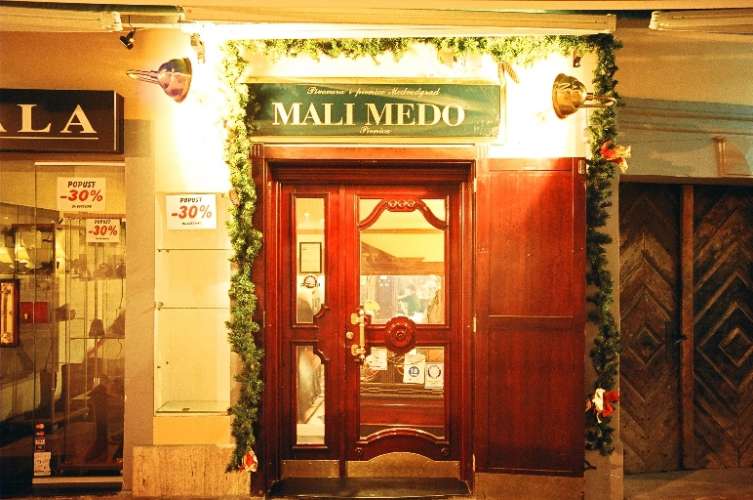
The ‘Little Bear’ is located in the centre of Zagreb’s old town and offers by far the best example of a pub around these environs. Otherwise, your options are identikit café terraces or the odd raucous rakija bar. To be honest, a night out spent solely Zagreb’s old town would be pretty bland unless you dedicated yourself to drinking shots, or visited this place.

Mali Medo acts as brewery tap for Pivovara Medvedgrad (translates as Beartown), named after an old fortress in the hills North of the city which has undergone a rather appalling renovation, but is worth seeking out for the view over the city.

The brewery, operating since 1994 precedes the craft beer craze and concocts a range of different beers – including their own attempt at Kriek – highly peculiar by Croatian standards where anything outside Euro Lager seems to be regarded as otherworldly. Their beers aren’t unpleasant but they’re some way short of the wider standard these days and a bit ‘last generation’. Nevertheless, a couple of the more traditional styles are competent enough to put away a few of, and the extra flavour and freshness will come as a relief after drinking the likes of Karlovacko everywhere else.

They operate a number of pubs, but the best of the lot is, in my opinion Mali Medo in the centre of town.

The pub itself has a typical pivnica look, dropping down off the main cobbled street to a large half-basement area with a curved ceiling, and some partitioned niches with bench seating (one of my favourite pub features) along with the typical long tables you’d expect of a central European cellar pub.  Mostly, the décor is in-keeping with inn-keeping, wooden framed artwork on the wall, and traditional furniture, a step above bland. It’s suitably cavernous in order to cram in the many hundreds of people who flock to it daily – worth a reminder at this stage that it is the number one venue slap bang in the centre of town.

This slideshow requires JavaScript.

As there is a beer terrace out front with much coming and going the atmosphere is very noisy and lively, sometimes pierced by live music performances. The upstairs area serves as a stage, with performers opening the windows to serenade people on the street. Very unusual and atmospheric. You  get the picture that this is one of the cultural hubs of the city. Be warned, if you’re after peace and quiet, this isn’t the place for you.

As with most pivnicas there is food available. Sometimes this can turn a place too much like a restaurant, but here it blends in with people turning up for a drink of beer better than some others, and as the evening progresses you can tell this is chiefly a drinking spot – good.

Considering the hustle and bustle, service is actually not too bad until it comes to the point of paying, where you almost have to grab the staff by the lapels and shove the money into their pockets. As per usual, table service slows up the whole arrangement. This is a very inefficient method when you compare it to those mega-brauhauses in Germany and Austria where a tapster and a token system means hundreds can be catered for by just a few people, or simply an English pub with a big bar where you can walk up to the bar staff and order – sort yourself out rather than relying on others to carry a glass for you. Unfortunately in Eastern Europe there appears to be an unwritten rule that one must never ever approach the person pouring the beer, or expect them to be able to operate a till.

Any place, city, town or village automatically feels enhanced by a centrally located brewery and/or its taproom, and this is certainly the effect Mali Medo has had on Zagreb old town. There is some work to do on the beers themselves, and it would be nice to see a few more pub touches, just slightly, to add character. It wouldn’t be an 8/10 unless there was some constructive criticism to encourage improvements. Aside of this, it still remains an essential, indeed desperately vital place to go for a beer in Zagreb.