Whitelock’s, Leeds

back to England

Turks Head Yard, Briggate, Leeds, LS1 6HB
  • Quality and/or choice of drinks – 8/10
  • Style and Decor – 10/10
  • Character, Atmosphere and/or Local Life – 9/10
  • Amenities, Events & Community – 7/10
  • Value for Money – 5/10
  • The Pub-Going Factor – 9/10

Amid a shower of mediocrity Whitelock’s is a beacon of preservation and tradition. You might call the place an object lesson creating a characterful pub.

Whether Leeds is serving up mediocrity in the form of cut-and-paste industrial chic craft ale venues or boring chain pubs, you only have to look at Whitelock’s to tell the difference between a here-today-gone-tomorrow fad, a Greene King IPA/Sports screen piece of gentrified nothingness and character of a sort that endures. Read the Historic England listing if you don’t believe me.

Whitelock’s itself was first founded in 1715 as The Turk’s Head, and served as a city centre mainstay in the Georgian era, although you’ll find the current state more akin to late Victorian in style, with mirrored panels, stained glass, tiled bar and tarred black wood, a strange halfway-point between the opulent and the down-to-earth.

The pub functioned as a ‘Luncheon Bar’ after being taken over by the Whitelock family in the 1880s, and in the daytime the place has much the same feel as it would have had a century ago; a bustling busy atmosphere (partly due to the compact space) with food service and drinking intermingling. Whenever you visit you always feels like you are part of a grand old tradition.

Situated down of one of Leeds many arcades off Brigate, the pub used to stretch along the length of the yard, albeit part was rarely used for years. It’s a narrow snaking venue, now effectively two bars, one of which is now a stylish cocktail and craft ale bar called The Turk’s Head in homage to the original name, but which typifies everything Whitelock’s isn’t – this may be a good or bad thing depending on your preferences. The pub can be approached from either side of the arcade, although I recommend approaching via the Trinity Centre entrance where it is hiding in plain sight surrounded by modernity. You access a quiet corridor, still called Turk’s Head Yard, which builds into rabbit-hole like escape from the noise of the street and shopping streets – it really makes you feel like you’ve been transported back in time. You will find benches outside, which can be nice to sit out on a warm evening but are not the main reason for venturing down here. Head inside and chance your arm at finding a seat – not always the easiest easy task in here.

The crowd at Whitelock’s rises and falls in swells. In the space of half an hour the scene at bar can change from a breathless tangle vying for space to calm and sedate. It’s really quite interesting to spectate.

The bar area itself is unusual and –of course– old-fashioned. Despite the pub having a low ceiling, the bar itself seems raised above the level of the pub so after pulling your pint it seems like they are lowering it down to the bar top where you are stood. The toilets are accessed via a narrow little staircase at the end of the bar, which is quirky, almost like being on a ship rather than a pub.

The best beers by far in Whitelock’s are the cask ales, as the lager offerings remain a little behind the times. You’ll find some of the classic real ales kept well on cask, along with some interesting local options. They have some forays into what are deemed ‘craft’ styles, and a sister partnership with the (in my opinion) bang average Five Points, but the guest cask ales feel far more in keeping with what the place should be about.

Although I am largely interested in a pub as a place to drink, for a change, I would like to enthuse about the food. They have put a lot of thought into how to bring the idea of Luncheon menu into the 21st century, and have largely managed it, with most dishes having an English pub heritage, and they use fresh ingredients, the majority of which are sourced from Kirkgate Market, which shows in the flavour. You pay for it, yes, but it’s well-prepared. It isn’t just a generic pub grub place, as Leeds University alumni and restaurant critic Jay Rayner remarked in his review.

It doesn’t stop there, as Whitelock’s and the Turks Head now host beer related events, annual festivals and suchlike, so you can’t go around Leeds for too long before your head is turned back to Whitelock’s.

Once you’re inside and sat down, with only the dappled light coming through the frosted glass, you can really soak up what is an extraordinary environment. With it being a typically cosy old pub, this works particularly well in autumn and winter – once holed up it won’t feel like there’s any reason to move elsewhere. Whole afternoons and evenings can come and go here supping quality pints of ales safely swaddled by its comfortable surroundings.

Whitelock’s is by far the best of the category ‘traditional pub’ in Leeds and due to its very particular preserved features and it could stake a fair claim to being one of the very best in the United Kingdom.

In the ‘40s and ‘50s Whitelocks was a haunt for artists and has been deemed characterful enough to be a subject of artistic study, as this vivid artwork demonstrates. John Betjemen, who always had a taste for the preserved, compared Whitelock’s favourably to another venerable public house, The Cheshire Cheese in London: a ‘less self-conscious’ equivalent.

I have linked to a 1968 video documentary of Leeds, ‘A Poet Goes North’ where this features. Highly recommended as a terrific watch.

In 2006 Whitelocks was awarded an overdue Civic Trust plaque for historical importance.  Therefore, if the team running Whitelock’s can deal with all this level of praise magnanimously then I assume my more modest inscription on European Bar Guide won’t alter their unabashed heads-down on-with-the-job approach. Viva Whitelock’s!

Azimut, Ć ibenik

back to Croatia

 Obala palih omladinaca 2, 22000, Ơibenik, Croatia
  • Quality and/or choice of drinks – 7/10
  • Style and Decor – 9/10
  • Character, Atmosphere and/or Local Life – 8/10
  • Amenities, Events & Community – 9/10
  • Value for Money – 7/10
  • The Pub-Going Factor – 8/10

Going out for a drink on the Dalmatian coast invariably involves choosing from a selection of Caffe Bars, which may have amusingly goofy names such as ‘TURBO’ or in one real life instance ‘KUM’, but in practise provide a nearly identical offering that defines the term Generic. After a few days anyone interested in good beer and good pubgoing will be tearing their hair out in frustration (I’m bald, so have to improvise) trying to find somewhere characterful.

Sibenik’s nightlife offerings are in the main, no different. There’s a beautiful Riva with patio furniture so you can relax by the calm seas and people watch – fine for a while. When it gets colder and darker, venturing inside becomes necessary, and it is then where the particularly poor beer selection, poor music choices and absence of interesting dĂ©cor or atmosphere starts to grate.

Azimut is Sibenik’s alternative antidote to all that, a club and live music venue of sorts, with offbeat dĂ©cor inspired by Hungarian ruin/garden bars making the most of its cellar situation nearly underneath the main square. I have recently been informed the basement used to be the town’s well/reservoir for water which explains the high ceilings very well! (Thanks to Azimut’s Facebook group for providing that information)

As with a lot of places on the Croatian coast, it doesn’t really get going until the summer, but even out of season there is a core crowd you’ll find lining the bar chatting and messing around, and a side room which is geared up for live music but also has games involved. The eventual end feel is relaxed, open, fun feeling and the sort of space you want to hang out and could make friends in.

Despite the basement situation there are tall warehouse-style ceilings which makes me wonder what the place used to be used for. However, they’ve done a good job with the dĂ©cor, with impossibly high shelves, hanging umbrellas, books and bric-a-brac making it feel homely whether it’s busy or quiet, meaning the venue is quite versatile, capable of coping with live music performances and bustling custom in summer or acting as a down to earth neighbourly bar off-peak. Perhaps their slogan ‘Find Your Way’ has this in mind.

Another good thing is Azimut’s opening hours, carrying on until the early hours of the morning, which is long after the rest of the city has gone to bed, meaning there’s no need to feel obliged to shape your evening around arbitrary time constraints.

There’s what counts for an interesting selection of beers around this end of Dalmatia, with some imported bottled English ales making an appearance, however it was short on Croatian craft beer at the time of writing – only Tomislav was available, which is tasty but too strong to spend all evening on. Again, this is a fairly low bar to pass given most places in Croatia serve 3 or 4 awful beers at most. Azimut’s prices are a few kuna more than elsewhere, but given it’s a distinct venue and slap-bang in the centre of town, that’s unsurprising.

Edit (9.7.18) I have recently been advised by the management they now stock Croatian craft beer –  happy days! Until my return the score for drinks provisionally goes up to 7/10.

Given young Croatians enjoy going out in the evening, and Sibenik is starting to attract the attention of Western tourists you would think there would be more than one venue like this, but so far the nightlife remains largely bland obsessed with creating modern aspirational lifestyle bars to create that ‘summer vibe’, but ultimately blend in to one and project mediocrity and cheapness rather than glamour.

Hanging out in Azimut is like breathing fresh air given those otherwise stale options. It’s clear that quite some imagination and bravery obviously went into creating it, and any stay in Sibenik by anyone desiring a beer and a good time in the evening must involve a visit here. As TimeOut point out, every Croatian town should have an Azimut. I’d extend that to every town full stop.

Orzo Bruno, Pisa

back to Italy

This slideshow requires JavaScript.

Via delle Case Dipinte, 6/8, 56127 Pisa PI, Italy
  • Quality and/or choice of drinks – 8/10
  • Style and Decor – 8/10
  • Character, Atmosphere and/or Local Life – 9/10
  • Amenities, Events & Community – 7/10
  • Value for Money – 7/10
  • The Pub-Going Factor – 8/10

Opinions of Pisa tend to be mixed, which is a shame as the airport provides an excellent conduit for people to explore Tuscany, but often people venture no further than the Piazza Dei Miracoli before moving on. It’s certainly true the Tuscan idyll of cypress trees, rolling hills and gently worn villas is perhaps not best demonstrated in Pisa, but that’s not to say the town is without charm, far from it.

The city centre is certainly one of those places that feels like it gets taken over by young people at night. Yes, you can sigh at the peeling plaster and graffiti in some of the classical piazzas that have become a bit grungy but there is a certain verve and energy Pisa offers in compensation for that. It’s a good night out.

Beer isn’t Italy’s strong suit, however it has belatedly begun a concerted effort to catch up. When you have a little think about why it’s suddenly taking off, it makes sense. The young seek good beer out in Italy for a few different reasons. Wine is seen as the preserve of the middle-aged and middle class, increasingly more of a drink to enjoy with food or a particular occasion or season, whereas beer is more casual.

Of course there are those looking to be a bit hip and different for which beer offers an opportunity to pose and stand out/completely conform among peers. Boiling all that down, the main appeal as I see it, is that quite honestly beer and aperitifs are a better option in a hot country over the course of a long evening. It is still the case that in Italy good beer is a bit of a novelty, but craft beer has been riding the crest of a rising wave for a few years now.

Pisa’s very best exponent of this is Orzo Bruno (a play on words with Orso meaning Bear and Orzo meaning Barley) not just a place with good beer on tap, but a really, really good pub.  In order to find Orzo Bruno you naturally find yourself wandering into the epicentre of the city’s nightlife. It’s a nice walk in, as you can feel the volume and excitement level gradually rise. You’ll find the pub and its unassuming exterior perched down a side-street, yet in the thick of the action.

Inside, it’s an informal affair with pinewood type seating falling somewhere inbetween modern and ramshackle. In the summer heat the windows and thrown open and there are tables and chairs outside. As with all great pubs, everyone looks like they’re having a good time. The best of all, it looks and feels predominantly like somewhere Pisans go themselves, with a ring of authenticity you just can’t fake.

On tap you’ll find local Italian brews for a decent price – their predilections for strong beers and German styles ensures you can purchase some strong, tasty stuff for quite a lot less than you’d expect. Wit beer, red beer, doppio malto, it’s nice to go to the heart of interesting Italian brewing styles and have a genuine isolated and authentic ‘Italian beer experience’ in what is a nice pub.

These are brewed at a co-operative brewery Il Birrificio Artigiano, an excellent idea still common in Germany where provincial beer enthusiasts have occasional use of shared premises of a scale capable of delivering decent volume. These beers are usually unpasteurised and unfiltered, which is fine because they aren’t designed to last, but to be drunk straight away! You may even find oddities such as attempts at cask conditioned bitter served by Angram hand-pumps.

There’s a little something extra on offer too, that a lot of English people won’t be used to. It’s difficult to find complimentary anything with a drink in England these days, yet in Orzo Bruno dig into a veritable platter of snacks laid out on plates in front of the bar to enjoy with you beer from 7pm onwards.

Spain and Italy are insistent that food must in nearly all cases accompany drink, which is not my view, but offers a change of speed. You may want to consider leaving some room after your evening meal to enjoy the range of snacky bites on offer. It’s a quick way of adding on further poundage on top of the calories in your beer, so don’t go over the top!

Orzo Bruno works well whether at day or night, which is typical of places of its kind that stay low key and informal. You could pop in mid-afternoon and read a book with a pint of head here at 11 in the evening with a group. It’s just an all-round good place, reinforced by the enthusiastic patronage of locals. They also do discounts between 7-8.30pm, which is much later (and therefore better) than most happy hours in England.

Wichmann’s Kocsma, Budapest

**NOW PERMANENTLY CLOSED 🙁 **

back to Hungary

 Budapest, Kazinczy u. 55, 1075 Hungary
  • Quality and/or choice of drinks – 6/10
  • Style and Decor – 8/10
  • Character, Atmosphere and/or Local Life – 8/10 
  • Amenities, Events & Community – 6/10
  • Value for Money – 9/10
  • The Pub-Going Factor –  8/10

The colour, energy and sheer distinctiveness of ruin bars should be enough to sustain any young visitor to Budapest for several visits. However, this doesn’t mean that the fundamentals of good pubs should be ignored. I broadly agree with the maxim ‘a change is as good as a rest’.

Wichmann’s Pub – an antithesis of a ruin bar – stands on the very same district as the original conception. As with a lot of these kind of places, it’s so inconspicuous that you could be halfway inside before you realised where you were. There’s no point building up something too much where the main qualities are simplicity and value.

It’s worth taking a look online before you go, because many of the pictures of the pub make it look faintly modern, partly due to the shade of the lighting and texture of the wood. When you arrive you’ll realise that it’s rather more traditional and worn with age.

From the street it is fairly inconspicuous, you’ll see only a golden glow of light from the exterior, through patterned tinted glass windows. Quite old-fashioned. Wichmann is one of the last original, authentic Budapest bars from before the fall of the Iron Curtain, before tourism, before capitalism, before AirBnb.

What you’ll discover inside is one of the most no-bullshit pubs in the city. Cast your eyes around its ever-ageing wooden edifice, nice vaulted beams towards the back of the room and a small bar where a venerable and portly man (presumably Wichmann himself) serves you the beer.

This slideshow requires JavaScript.

Everything about the beer ordering, serving and presentation (or lack of it) is so many fathoms short of façade and showyness it’s endearing and actually, downright hilarious. However, dig beneath the service and you’ll find many a punter going into raptures about the service and the place in general. According to WeLoveBudapest, if you’re offered a shot of palinka, it is deemed the height of rudeness to decline. There you go – you have been warned!

Wichmann’s pub is owned by a famous Hungarian Olympian TamĂĄs Wichmann, with 3 medals in canoeing, famous enough to supplant the place’s previous name ‘St. Jupat’. Wichmann himself was bequeathed the pub for his achievements instead of a pension, by virtue of how the old system was arranged for retired sportspeople.

As you’d want, demand and expect, a place like this is good value, and one of the few non-generic pubs in the district where the prospect of a good beer for a quid remains  feasible. Here you can choose between a bottle of Pilsner Urquell or a German-style, Budapest-brewed Brandecker on tap for that price – not bad at all.

After service it’s really all about the drink and the chat. The more friends the merrier. It’s one of those places that needs a few groups to drum up a merry atmosphere, that without music and conversation can be absent, but when its are kicking off, it feels like you wouldn’t want to be anywhere else. That cosy glow of wood and old lights makes you feel right at home. It’s also nice to be among a mixed crowd of different generations, rather than the exclusively under-30 crowds of most ruin bars.

You will find a small snack menu, serving only the most basic food so rudimentary as to be impossible to cook badly, all focused towards your desiring of further drinks. Meat sandwiches, schnitzel, along with chilli beans on a Thursday.

The opening hours are pleasingly traditional: 6.15pm onwards, closed all day Sunday, and yet open until 2 in the morning all other nights. A nice illustration of the mass of contradictions going on. It’s a late bar that opens when it wants to.

You’ll find it difficult to wrench yourself away from the ruin pubs but honestly, give this place a go if you fancy a calmer, more authentic Budapest pub experience. Beneath all the glitz and frantic excitement it’s nice to drill down and spend some time among locals grumbling away and propping up the bar. This is a last bastion sticking two fingers up to gentrification, and all the better for it.

Unfortunately – and this is the sad part – it appears time is running out, and the old man is due to retire at the age of 70. Wichmann‘s will remain open this summer 2018 before closing its doors for good. It seems central Pest has no remaining call for a down to earth cheap hangout pub. It’s your last chance to be part of a wonderful tradition, as the district will never be the same again. 1987-2018 


The Blake Hotel, Sheffield

back to England


This slideshow requires JavaScript.

53 Blake St, Sheffield S6 3JQ
  • Quality and/or choice of drinks – 8/10
  • Style and Decor – 8/10
  • Character, Atmosphere and/or Local Life – 9/10 
  • Amenities, Events & Community – 7/10
  • Value for Money – 9/10
  • The Pub-Going Factor –  9/10

Be prepared for a climb up to this pub unless you’re approaching the pub from Crookesmoor (in which case you may have had a different climb of your own). Blake Street is steep enough there are handrails for assistance, which given Sheffield’s propensity to snow up on the hilltops, is probably a legal obligation of some sort. Your reward is on the corner at the top of the street, and during your ascent you’ll see the Blake Hotel sign sticking out on the corner, looming ever nearer, the proverbial dangling carrot.

Although the journey is more arduous than most pub visits, you will struggle to find a better reviewed drinking hole, even in Sheffield, a city packed full of brilliant pubs. The glowing reviews from the public are well-founded, as The Blake Hotel is a classic example of a neighbourhood pub designed and run by people who know what they’re doing. Resurrected from its boarded-up state in 2009, the cellar dug out, foundation  and floor replaced, this end terrace boozer is alive again and rewarded with a stream of loyal custom.

The recipe for success is so simple and pleasingly disinterested in all things gentrified. This is the case with the family of pubs in Sheffield run by James Birkett, including ,among others, the Wellington at Shalesmoor and Sheaf View in Heeley, the former I haven’t yet visited, the latter of which I highly recommend.

While The Blake Hotel may be in all respects a traditional pub, don’t expect it to be crowded with horse brasses or tarred black. Nor – while it has a history – is it obsessed with and trading off its own mythology. The dĂ©cor is kept tastefully low-key and lounge-like, retaining a homely neighbourly pub feel and having an instantly appealing atmosphere upon entering the place.

The lounge room in the Blake – to your left – follows that reliable template of of dark green wallpaper, mid-brown furniture, cream walls and ceiling. There are a few large picture frames and the odd pot here and there to remind you you’re in a pub, lending it a hint of the pastoral/domestic. There is further seating opposite the bar and tucked up a couple of steps to the right, in comfortable down-to-earth surroundings. You may find a few board games to help you pass the time if you see fit. It’s what such a place should be, a living room with a bar attached.

The bar area is compact but with the aid of some partitions they have crowbarred some leaning space and put in a few bar stools which are pleasant enough to gather round.

The drinks offerings remain very good value at the time of writing. You’ll find several cask ales for sale well under ÂŁ3.00 a pint – partly down to a connection with local Neepsend Brewery. There is plenty else to go at if that isn’t your thing – including some harder to find European lagers – though take a look behind the bar at the decent whisky selection which should turn a few heads.

Once you’re sorted for a drink have a sit down and a chat in the comfortable environment of the Blake. There won’t be any music playing or games machines whirring away, just the background hubbub of a friendly crowd, the classic sound of a harmonious pub, people having a laugh and a good time. Even their pub quiz has a rather old-school stentorian format: no microphone, just a man shouting 20 questions in fairly quick order.

The Blake will always remain a neighbourly, low-key place, so it’s for locals and those in-the-know. Staff and the customers seem to be all part of the same machine, with some local characters milling about, and a nice blend of different people who all seem to appreciate the surroundings.

It’s truly amusing to think of the lengths the likes of Greene King go to to attract as many demographics by making their pubs as bland and cookie-cutter generic as possible. Focus groups, marketing managers, surveyors, master craftsmen
 when this alternative is so simple and effective. It never really died.

Blake is the kind of pub that has been boarded up/converted across the country – indeed for a short while it remained closed, possibly for good. You never know when the wind will change direction and threaten the Blake’s existence once again, so all the more reason for you to visit and pass the flame on.

The Blake Hotel does nearly all the important things really well. When it’s your turn to visit perhaps take a few photos or a video, send them on to the head offices of the various huge pubcos attaching a small note simply stating ‘Now this is a Pub.’

Edit: (14/06/18) I’ve been reliably informed the Blake’s beer garden is a nice spot with  views over the Don Valley. Unsurprising given it’s at the top of the hill.

Pivnica Mali Medo, Zagreb

back to Croatia

Tkalčićeva 36 Street, 10000, Zagreb, Croatia

  • Quality and/or choice of drinks –7/10
  • Style and Decor – 8/10
  • Character, Atmosphere and/or Local Life – 9/10 
  • Amenities, Events & Community – 7/10
  • Value for Money – 7/10
  • The Pub-Going Factor –  8/10

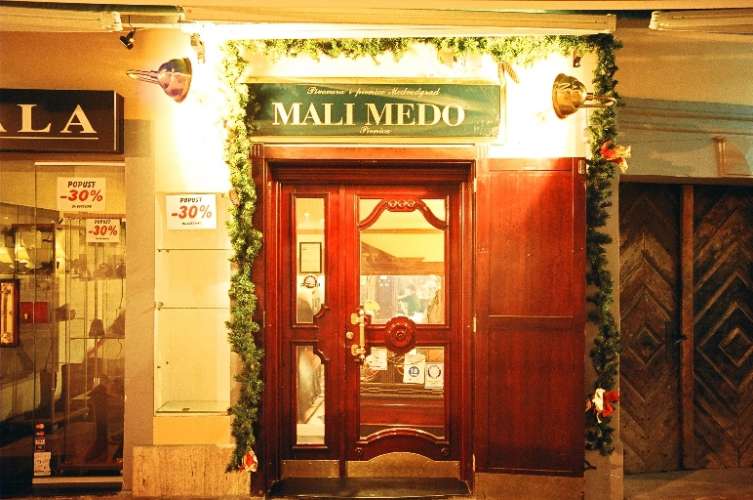
The ‘Little Bear’ is located in the centre of Zagreb’s old town and offers by far the best example of a pub around these environs. Otherwise, your options are identikit cafĂ© terraces or the odd raucous rakija bar. To be honest, a night out spent solely Zagreb’s old town would be pretty bland unless you dedicated yourself to drinking shots, or visited this place.

Mali Medo acts as brewery tap for Pivovara Medvedgrad (translates as Beartown), named after an old fortress in the hills North of the city which has undergone a rather appalling renovation, but is worth seeking out for the view over the city.

The brewery, operating since 1994 precedes the craft beer craze and concocts a range of different beers – including their own attempt at Kriek – highly peculiar by Croatian standards where anything outside Euro Lager seems to be regarded as otherworldly. Their beers aren’t unpleasant but they’re some way short of the wider standard these days and a bit ‘last generation’. Nevertheless, a couple of the more traditional styles are competent enough to put away a few of, and the extra flavour and freshness will come as a relief after drinking the likes of Karlovacko everywhere else.

They operate a number of pubs, but the best of the lot is, in my opinion Mali Medo in the centre of town.

The pub itself has a typical pivnica look, dropping down off the main cobbled street to a large half-basement area with a curved ceiling, and some partitioned niches with bench seating (one of my favourite pub features) along with the typical long tables you’d expect of a central European cellar pub.  Mostly, the dĂ©cor is in-keeping with inn-keeping, wooden framed artwork on the wall, and traditional furniture, a step above bland. It’s suitably cavernous in order to cram in the many hundreds of people who flock to it daily – worth a reminder at this stage that it is the number one venue slap bang in the centre of town.

This slideshow requires JavaScript.

As there is a beer terrace out front with much coming and going the atmosphere is very noisy and lively, sometimes pierced by live music performances. The upstairs area serves as a stage, with performers opening the windows to serenade people on the street. Very unusual and atmospheric. You  get the picture that this is one of the cultural hubs of the city. Be warned, if you’re after peace and quiet, this isn’t the place for you.

As with most pivnicas there is food available. Sometimes this can turn a place too much like a restaurant, but here it blends in with people turning up for a drink of beer better than some others, and as the evening progresses you can tell this is chiefly a drinking spot – good.

Considering the hustle and bustle, service is actually not too bad until it comes to the point of paying, where you almost have to grab the staff by the lapels and shove the money into their pockets. As per usual, table service slows up the whole arrangement. This is a very inefficient method when you compare it to those mega-brauhauses in Germany and Austria where a tapster and a token system means hundreds can be catered for by just a few people, or simply an English pub with a big bar where you can walk up to the bar staff and order – sort yourself out rather than relying on others to carry a glass for you. Unfortunately in Eastern Europe there appears to be an unwritten rule that one must never ever approach the person pouring the beer, or expect them to be able to operate a till.

Any place, city, town or village automatically feels enhanced by a centrally located brewery and/or its taproom, and this is certainly the effect Mali Medo has had on Zagreb old town. There is some work to do on the beers themselves, and it would be nice to see a few more pub touches, just slightly, to add character. It wouldn’t be an 8/10 unless there was some constructive criticism to encourage improvements. Aside of this, it still remains an essential, indeed desperately vital place to go for a beer in Zagreb.

U Jelinku, Prague

back to Czechia

Address: CharvĂĄtova 33/1, 110 00 NovĂ© Město, Czechia
Nearest Square: Jungmannovo náměstí
Nearest Metro Stop: Národní tƙída on the B-line
Hours: 11:00 – 23:00, Saturday until 18:00, Sunday Closed
Reservations: +420 224 948 486
  • Quality and/or choice of drinks –9/10
  • Style and Decor – 9/10 
  • Character, Atmosphere and/or Local Life – 9/10 
  • Amenities, Events & Community – 6/10
  • Value for Money – 7/10
  • The Pub-Going Factor –  9/10

Even those of us committed to pub-going find it daunting (though enjoyable) to explore Prague’s enormous pub scene. Tearing oneself away from the high quality known favourites such as U Hrocha or U Cerneho Vola is difficult enough in itself; given a holiday may last only a few days, you could be forgiven for sticking to the known favourites.

However, several visits in, I am starting to chip away at the available drinking holes the city and can strongly recommend doing so for the many gems that exist outside of the most touristic areas.

However, Jelinkova Plzenska Pivnice or U Jelinku’ as it is more colloquially known, was a bit of a blot on my copybook, a core old town pub I had known about since 2007 recommended in Prague Pubs as being an authentic Pilsner Urquell pub in the heart of the old town, but never visited.

By rights I ought to have paid a visit in the early days, but for one reason or another, things got in the way. This is partly down to the unconventional opening hours, quirkily being open only until 6pm on a Saturday and being closed altogether on a Sunday! Though inconvenient, it gives you a flavour already that this is a pub doing whatever it wants, to hell with the consequences.

Finally, after multiple occasions I ensured I paid a visit in December last year. Firstly, as with all the best Pilsner Urquell pubs, it is virtually impossible to leave after a single pint, the devil on your shoulder always telling you to go for one more, combined with the Czech habit of inviting you to have another the moment they spy you getting to the end of your glass.

Jelinku is a tiny pub and so when you visit don’t be surprised to find standing room only, if that. As you walk in you’ll find a square wood-panelled bar area and walls sparsely decorated with some classic Pilsner Urquell ephemera from decades past. There is an old fashioned open bar area with a sink where the tapster Bohumil Kundrt does his work.

It’s all about having a beer na stojaka, ‘on the stand’, so you greet the tapster, order the inevitable number of beers required, pay straight up (unusual for a Czech pub) and take your beer for a lean with your mates. Simplicity defined.

This slideshow requires JavaScript.

It seems to be a family operation, and the main tapster’s appearance is appropriately a caricature of a pre-war central European maestro, a rotund, smartly-dressed fellow of borderline retirement age with white hair and a majestic and comically-curled moustache, helping transport you back in time to the good old days of Bohemia, which is very much where this pub would rather exist.

The site has been a pub since 1918, with the Pilsner Urquell contract drawn up 8 years later, remaining ever since.

One of the recurring features of these throwback places is treating tourists with a tolerance rather than an open arms embrace. If you can stand some-good natured jesting and accept you are in the domain of the tapster and his stamgasty, who are perched by the bar having a chat and a joke, you’re assured of a good time nevertheless.

Many of the regulars use their visit for conversation, so you may find one or two chirping up in English to get a conversation going. This is one of the hallmarks of a great pub and it is this unique environment, almost forcing people together at the bar area to drink and talk which acts as the ice-breaker, so vital for a sole travellers in a foreign country.

The Pilsner Urquell is as good as you’ll find it anywhere, and you may find the format of standing results in you drinking more of the stuff than usual – that and the nerves, I guess. At 46 crowns for a pint, it’s on the high side of pubs still catering for locals rather than tourists, but if I told you that equates to ÂŁ1.50 a pint I’m sure you won’t quibble! Don’t even bother asking what else is on to drink, as there isn’t anything. You’re on Pilsner or spirits – that’s it.

There is a room around the back which receives table service (it will either be the rakishly thin lady or the more comely lady of the house who is in attendance). Access to these tables can depend on reservations and at a loss of that, good luck. Though I haven’t yet had the pleasure, it looks a truly pleasant place to be with seating facing in around the room creating that feel of conviviality you’re searching for when you try pubs like this. The format is simple and effective. Why do so many other places make genius loci seem like alchemy?

Though Prague is currently experiencing a wave in characterless craft beer bars, and has an almost bottomless trunk full of cheap but featureless macro-brewery branded drinking holes, you can’t walk far before a true pub hoves into view. The real job, as I’ve been finding, is being able to sort the wheat from the chaff, and knowing when is the best time to be there.

Jelinkova deserves a high score because it is so different from the usual, it rewards perseverance and the best time to be there is simple: when it’s open. If you’re up for a good time, not a long time, the pub is right up there as the best in the city.

The Dawson Lounge, Dublin

back to Republic of Ireland

25 Dawson St, Dublin 2, Ireland
  • Quality and/or choice of drinks –7/10
  • Style and Decor – 9/10 
  • Character, Atmosphere and/or Local Life – 10/10 
  • Amenities, Events & Community – 6/10
  • Value for Money – 5/10
  • The Pub-Going Factor –  9/10

One common feature of pubs claiming to be the ‘longest’, ‘smallest’, ‘oldest’ etc, is the tendency for them to be over-visited tired old shite, but something about dimensions and longevity appeal nonetheless. Perhaps it’s the old saying that variety is the spice of life?

The Dawson Lounge trades on being on the small side – which is to understate it – in fact, I’ve seen snugs with more wriggle room than this place. From the promotional literature and signage you’d be thinking to steer well clear, what with the Carlsberg insignia and cartoon suggesting a descending of louts to the place. This impression is further emphasised when contrasting the alternative establishments on Dawson Street which are very much upscale and upmarket, leaving this looking like a pimple on an otherwise pristine visage. At least from the outside.

Relievingly, appearances are deceiving – so don’t be deterred. With only a doorway as an entrance, you could be forgiven for walking straight past. Perhaps that, along with the tacky branding has some effect on maintaining the capacity inside so it doesn’t get too overblown the whole time.

As you open the door you’ll immediately step down into what feels like a bunker directly below street level. To give you an example of the proximity – if you approached the place from St. Stephen’s green and walked over the glass window insets on the street you’ll have been standing only centimetres away from someone’s head as they were positioned at the urinal. Interesting thought, eh? If you don’t believe me take a look directly above when you go to take a leak.

The creators of the pub have shown attention to detail in regards to the cramped space, as they’ve installed a leather cushion on the ceiling of the toilet cubicle so patrons don’t bang their heads on the wall!

Ron, pictured in the video above is the typical image of a Dublin publican, white-haired, broad-bodied and smartly dressed, the type of chap you’ll see asking for your order and offering good craic to the barflies all across the city.

The pub itself is merely a standing area directly ahead, and a seated area on your right, in front of the bar. Other than the ladies and gents, that’s your lot. With a low ceiling, wood-panels and framed artwork it’s like any other pub in that sense, but once that door closes behind you there’s no sense of claustrophobia, only the snug intimate feeling you’re hoping to get out of a visit. The carpets and dĂ©cor help provide comfort rather than a feeling of being choked.

The guests are a mixture of local folk and tourists, but certainly no more touristy than this area of Dublin generally, and you may find a few locals bursting out into song later on at night if the mood takes them.

The main issue, as you’d expect from a pub with a capacity of 40 which has one row of seats and about 8 stools, is of obtaining seating room. The usual solution is to get there at opening time, although if you have bigger fish to fry and are inhabited of a little patience, wait a while and a stool or a position on the leather seats will become available.

It’s quite good all the same to choose a leaning post and a shelf – of which there are plenty – including a bespoke 30cm job above the bins by the bar – every inch of space is utilised.

Drinks-wise, expect the standard fare for Dublin, Guinness and much of the usual Guinness-owned alternatives, at a price neither exceptionally good nor terrible. It must be said the beer was very well kept when we visited and the temptation for a second pint proved irresistible, as I’m sure it will be for you.

What makes the pub stand out is it quirky, unique layout and intimacy – though there are more facets to it than that which all help make a truly outstanding experience.

Been there? Want to go there? Drop us a line!

El Bosc De Les Fades, Barcelona

back to Spain

Passatge de la Banca, 7, 08002 Barcelona, Spain
  • Quality and/or choice of drinks –7/10
  • Style and Decor – 10/10 
  • Character, Atmosphere and/or Local Life – 9/10 
  • Amenities, Events & Community – 7/10
  • Value for Money – 6/10
  • The Pub-Going Factor –  9/10

Translating to The Forest of the Fairies, this high concept bar is set down an alley entrance to a Wax Museum, and although it is listed as secret (how secret can a bar with over 1000 Google reviews really be?) you’ll find it signposted clearly enough on an arch set off La Rambla.

El Bosc definitely ranks highly for oddness – it is one of those special bars decorated with such care and attention that you can turn your head in any direction and see something new. The main area is quite a sight to behold when you enter in, with tree trunks shooting up and branches crawling along the ceiling to create an enclosed forested feel. Fairy lights make a prominent, predictable appearance, but it’s tastefully done. The central room is largely cleared of furniture to allow more people to congregate. As you’d expect with this dĂ©cor and this location – it’s a popular spot, both with tourists and locals. No surprise – there’s nowhere else like it after all.

Luckily, there are plenty of other places in the bar to wander to, should you find the going a little bit congested. You will find a small area similar to a snug in a traditional pub (rather unexpected in such a place), a completely different back room with origami beetles in the window, a medieval style rocking bed to sit on, a table held forward by a toy soldier. Then another room, where suddenly the bar turns into a lush upholstered Victorian bedroom with pretty white furniture and billowing curtains – presumably the fairy’s bedroom? Who even knows anymore?! Then, follow through a corridor with huge machine like cogs on the wall and lampshades that look like bats, and a wall covered in backlit butterflies. I wasn’t high or anything, I can assure you. Wherever you turn, something new.

This slideshow requires JavaScript.

The beers are the usual limited Spanish arrangement, and aren’t especially cheap (it’s La Rambla, so no surprise). Probably your best option is Voll-Damm, a double pilsner with just enough flavour and just clean-tasting enough to be inoffensive. But hey, at least it’s not Fosters. Voll-Damm services the visit well enough. Grab a bottle and get wandering down.

I visited El Bosc with my partner and we both felt the bar strikes a good tone, not too masculine or too twee, but occasionally fanciful and macabre, likely to appeal to both sexes and anything in between. It’s also pretty cosy if you get the right seat.

If you ever fancied combining a night out with the aesthetics of A Midsummer Night’s Dream this is your chance. No, this place doesn’t quite have have the raw power of an alternative bar, indeed it’s been lavished with money and attention to the extent it moves past a ruin-bar feel and there are some areas that verge on anodyne, but it’s so unusual, outstanding in its distinctiveness, so well-done in its execution, you can hardly walk past it without popping in for a drink and a nosey around. With any luck you’ll get a spot on the swing!

Although we always love obtuse and obscure selections on European Bar Guide, when the mainstream knuckles down and devotes some effort into making something fabulous, it can be well worth your time and attention. El Bosc goes way past the call of duty, pushing beyond the normal boundaries and expectations. When you leave, or perhaps even during your stay you may find yourself reassessing the question – what actually is a bar?


Yarborough Hunt, Brigg

back to England

49 Bridge St, Brigg DN20 8NS
  • Quality and/or choice of drinks –8/10
  • Style and Decor – 8/10
  • Character, Atmosphere and/or Local Life – 9/10
  • Amenities, Events & Community – 7/10
  • Value for Money – 6/10
  • The Pub-Going Factor –  8/10

Some of you may have been wondering when I’m going to profile an English pub, so I’m pleased to keep you in suspense no longer. After all, England is going to feature heavily on this website one way or another given the quality and sheer number of good pubs (regardless of whether that number is going up or down) and given it’s where I happen to live, making these places much more accessible than, for example, the bar scene over in Belarus.

Brigg is a typical Lincolnshire market town, yet crowded with more pubs than you’d think would be viable for a place of its size. A 5 minute walk through its small centre will take you past a dozen pubs, each of which manage to remain open despite the recent appearance of a Wetherspoons and the ominous threat to local trade that represents.

My favourite in town by some distance is the Yarborough Hunt, based on a small back street over the river Ancholme, which until very recently had three pubs within a stone’s throw of each other, making for one of the easier pub crawls out there! There’s a bridge and a picturesque stretch of river lined with willow trees, often with a family of swans terrorising anyone trying to use the water for barging, rowing etc.

The pub building is one of those typical venerable townhouses you find across the East of England with weathered brickwork and an architectural style calling up stereotypes of rural life in the 18th Century.

While the buildings themselves go back a long way, the pub itself is a relatively new venture from 2003, making use of the old ‘Sargeant Brewery’ buildings and carefully designing a bar and pub rooms into the ground floor in a traditional rustic style.

This slideshow requires JavaScript.

“The Yarbrough” manages to be a country pub in a slightly different way to some, with some touches which give the place a preserved character, and eschewing a lot of modern pub features – music, cooked food and fruit machines for a start. The main sound you’ll hear is the chatter of conversation and perhaps the occasional dog barking. The sense of calm is often missing from pubs these days whereas there are times, especially during the afternoon, when that’s precisely what you want.

This place isn’t ‘Inn’ by any stretch, it isn’t large or homely enough for that. It’s a workmanlike barn type pub, and before you think I intend that as a criticism, I don’t! I mean that in a very good way.

You will notice the exposed beams and tiled floor when you walk in. Take a few steps to your left to enter the bar area where the ceiling has been removed to expose the rafters which gives it a characterful feel. The central area of the pub is mainly tiled but there are comfortable carpeted areas in the sides rooms to your left and right with huge sturdy wooden bench seats.

Almost a pre-requisite, the fire is kept going for months on end which adds a warm cosy feel to the otherwise upright sturdy main pub area.

Despite being a pub, the place does more like cafĂ©-style trade during the day, as young families, old fogies and retirees potter down here to drink coffee and read the paper. However, there are some reliable intransigents propping up the bar drinking cask ale, and when you look at the range of options it’s clear these chaps have the right idea over everyone else.

Rather unusually, the Yarborough has a multitap keg ale panel behind the bar in addition to several cask pumps in front. It’s a curiosity in an otherwise old fashioned place, but the joy is that there are several unusual beers to try. Unfortunately they have ceased to do the line of beer from Brauhaus Riegele which is a great shame as that is barely available anywhere in the UK, and knocks a point off, but the range still extends beyond what you’d expect for the place. Without the specialist beers on offer you’d still be right at home with a pint of thick brown cask bitter, kept as well as you would hope and expect.

On Saturdays the pub often plays host to friendly away fans travelling to football matches in Lincoln, Grimsby, Scunthorpe and the pace certainly livelies up a touch when they arrive. The Ancholme can be good for rowing and often rowers head over for a pint after their exertions.

During the evening the Yarborough escapes first gear, with a different crowd gathering and a hubbub developing. I would recommend sitting towards the end of the bar area for the most atmosphere as the fairy lights around the beams and general ambience around the bar is pleasant and jovial. The high ceiling in the main room betrays what is otherwise a ‘nook-and-cranny’ type pub.

They have made some strange design decisions in some of the smaller side rooms which are wholly regrettable and not in keeping with inn-keeping (bdum tish), but hopefully soon someone will see sense and consolidate the whole pub back to its core and stop trying to use it as a canvas for dodgy amateur interior design.

The same extends to the beer garden where they have seen fit to create heated beach huts, presumably to try and keep smokers satisfied. Odd to say the least.

There were also some wranglings in the last few years with the owner Tom Woods whose brewery’s mediocre ales (in my opinion) were being outsold, unsurprisingly, by the other, superior options. It seems that this has now been resolved by moving on from that connection altogether. I’m pleased to say on each of my visits in 2018 there has been a wide range of cask and keg is on offer.

However, despite the usual provincial quirks that stop the Yarborough reaching its potential, the pub is managed by Lucy, a very enterprising woman and a core of committed employees that are clearly proud and determined to keep the pub in good shape. This shows in nearly everything the pub does, and despite the healthy competition for bums on seats in Brigg, they enjoy committed repeat custom, quite rightly, and the strongest reputation as the reviews on Google will attest to.

You’ll find the staff up front and welcoming; it’s one of those places where groups of people know each other very well. The essence of being there is the simplicity and the ritual a social tradition untouched by centuries, which is the genius loci of this place. Given that’s the case, I’d strongly advise them to concentrate on preserving that and trying not to turn it into something it isn’t.

I have no hesitation in recommending paying a visit if you’re anywhere near Brigg.