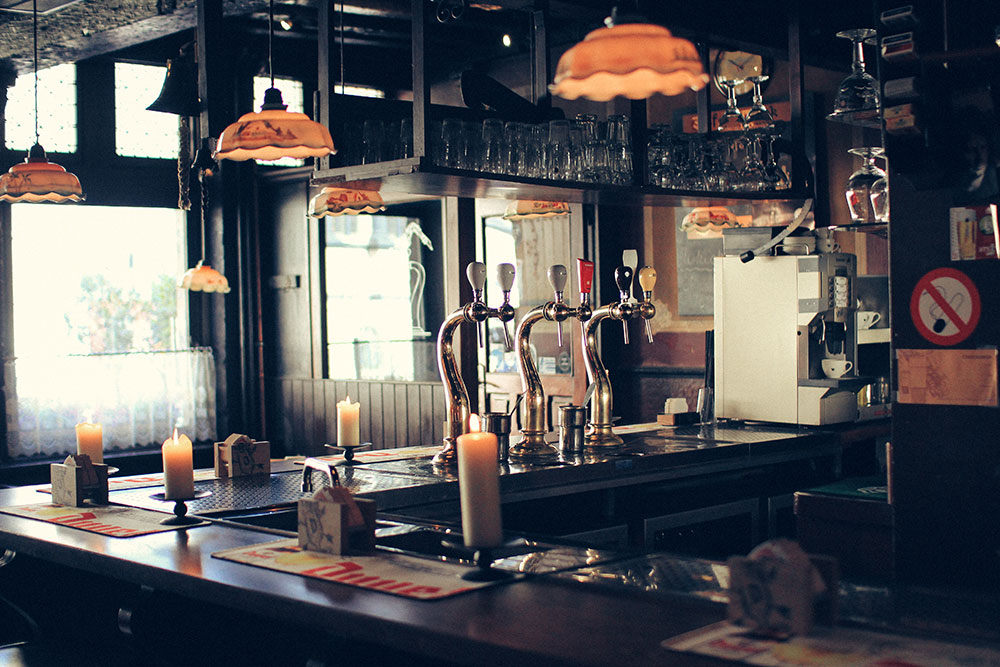
Café Vlissinghe, Brugge

back to Belgium

Blekersstraat 2, 8000 Brugge, Belgium
  • Quality and/or choice of drinks –8/10
  • Style and Decor – 10/10
  • Character, Atmosphere and/or Local Life – 10/10
  • Amenities, Events & Community – 8/10
  • Value for Money – 6/10
  • The Pub-Going Factor –  10/10

Every town deserves at least one historic place in which nothing ever seems to change. Being able to link aspects of our own lives to the past (as futile as that endeavour may seem at times) helps to provide our own existence with a sense of place and purpose, in the knowledge that we have retained and respected at least some things of value along the way, and by frequenting these places we contribute to their survival.

Café Vlissinghe takes this idea and extends it beyond all usual historical parameters, and the news gets better still – it’s a pub! Even in Brugge, a place not short of preserved architecture and institutions, it can reasonably claim to be one of the most evocative links to their past, the business traceable for centuries and thankfully keen to preserve the format for centuries to come. Once you have a good thing you don’t easily let that go.

The earliest record of the pub dates back to 1515, extraordinary in and of itself and it claims to have been running continuously from then until the present. This earns Vlissinghe a place on the list of oldest companies in the world. The look of the place may be redolent of a late Medieval inn, however it appears some of the appearance was lovingly and coherently retrofitted in the mid-1800s (an era steeped in fascination and nostalgia for all things Medieval), with the installation of contemporaneous artworks and paintings and furniture that are consistent with the period. It’s all very brown, black, tarred, burnt caramel and crusty textures. Precisely the sort of thing you want with an old pub.

Vlissinghe is located mercifully outside of the main tourist drag, down a typical Brugge alley: cobbled street, whitewashed walls, ancient brickwork, and a bicycle propped up outside that’s so old you wonder whether it’s become an ornament (until a man in a flat cap emerges from the door, tucks his newspaper under his coat and rides off on it). It must be no more than 50 metres long, but the amble down the lane, with the pub entrance coming closer with your every stride has become somewhat of a ritual for me, just long enough to build a sense of anticipation for what’s to come…

Vlissinghe’s gothic lettering is painted above the entrance, so dive straight in and turn left and head down a long corridor entrance with a series of side rooms. This may lead you to believe it is a large venue, but the pub itself is really just a central room, up a couple of steps at the end. You will note it is appointed with large, sturdy, venerable furniture, cushioned with studded leather upholstery, warped floorboards that creak underfoot, faded oil paintings hung on the wall which you have to swivel to and fro between the sheen of the lighting to properly discern, and an impressive and unusual centrepiece: a cast iron steam heater kicking out warmth into the room, most welcome on those days when the cold is piercing and the wind is rushing down the North Sea through the canals and arteries off Zeebrugge.

This slideshow requires JavaScript.

There is a pub dog, for good measure who is unobtrusive and content with its existence, pottering around, sniffing and having naps.

The main room overlooks a garden and terrace area used as a bowling green in the summer and has outhouse toilets, which gives the place a friendly and ad hoc feel. These toilets are modern, which I will concede is the one part of a pub which should keep up with the times (though, rather incongruously, they also ‘have’ an APP!)

The kitchen is in an adjoining building and focuses on winter fuel – soups, toasties, meat and cheese platters, miscellaneous bar snacks, which are all done Belgian-style, reliably homespun, the purpose being to warm you up and soak up the drinking. Service is friendly (occasionally disorganised and a little slow, which comes with the territory) and the prices are par for the course, with a few cheaper options.

Nevertheless, there are other things going on here than a pocket sized ethnographic museum, Café Vlissinghe stocks a local beer, the delicious tripel Fort Lapin brewed in a garage five minutes up the road by a new brewer. As this is part-fermented in the bottle and unfiltered, as you pour in the last part of the bottle you will note the colour change from bright amber to a cloudy, yeasty colour! Even with this beer choice, you get the sense of sentimentality and heritage at wanting to promote a city project, even with the hundreds of other Belgian beers they could have chosen to sell. The total range of beers available is modest (most Belgian cafés feel obliged to offer at least 60 bottles and 8-10 taps these days, which does showcase their extraordinary brewing very well, but is often unnecessary) but it is well chosen, with at least one of each main style, and with local options.

The main appeal of frequenting Vlissinghe is the sheer sense of relaxation. Whether it is 11.30 in the morning or last thing at night, I doubt anything about the feel of the pub changes hugely. Hunker down for an afternoon of supremely enjoyable beer drinking, hearty soups and toast, or head down in the evening and sit amongst the throng, frozen- in-time but warmed through with merriment and the satisfaction of your own quiet contribution to keeping the whole thing going. Cheers!

Libertina, Dubrovnik

back to Croatia

Zlatarska ul. 3, 20000, Dubrovnik, Croatia
  • Quality and/or choice of drinks – 6/10
  • Style and Decor – 9/10
  • Character, Atmosphere and/or Local Life – 8/10
  • Amenities, Events & Community – 6/10
  • Value for Money – 7/10
  • The Pub-Going Factor –  8/10

Dubrovnik has done a pretty good job of evicting all traces of local life from its historic old town to make way for a touristic theme park. Apartments once owned and lived in by locals are now rented out to Western travellers gorging themselves on the feast of Instagram-worthy shots of the city walls and fulfilling such enthralling bucket-list items as the Game Of Thrones tour, as though the place itself only ever existed so it would eventually serve as the set of a TV show, then after, a museum dedicated to it.

The locals long since packed up and headed for the suburbs, set in sprawling hills outside of town where an entirely different economy operates. During my research, I didn’t find any diamonds in the rough bar-wise out there either, leaving the treacherous prospect of being stuck trying to find a decent down to earth pub in an old town where fairness and modesty are an endangered species. This was a challenge undertaken in 2015 by Guardian writer David Farley, and now, armed with his findings, I was to take on the challenge in 2017.

As you may expect, going for a night out slap bang within the city walls can be an expensive business and not a particularly enthralling one, with characterless generic bars (many of which are focused on wine) and an early call for bed time, leaving a sleepy, slovenly and fairly unexciting atmosphere to it in general – with the usual blight of being shrouded in cigarette smoke for good measure. You won’t find many local haunts anywhere within the old town proper and finding even a simple crap lager for less than £3 is close to impossible.

You may read blogs telling you how Dubrovnik being expensive is a myth, but rest assured – it isn’t – their rather clueless middle class claims are redundant.  The old town is far smaller than the likes of Venice and every square inch of it has been ruthlessly priced in the knowledge of a baying, wealthy and pliant audience. Following any recommendations on these blogs, particularly in terms of restaurants will lead you to places that sink in quality dramatically in the search for what are ultimately meagre savings. If you’re in an expensive place, you may as well enjoy yourself.

Libertina is hardly a shining example of good value or good beer either (you may be wondering at this point where the good stuff is going to start) but fortunately it executes the main thing our page exists to champion – it’s a really good, honest and atmospheric pub.

This slideshow requires JavaScript.

You’ll find Libertina stuck at the end of the uphill stretch of alleys at the north end of the old town, a slightly less visited corner, and one you might miss out on altogether unless you were determined to eat your way through every single street in Dubrovnik’s grid-pattern old town like a demented Pacman.

There’s an arched doorway and upon entry you’ll encounter a pleasant and homely semi-circular bar area patrolled by a kindly simple chap by the name ‘Luci’, who is also the owner. Luci has quite the story to tell – he was a member of the apparently renowned Troubadours of Dubrovnik, the Yugoslavian entry to the 1968 Eurovision song contest where they took 7th place. The group toured Europe and Great Britain and Luci claims their medieval style outfits where the inspiration for the movie “Robin Hood – Men in Tights”. So there you go.

The shape of the pub invites communal drinking and you’ll quietly sing Hallelujah to yourself in relief as you can escape the corporate drudgery and enjoy the environment of a true pub, something not just Dubrovnik, but Croatia in general sorely lacks.

It appears Libertina has further nostalgic reason for its continued existence, being a popular meeting place during the war when the city was under siege. When you look at its location it really does have the kind of snug close-knit feel you can imagine banding people together – that’s something special.

The place is decorated with an appropriately nautical theme, not overstated but enough to give it a traditional and faintly rustic style. Libertina certainly isn’t interested in attracting the seen and be-seen crowd, and outside of the height of summer you’ll find the place largely filled with locals, which is a delight as a trip to Dubrovnik usually involves only interacting in a service capacity – predominantly them standing at the front of restaurants trying to get your attention and you telling them to get lost.

Please note that inside Libertina there is a prime spot to sit, on a raised seating area at the back of the room. It’s cushioned, cosy and snug, and has a great view of the pub proceedings without ever feeling detached from the action. If you grab that seat, you’re all set for the evening.

Paying western prices for 0.5l of the decidedly ropey beer Ozujsko will burn your wallet, and in a more subtle way, your soul, but it’s difficult, nay impossible to do any better elsewhere in the city centre –  so you may as well pay it somewhere that’s good.

It’s one of the few places in the hollowed out city that has a real hubbub and character. Glam Café is also recommended, but for independent Croatian beer rather than for any particular atmosphere. However, you’ll want to spend the wealth of your time in the evening in Dubrovnik’s best pub, among the locals, as the last bastion of character clings like a limpet by the city walls to the corporatised husk left behind. Get down there and get the beers in while you still can!


Café Jubilee, Valletta

back to Malta

Konvoj Ta’ Sta Marija, Malta
  • Quality and/or choice of drinks –6/10
  • Style and Decor – 9/10
  • Character, Atmosphere and/or Local Life – 8/10
  • Amenities, Events & Community – 6/10
  • Value for Money – 7/10
  • The Pub-Going Factor –  8/10

Sometimes quiet towns and cities can churn up such desperation for a drink that you’re prepared to lower your standards with alarming ease, as you wander past boarded up shops and sleeping houses in search of nightlife, or in lieu of that human adults that aren’t already in bed at 10pm.

Malta’s capital Valletta certainly knows how to make a beer drinking pub-goer concerned, as although it may be pretty and characterful, on an average evening out of season you may find its large old town to be packed away and fast-asleep in the manner of an English market town on a Sunday circa 1950. As with many countries with a warm climate, a bulk of the usual pub characters you’d see propping up the bar in an English pub or holding forth at the stamgast table in Germany or Czechia (craggy old men, let’s be honest) instead start the day with a pint and a cig at a drop-in bar, and are safely home for tea, bed and chronic farting by the time most of Northern Europe are venturing out.

It’s vital to do some digging if you want to hang around all evening in Valletta, as turning up on spec could lead to a good hour of traipsing around fruitlessly for drinking options, something which can become more confusing on account of the inconsistent labeling of streets on printed maps flitting from Maltese to English whenever it feels like it.

Café Jubilee is a shining star in this void, a bar I’d be eager to frequent were it in my town. Tasteful, sometimes striking art nouveau frames fill each inch of wall space making it a very stylish and atmospheric place for a drink, regardless of how many people are there, yet it is a popular place, predominantly with young people, and tables fill up during the evening. Grab any table you get the chance to. I’d say it goes past simply being tasteful and really crams in the art pieces to build a memorably busy-looking atmosphere.

This slideshow requires JavaScript.

There is an unavoidable café element to the place, with that being the daytime purpose, and the furniture style being more in that direction, but I felt it transformed sufficiently on an evening to be a typical evening bar, a meeting place with a communal vibe developing that makes it feel more homely as the evening progresses, bubbling up to that pleasant background hubbub that combined with the elegant surroundings could be transporting you to Paris or Brussels.

It’s also a place to find Farson’s Blue Label on tap, reasonably rare as most other places tapping from Malta’s big brewery, one of many true oddities on the island serve only Cisk, a decent if not outstanding lager. The combination of cask bitter and the cosy, ornate surroundings are just the tonic to a city pub scene lacking on a number of levels. Service and price are not notable for the area, but neither are they offensive, and the service is likewise understated rather than fantastic, but those are minor issues. The bar is open until 1-am (wahey!).

The good news is Café Jubilee are stationed in Gzira and Gozo too, providing further pleasant places of refuge as you navigate options that fall between tacky ex-pat pubs and generic Mediterranean café bars. Along with the strip of stylish night bars that open on weekend evenings down the centre artery of town Café Jubilee is an essential port of call during your stay in Valletta, as the exemplary reviews elsewhere attest to.


Józef K, Gdańsk

back to Poland

Piwna 1/2, 22-100 Gdańsk, Poland
  • Quality and/or choice of drinks –8/10
  • Style and Decor – 10/10
  • Character, Atmosphere and/or Local Life – 8/10
  • Amenities, Events & Community – 7/10
  • Value for Money – 7/10
  • The Pub-Going Factor –  8/10

Any trip I make to a new city invariably involves researching local breweries and popular pubs in advance (this blog wouldn’t be up to much if I didn’t), which I find to be an enjoyable way to drum up excitement for an impending holiday, and useful so as to ensure you aren’t wasting your precious time abroad chancing it in drab dumps. There is always space for the odd unforeseen opportunity, however, and the ‘rabbit hole’ experience where you find to your surprise and delight you have found somewhere by accident is one to cherish. When you plan, be careful not to micro-manage those opportunities away.

While breweries are easy enough to seek out, for various reasons it can be difficult to filter out drab mainstream bars and Irish Pubs while google searching for bars abroad (thanks Lonely Planet for the gazillionth Irish Pub recommendation, you lazy middle aged wankers). In order to drill down to find alternative pubs and bars where locals go, or where there is anything different going on it can take a bit of persevering. Depending on the country, if you can’t find anything, that may mean it just doesn’t exist (eg. Croatia), but Poland is one of those countries where even if good bars aren’t obvious at first, it doesn’t mean they aren’t around.

Jozef K was one such place I probably would have walked straight past if it wasn’t for word of mouth recommendation from a guy I know who had recently visited. Granted, it is located on Piwna (‘Beer Street’) in Gdansk, one of the main nightlife spots in an old town not short of good options, but has no courtyard and the entrance is so plain you would never get an idea what was inside unless someone told you, or unless you were morbidly fascinated by the plain exterior of that particular building.

The bar is situated in a modernist building with impressive and elegant narrow windows stretching from the ceiling downwards. Strangely enough I can’t remember too many bars with such windows, of a kind which reminded me, weirdly, of the science block at my secondary school. These soaring windows allow quite a deal of light into the bar, and you’ll find the place operates with the lights off until fairly well into the evening.

This slideshow requires JavaScript.

The style of the place is salvaged defunct scientific equipment + antique furniture which is a combination which could look odd, but when placed together and mounted so they all align with each other creates an impressive feel like a museum of professor’s study that has gone rogue and become a bar. Certainly techy and geekier than your usual retro chic bar, but pointedly elegant with it. It borders on the ‘ruin bar’ aesthetic but manages to be its own thing really well. There’s lots of stuff to look at, so when you’re tucking into a lovely strong Polish beer you can let your eyes wander around the room appreciating the effort, which stands apart appreciably even among those bars it is inspired by. That good.

Jozef K also appears to be the place to see and be seen if you’re a millennial in Gdansk, and in the evenings there are groups of townie types who will appear after 10pm, who don’t quite appear to understand or appreciate the aesthetic but have an intrinsic understanding of their obligation to be there. The seating is a little sparse which reflects how quickly the transition from sleepy afternoon place to buzzing night venue takes place. It gets very lively indeed.

Jozef K’s beer choice is admirable, as nearby brewery Browar Amber is represented well  – one smaller brewery that pre-dates the Polish craft ale explosion and serves beer in styles tradition to the region. Being a Pomeranian brewery, their offerings are largely Germanic, with interesting bocks, double pilsners and pszeniczne, a useful word to learn (psheh-neetch-nay) as it means wheat beer! It’s great to see the brewery concentrate on heritage styles rather than copying the popular US styles as so many other Polish breweries have opted for. The price at the bar is typically competitive for Western wallets – not necessarily the best value for the city but for an English tourist paying between £1.50-£2 for a beer will not break the bank.

Jozef K deservedly earns a reputation as a good all-rounder. The atmosphere and style is good, the vast majority of the other visitors are Danzig born and bred, good cheap and slightly different beer and it seems to occupy an important role in the local pub scene. The music works well for the environment and it moves seamlessly from stylish and studious cafe bar to lively night bar. There are no real lows to think of and a visit here comes highly recommended.

Have you visited recently? Please let us know what you think via the comments below or our Facebook group!

Senk Na Parkanu, Plzeň

back to Czechia

Veleslavínova 59/4, 301 00 Plzeň, Czechia
  • Quality and/or choice of drinks –10/10
  • Style and Decor – 7/10
  • Character, Atmosphere and/or Local Life – 7/10
  • Amenities, Events & Community – 6/10
  • Value for Money – 7/10
  • The Pub-Going Factor –  8/10

Drink unfiltered unpasteurised Pilsner Urquell delivered in barrels via horse and cart from Plzensky Prazdroj brewery up the road.

It doesn’t get much better than that for beer drinking, and despite the relative expense (cost being £1.70 rather than £1 which is the usual price for a beer in Czechia) it still represents extraordinary good value by nearly all other Western measures for supping what still is, pound for pound, the nicest beer going.

The horse and cart service also goes around a few other Pilsner Urquell pubs in Plzen on a largely ceremonial journey (though a good quantity of beer is delivered), such as U Senku and U Mansfelda,which are also worth checking out, but Na Parkanu is really the cultural epicentre, located in the bailey in the city walls and features an adjoining brewing museum which is brief, and poorly signposted but comes with a pint thrown in.

Na Parkanu itself is a shiny new pub, albeit in a traditional cookie-cutter Pivnice style, with some nice traditional features and a few little quirky concessions to the local hockey and football teams, along with reliable, absolutely conventional Czech food. You can sit down and just have a beer anywhere, much in the way you can at a chain pub in England, but there is a dedicated bar area too if you want to sit away from diners.

This slideshow requires JavaScript.

In the main, Na Parkanu is a fairly by-the-by venue and in local terms a tad expensive by virtue of self-awareness of its own importance.

Why the fuss then?

The place serves a special beer that is very difficult to obtain in both unfiltered + unpasteurised form in Czechia let alone anywhere else, so there is always a tinge of excitement at the prospect of drinking at the ‘place to be’, which, outside of the Plzensky Prazdroj tap itself, this pub pretty much is, and everyone knows it, and is excited by the fact, which alone elevates the experience of drinking there.

The 12° Pilsner Urquell Nefiltrovany has that classically thicker texture and sharper flavour you get with a lager pre-filtration, but that makes it no more difficult to drink. The reviews speak for themselves. The beer slips down with alarming alacrity, while the keen-eyed servers have their eyes trained on any near-empty glass, and are only a quick nod of the head away from providing you with a replacement.

That’s enough in itself on this occasion. The venue is otherwise ‘steady’, it doesn’t really have any weak points (other than failing to fulfil my desire for it to be wonderfully old, preserved and traditional), which is hardly its fault. If they keep the layout for the next 80 years they may achieve that. It’s a solid pub you’ll find around in many a place, just one that’s blessed with something nearly every other pub doesn’t have.

If you’re feeling brave, try some of the intimidatingly greasy ‘food to go with beer’ options on the menu, and wash it down with the gorgeous beer – you’ll soon be transported into a fatty, gristly, and delicious world of true Czech pub going – halitosis central but that’s just your body trying to communicate how satisfied you are!

A trip to Plzen that doesn’t include a pint of unfiltered ‘PU’ at Na Parkanu would feel strangely hollow and lacking. This is something that I and the other Google reviewers seem to agree on. Join the throng and drink the tastiest damn beer you’re ever going to have, right from the source.


U Poutníka, Brno

back to Czechia

Vstup branou č.p. 14, Starobrněnská 16/18, 602 00 Brno-střed, Czechia
  • Quality and/or choice of drinks –9/10
  • Style and Decor – 8/10
  • Character, Atmosphere and/or Local Life – 9/10
  • Amenities, Events & Community – 6/10
  • Value for Money – 10/10
  • The Pub-Going Factor –  9/10

Czechia excels in very unpretentious pubs devoted to swilling high quality beers of its own making. These pubs are the very definition of down-to-earth (particularly the ones located in cellars), welcoming all comers so long as they wish to experience and uphold this noble mission.

U Poutnika is Brno’s best example, possessing attributes common to those rare standout pubs that tie everything they do and everything they are together to produce ‘genius loci‘, a phrase which refers to that most indefinable and frustratingly hard to pin down thing – a place’s ‘spirit’ – (no, not Becherovka or Slivovitz ) – an accumulated sense of place and purpose that produces that atmosphere most people are seeking when they go out and socialise: vitality and character, usually so elusive to the majority of bars and pubs. The phrase ‘you had one job’ springs to mind whenever I think of some the hapless, and occasionally pretentious soulless holes I’ve stepped into.

Genius loci is a very well-used phrase by Czechs on reviews of their pubs, so it seems appropriate to mention it in reference to U Poutnika, which is as good a pick as any to demonstrate how an otherwise simple place with a look you could barely pick out at an identity parade can be elevated by virtue of its operation and customers, who every day contribute in their own way to the maintenance of a tradition, and who knows, perhaps even one day a legend. Some people may scoff at this, but even cursory research indicates that this place, much as several others has had its very existence threatened by bureaucrats, and therefore anyone who in their own way has patronised a pub, become an advocate, or a regular can fairly be argued to be participating in a peaceful revolt against such nonsense.

U Poutnika enjoys a central location in Brno’s ‘old town’ (largely a bustling and business-like provincial city but with some very pretty areas and buildings too), meaning no special trip-out to the suburbs is required in order to join the young, old and everything in-between who drop by on their nightly ritual. Although the pub may be central, its unassuming position nestled in a side-street arcade seems to provide at least some shelter from passing trade. However, upon your arrival you may notice a throng of people outside (all smoking). It will be quite busy, as Brno itself has very lively nightlife of a kind anyone from a northern city in the UK might be quite familiar with.

From a simple look around at the exterior, with its shopping arcade frontage and rather straggly-looking signs you may be adjusting your expectations downwards by the second, and I wouldn’t blame you if you were a touch tremulous arriving solo. Sod it – you’ve come this far, so why baulk at the last minute? Dive inside!

This slideshow requires JavaScript.

The taproom is located right at the front, so if you want a quick beer ‘on the stand’ as they say, find a leaning post and have at it. U Poutnika is lucky enough to boast a “tapster” – invariably a rotund, middle-aged man whose sole job is to attend to the cleaning of glasses, pouring of beers and maintenance of the taps and kegs. Separately the server’s job is to go around tables doing the ordering and delivering of said drinks, but if you’re alone it may be easier and quicker (given how busy U Poutnika is) to approach the tapster directly when you first walk in – not always the most pleasant experience. These chaps can be quite growly and monosyllabic, even in their own language, let alone trying to converse with them in yours, so approach with caution, know your ‘dobry den‘ from your ‘ahoj‘ (the latter reserved for friends and regular acquaintances only) and be clear in your demands.

Jedno Pivo, prosim‘ will result in being presented with the house light lager, which is the excellent, criminally under-distributed Poutnik Pehlrimov, (translating to Pehlrimov Pilgrim) a Moravian beer difficult to find in Prague and Brno, let alone anywhere else (forget about tracking it down in the UK). As always in Czechia, light lager is so much more than the thin, gloopy and over-crisp offerings Brits are used to. This beer is poured with a smooth thick head, giving you a correspondingly thicker, smoother drink, and one which is so easy to knock back it becomes virtually irresistible. They do the 12 degrees and the unfiltered equivalent. That’s all – and that’s all that’s required. Try escaping from a pub having had just one half-litre of Poutnik – I haven’t seen it happen yet.

And ‘Czech‘ out the prices (sorry, I had to do that once and I promise never to do so again) – unbelievable! 29 crowns for a half-litre, ie. a pound a pint in a city centre pub, without having to enter into a slum with a tap, or one of Czechia’s notoriously rough and occasionally dodgy ‘Nonstop’ Herna pubs that stay open 24 hours for gambling, chain smoking and putting back of gallons worth of budget lager in a haze of depression. This great value has not escaped the attention of everyone – the pub is name-checked in a 2010 article in The Guardian.

Fuck, we haven’t even sat down yet! Have a glance around the taproom first – there are usually some pub emblems, mascots and ornaments that give a place individuality, and U Poutnika is no different in that respect, but head into the backroom for the sit-down and a chat amongst Brno’s finest.

You’ll find a curved ceiling in the archetypal Czech pivnice style, bench seating around the perimeter and plenty of communal tables, with a yellow ceiling telling tales of the millions of cigarettes smoked in the room and a palpable sense of history reverberating through the echoes and murmurations of friendly conversation going on around you.

Once seated, the server will be round to hand out a slip, and mark your slip for every beer you consume. He works pretty hard considering the almost constant demand for fresh beers – it is no cushy job, and you can tell that by the thickness of forearm and glistening forehead. The drinking goes on between 2pm and midnight – a relatively late closing time in a country with a more conservative attitude in that regard.

As with a lot of the best pubs, the come-one-come-all inclusivity here is what makes it – you can rub shoulders with students, architects, petty philosophers, borderline-vagrants, politicians, quiet pensioners, who may sit there silent for an hour before a conversation topic sparks them into life. Idle chit chat, card games, passionate political discussions, bitter feuds over sporting rivalries, it’s all to be had in places like this where everyone no matter how low or lofty is allowed to express themselves and be at one with each other.

It’s the kind of pub you would make your local minutes after moving into town.

Café Den Turk, Ghent

back to Belgium

Botermarkt 3, 9000 Gent, Belgium
  • Quality and/or choice of drinks – 8/10
  • Style and Decor – 9/10
  • Character, Atmosphere and/or Local Life – 9/10
  • Amenities, Events & Community – 5/10
  • Value for Money – 7/10
  • The Pub-Going Factor –  9/10

Any pub described as a ‘city institution’ carries its reputation before it. A heightened expectation level can and has resulted in occasional disappointment for me in the past, however a visit to Café Den Turk was not among such occasions, indeed, the place cemented its reputation, as I’ll explain below.

Café Den Turk is located in the very centre of Ghent, among an unparalleled, stunning display of Gothic and medieval buildings, which at points achieves a grandeur not even neighbouring Brugge can quite match. That alone has a tendency to draw you towards the place, which acts as a natural start or end to a sightseeing circuit of the city centre.

The longevity of Den Turk (reputedly the oldest continuous drinking hole in the city) appears to partly be down to officials from the town hall nipping across the road for lunchtime and post-work drinks. It really does feel like the kind of place where you come to shoot the shit about the latest political shenanigans or strike a clandestine deal over lunch and a beer – a proper pub.

Den Turk has striking signage and is located in a classic stepped-gable Flemish house, transmitting all sorts of positive signals before you’ve even walked through the door.

Although the interior of the bar area is typically Belgian, there is a more universally recognisable sense, that you get with those classic pubs that have so clearly and resolutely refused to change with the times. Furnishings and bar area are similar to a brown café, which are better known as being characteristic of Amsterdam, and Netherlands but are just as prevalent in Flanders too. However, the layout of Den Turk is more like a country English pub with ‘plotting’ rooms and corners, along with some pub-style corner seating, all proudly old fashioned with that doorstep sandwich thickness to the unvarnished tables that gives off a rustic feel.

This slideshow requires JavaScript.

The choice on tap is a pointedly sensible working class array of typical AB InBev products, Leffe, Hoegaarden, Stella, yadda yadda at decent prices about you’d expect to pay in a well-to-do Belgian city centre, but check their menu! They stock a small but choice selection of bottles that will keep any Belgian beer fans well interested, not least a few Ghent beers that don’t crop up very often. Ghent Tripel is nice (but not a Ghent beer strictly – it is brewed to order elsewhere and relabelled) but Gentse Gruut is brewed only walking distance away, and their blonde ale makes for a sensible choice for a first drink in Ghent. Gruut style beer is brewed with spices in substitution for (or sometimes in addition to) hops, leading to a different flavour balance. The spices are also slightly botanical and bitter which balances well against the sweet, yeasty Belgian blonde you’ll be familiar with.

The pub regulars look dyed-in-the-wool and give off that vaguely reassurring feel of permanence; that while they remain in attendance everything in the world is ticking over nicely, or at least doesn’t matter a great deal for the time you are there. Better still, the place , like Ghent in general, is tourist-free. Expect a few stares to greet you on your entrance, as they clock an unfamiliar face, but the servers expect one or two new comers and are welcoming, if a bit upright. The city website itself tells of “typical Ghent arrogance” which may be overplaying it slightly, but then even their own website seems to take pride in the same reputation. Yes, the service gives off an air of fellows who are masters of their domain – they won’t be fawning over you or pretending to be your mate, but it isn’t really obnoxious.

One quirk is the red and white patchwork tablecloth spread on many of the tables which don’t seem to fit the brown café style or the jazz bar intentions (that it wears quite casually), being more akin to a Hungarian Etkezde or trattoria than what you or I may think of for a pub. That’s a slight distraction, however.

An afternoon drink in Den Turk is quiet, surprisingly so for such a central location but the place acts as an oasis of calm and normality, of a sort that normally lends a place a permanent appeal.  However, while an afternoon drink in here is far from unpleasant I most recommend visiting in the core of the evening where everything takes on an atmospheric and shady glow, and the murmur of conversation starts to bubble up.

In the evening there is an understated jazz and blues soundtrack which are naturally complimentary and the whole effect coalesces to become a brilliant pub.

Den Turk is deservedly an institution, and a visit to Ghent without popping down for at least one would be to deny you one of the city’s finest and most authentic offerings. It seems almost impossible if I worked in Ghent I would not join their venerable councillors for a drink in Den Turk every lunchtime.

Categories: Uncategorized Tags:

Bar Pastis, Barcelona

Carrer de Santa Mònica, 4, 08001 Barcelona, Spain
  • Quality and/or choice of drinks –6/10
  • Style and Decor – 10/10
  • Character, Atmosphere and/or Local Life – 9/10
  • Amenities, Events & Community – 8/10
  • Value for Money – 7/10
  • The Pub-Going Factor –  9/10

Any cursory research into Barcelona’s bar scene will lead you to the venerable and incredibly dinky-sized Bar Pastis, a staple venue of the Raval district for decades – with very good reason.

You may be concerned the place is over-exposed and  overly touristy – that’s understandable given how often it happens – well don’t worry. Bar Pastis can’t physically contain very many people for a start – secondly, the format of the place acts as an effective filter repelling faint-hearted rubberneckers, mainstream middle class folks and gormless teens almost as soon as they walk in (if they even get that far).

The outside of the bar really looks like nothing special, so much so that you might do a double-take before even trying the door. A late 80s/early 90s era sign in black and white ‘futuristic’ lettering hardly signposts the atmospheric speakeasy inside – just look at it! – but be brave, intrepid traveller, and dive in.

Once entering, and on the – not guaranteed – proviso you’ve managed to secure a comfortable standing or leaning spot, do take a moment to glance around at people entering the bar for the first time; enjoy the shocked and intimidated looks on people’s faces as though they’ve opened the wrong door into something truly disturbing and smily wryly as they reverse back out.

The old geezer running the bar wouldn’t want it any other way – indeed you’ll notice many stickers behind the bar area pointedly directing Erasmus students to an eff marked off.

So what’s this all about then?

Well, despite its diminutive size Bar Pastis could mostly call itself something of a music venue. It seems silly, even then, considering the place most likely fits 25 people in at a push (including any performers) but as true as day, there’s a small stage at the back of the bar that might allow 3 musicians at most, a table by the door that seems to become ever more useless and in the way as the night progresses (you can’t see the stage properly from there) and a few bar stools. If you’re desperate to sit down then prepare to be patient or prepare to leave – it took us around half an hour last time.

This slideshow requires JavaScript.

The musical offerings vary between folk and jazz, and my last visit involved a maudlin French folk duo which despite being in Spain seemed perfectly appropriate for the location. Rather than recoiling in disappointment by what we found, the sound of live music was just the ticket as we thrust ourselves inside, and leaned over a few bodies to order some drinks.

Although it is a pastis/absinthe bar, strictly speaking, you’ll find a beer/wine easily enough. These are perfunctory efforts, really, slight concessions to what the bar would really rather sell, and merely passable. In addition to the drinks expect to pay a little surcharge for when there’s music on, though this doesn’t run to much more than a few euro. It’s all done informally by way of your first drinks order, which providing you’re not scared yet and wanting to flee, will prove very good value when the music starts.

The owner Angél has a typical René type look, slick back balding hair, roman nose and paunch, and is very much master of his domain.

While the music is playing you’ll find yourself drifting off into the surroundings which are some of the most crusty, ramshackle and amazing I’ve ever visited. The crimson painted walls of this tiny drinking den ran out of space some time ago, taken up with an unmistakably gothic and ever darkening set of paintings, yellowing newspaper clippings and various cultural ephemera from decades past. There is a slight bordello theme with some vaguely erotic stockings gestures and the centre piece on the ceiling, almost certainly a remnant from a Mardi Gras type festival is a suitably macabre mascot for a bar of rich, unflinching, uncompromising character. None of these items appear counterfeit, but inherited, and as a consequence you feel smothered in its history and the gradual accumulation of its importance.

No matter how many tourists attempt a pilgrimage to Bar Pastis, there is always a core fanbase who could be clearly identified from the tourists, while the transient custom of couples and folk music aficionados is only fitting for a bar of its kind.

Although I could suggest a few changes to the drinks roster and seating situation, it seems almost rude in the circumstances to do so, when so much of the place lavishes you with new things to look at, new music and revelry to enjoy, or that bleary eyed soulful haze at the end of a night. The place has a tendency to stay open into the small hours. Rejoining the street and heading down the relative normalcy of La Rambla (2017 terror attack excepted) feels like you just stepped back from a window into another universe, both real and yet unreal. How many bars come close to this?

It is for this reason Bar Pastis gets such a thumbs up from me. One of those places where an average score on Google fails to tell the true story. It’s brilliant – even if you go there once just to say I was there, good on you. You were there.

Strefa Piwa, Kraków

Józefa 6, 31-056 Kraków, Poland
  • Quality and/or choice of drinks –10/10
  • Style and Decor – 7/10
  • Character, Atmosphere and/or Local Life – 8/10
  • Amenities, Events & Community – 6/10
  • Value for Money – 7/10
  • The Pub-Going Factor –  9/10

Any new bar venture in Kraków’s old Jewish quarter Kazimierz (unarguably the coolest district for nightlife in Poland) needs to work hard to wrench people away from the dozen other exceptional bar options in the vicinity. My first visit to Strefa Piwa in 2015 was enjoyable, but the venue was young looking with that fresh wood-shavings smell still lingering in the air, yet to develop character either as a place or with its own crowd. In just a short space of time, that has now changed.

Strefa Piwa translates to ‘Beer Zone’, a rather generic name if there ever was one, so I stick with the lingua franca when referring to it. The pub itself is quite small – a narrow room with a curved ceiling in the style of a Czech pivnice decorated with a rather striking chart painted across the expanse of the walls, linking a hundred beer styles with their parent families. This decoration gives a clear indication about their raison d’etre -it’s heavily beer orientated, which is of course a good start with any bar. I quite like the fact the interior is a nice cross between a simple cosy drinking den with some of the architectural features of a beer hall. It’s not a specific reason to visit, but adds to the genius loci. The mirror to the left hand side of the bar always suggests there’s a second room, but trust me, there isn’t.

Two years ago a visit to Strefa Piwa would have been largely one to seek out a quality beer, what with the venue being in its infancy and  atmosphere still being a little quiet. I’m pleased to say since that visit Strefa Piwa has developed a core audience of locals who share the space with clutches of young travellers and backpackers. It’s a friendly, hustle and bustle type place in the evening that isn’t overly bothered about competing with the faded antiquey style bars down the road in terms of décor, isn’t going to drown out conversation with pumping music either and does well in providing a slightly different offering for the area.

This slideshow requires JavaScript.

Because the décor is simple, it is the kind of pub that needs a throng of people to lend it vitality, but now it has that, Strefa Piwa serves up a great combination of incredibly high quality beer and a chatty, vibrant venue, that is also down-to-earth enough to avoid the pitfalls of some pretentious multi-tap beard-stroking craft venues out there (we’ve all been to them).

To compliment the nod towards Czech pubs in the design, there are a few high quality Czech ales (such as Kout na Sumavy) along with rotating craft Polish beer. The range is wide enough that you can find something great along a range of styles, with 7/8 tap options and a large bottle selection. As per usual the pricing, while a tad expensive by Polish standards is among the cheapest for craft ale you are likely to find around Europe. They have also opened a beer shop next door, which qualifies as one of the least surprising business moves going. Fine, of course, avail yourself of that if you feel the need, but we are more interested in the pub, right?

Strefa Piwa succeeds by offering something different to the majority of Kazimierz bars (although Omerta is quite similar). The pointedly different style to the ruined antique chic typifying the style in other Kazimierz bars seems to appeal to a local crowd who are more interested in drinking good stuff and socialising than ‘being seen’. You can pop in, sit down, calm down, and find a corner your mates and you can have a chat – that’s a key appeal of a pub, after all. The reviews online don’t lie – 4.6 stars on Google after 250 reviews is a phenomenal mean average considering it’s a simple pub, and that speaks of a widely friendly and likeable place, not just a hipster venue, and it’s not the first time the pub has caught the affectionate praise of a bar blogger , nor I suspect will it be the last.

Strefa works well as a stop off in between the bars around Plac Nowy in the centre of Kazimierz and the old town in Krakow, or just to drop by in and of itself for a casual pint. It’s a strong option that’s improving every year.

Like many pubs courting a young crowd they must be careful to make plans for when the place is no longer flavour of the month. For now they’re safe, but it wouldn’t hurt them to introduce a few community events, or consider a small extension to create more space.

If you lived anywhere near Kazimierz, Strefa would be right up the list for a stop-off, very much your home away from home public house, as it were. It’s just a pity only Cracovians get to enjoy the pleasure more regularly, the jammy bastards. Even though Strefa is up against stiff competition, jot this one down in your notebook! You won’t regret it.