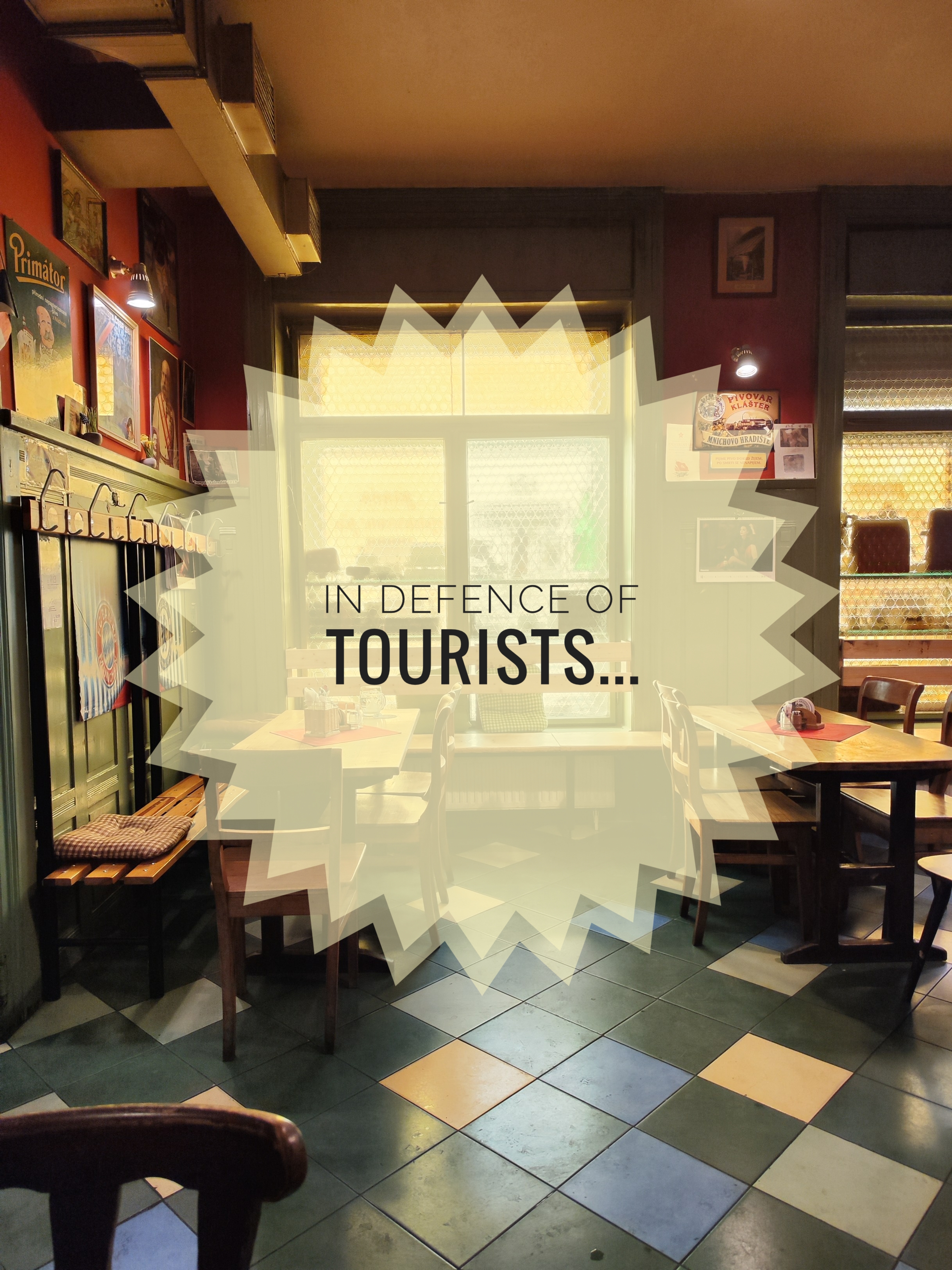

When I first visited the pub U Prašivky in Letná, Prague 🇨🇿 around 2017, this followed in-depth research into the plentiful but rapidly declining stock of old, battered survivor pubs in the city, as well as scouring recommendations from insiders.
The promise was of a throwback to the 1980s, a time before the revolution, one of unrestrained cheap boozing and with a peculiar format too. The sort tourists don’t know about, let alone to avoid. When I started out my travels I admit I’d have been too scared to walk through the door.
This pub keeps highly unusual hours of 9.30am-9.30pm owing to its origins as a Fourth Grade pub during the Socialist era (known colloquially as Čtyřky) where businesses were graded according to the social status of their clientele. In Prašivka’s case they were popular with bin men coming off their early morning shift and heading for the first Pivo of the day. The hours reflect those work patterns and social rhythms, whilst the atmosphere inside the main room adjacent to the taproom can be so bunker-like, that in mid-June you can emerge at closing time into broad daylight – an odd sensation!

For many years the pub offered two beers, Chotěboř (declining) and Klášter (passable on its day) on tap for as cheap as you will find a beer anywhere in the city. This remains the case. Let’s put this into context. Both those lagers, even now annihilate the likes of British, Croatian, Hungarian, Spanish, Scandinavian lager with their relative complexity, depth and poise. They beat a lot of generic German pils too. They aren’t exactly respected in Czechia though. But for 30 crowns a throw, who’s worried about that? Definitely not the pubs faithful, their štamgasti.
With the advent of Google maps and online resources assisting visitors to Prague on a level unimaginable even in the mid-00s (where visitors were still stumbling around the cobbles clutching a fold-out map), the democratising of information meant the pub began to acquire a different audience, supplementing its motley crew of shift workers, oddballs, alkies, infirm and misfits whose favourite spots at each table are so fixed that it is like wandering on to the set of a film that has never quite reached the point where someone shouts “that’s a wrap!”
The first wave of curious interlopers were local students enticed by the promise of cheap beer, forming a well-recognised union in old tatty boozers of youngsters and grizzlies sharing space. Online wars about Gen Z and so on melt away when you bring these groups together in a good pub.
There is also sporting affiliation. Until a modest 2020-ish clean-up, they had festooned the walls and ceiling with dusty 80s and 90s football memorabilia. It is only a few minutes on tram from Sparta Prague’s ground, and on match days takes on another dimension. The answer to where to drink before/after a game is Here. But despite all this, you’d never call it a footy pub. Fans have their ritual dalliance, often not returning until the next home game a fortnight hence. Not enough for a pub to rely on.
The pub also made some smart moves and began offering changing guest taps from smaller brewers (these days less so, usually leftovers from Lobkowicz group). The offerings of modern craft ale Matuška California and the like for almost base price began to turn a few heads locally, dragging beer aficionados through the door too.
That caused U Prašivky to become known internationally, at least for a niche.
None of this changed the experience overly though. Wild, backwards, charming for it. Breweries like to endow pubs with merchandise. Tablecloths, beer mats, emblems. When the brewery’s beer calendar on the wall here is turned to the next month you might see a vulva. Welcome to Czechia.
Day to day operations have not altered substantially, but it’s the little things you pick up on. The customer service has softened. Originally, I found the servers bracingly hostile, almost annoyed to find their next potential victi….err, I mean customer!- capable of speaking Czech courteously, almost longing for a reason to sling you out. In Prague -outside the biggest tourist traps at least- you’ll normally find servers soften up considerably if they notice you’ve paid respects to their language and can do the verbal back and forth. Today the Prašivka experience has moved on from a genuine fear you might be spat at as your beer is delivered to the point where some of the new staff are pliant and one of them even speaks basic English. That was like the pub had crossed a rubicon. If you’re looking for the rawest possible experience it’s probably no longer at this pub (I’d suggest trying your luck at a private member’s smoking pub like V Koutku if you’re seeking that).
If you’ve come this far you’ll notice I’m finally getting, digestively, to the point. Would it have been better to leave Prašivka to pickle in its own juices, undisturbed? Or is the march of time inevitable and exposure even a positive, securing its future? Perhaps this is an unresolvable conundrum.
I wasn’t either early or late to discover U Prašivky and so even after publishing a bar profile on my guide I note it has taken several years to become a pick for bar explorers on their regular pub roster.
Financial traders advise novices that once they’ve heard about a move it’s already too late to take advantage. Those who jumped on Gamestop once it hit the news probably know that feeling. You wonder whether influencers are already producing videos crowing about this “like, 100% Communist Prague pub for locals dude” that’s actually bending in the breeze. I haven’t searched to find out, I haven’t the heart.
However, for those whose Prague pub experiences are limited to the patrician Old Town beer halls, I suspect Prašivka will still make a strong impression. And anyway, even if it is no longer a diamond in the rough, it may be that the pub itself is just as responsible for that.
They introduced the new beers, they tidied the pub up a little, they’ve discovered how to be civil to customers other than their regulars and they’ve kept themselves relevant. Their pricing also means they need a decent turnover of people to make money and no doubt calculated that their regulars, bless them, are not going to live forever.


It’s a market economy and people can do as they please but surely no-one wants to see a pub of this sort become half-filled with tourists, especially not the kind you find in the Old Town. No-one comes here to listen to American families crass conversations cutting through the room like a razor blade or English lads on tour, the self-awareness free zone of endless banter. The pub probably could do without those lone Chinese guys that come in to places like U Zlatého Tygra and stare at their beer for an hour as if trying to parse an entire culture through the prism of a glass. They already have many places they can go.
Prašivka has been an extreme, colourful example of local life in situ. Like a Van Gogh, there’s something remarkably vivid and beautiful captured in its existence that modern life has yet to destroy. I genuinely regard it as intangible cultural heritage, my pub UNESCO. The fact even this beacon on the hill for Pajzl culture is glacially changing is pause for thought.
But to a point, I don’t see much harm in it settling to being a place where respectful foreigners drop by, remaining in the background, being a tolerated minority and a part of the story.
Over in Vinohrady a few years ago there was a great example of this at V Lucemburské, a similar Čtyřka where we were silently observed by their regulars and for 20 minutes very much felt unwelcome. Then, as we moved to use the toilet one of them asked “Where are you from?” and we got talking to him and to some of the other crowd, who suddenly came to life. That is what a pub is all about, and tourists surely play a part, providing they position themselves properly. We provided the dimension and spark the pub and its regulars were seeking.
Hostility to tourists has peaked in recent years not only for occupying and often dominating some favourite pubs, cafés and social spots but the accompanying effect on prices, housing, crime and the environment. There is no doubt a serious problem to address in cities like Barcelona and Prague on those fronts.
However those legitimate concerns risk sheltering a genuine undercurrent of xenophobia and chauvinism which shouldn’t belong in any cosmopolitan city, as Prague residents themselves hope and believe theirs is. As Prašivka shows, there can be a dialogue so long as respect is duly paid.
What do you think? Let us know in the comments!