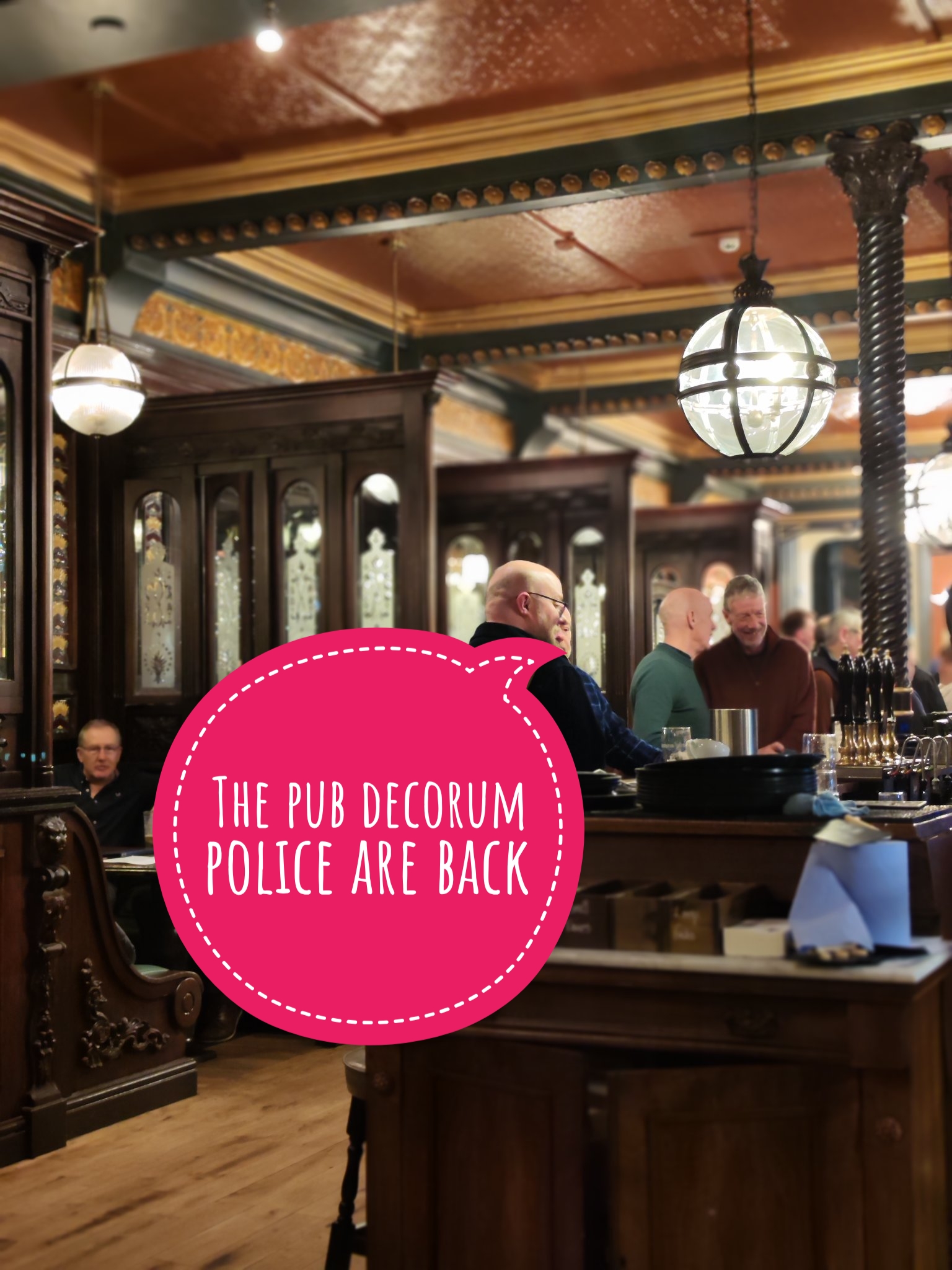

The second half of the 20th century saw a gradual democratisation of English pubs. Spaces which had been formally segregated by class and gender (with other informal but profound discrimination too), where speech and activity was carefully parcelled into manageable areas slowly moved to open up. They became places people from different backgrounds shared together. In particular, large new-build post-war pubs represented a pragmatic, practical (if not always aesthetically pleasing) reaction to a society moving in a municipal, community-centred direction with a burgeoning middle class, aspects of which came to fruition in some parts of the country during the 1960s and 1970s.
Relaxation of licensing laws, codes on dress, and ease of bar access casualised pub spaces to a great deal. The umbrella of reasons why people might meet in a pub increased dramatically and with that, the needs of the wider audience became better catered-for. By the end of the century, great progress had been made – even confronting the most difficult and stubborn areas of discrimination – sectarianism, sexism, racism, ableism, homophobia and transphobia. Arguably this was not just a one-way process: there was a call and response. The presence of different sorts of people in a casual atmosphere engendered a tolerance, first hand evidence that things people feared were not to be as feared, but that they themselves could be enhanced, become better people – a lesson people took away with them into their private lives, attitudes, and personal politics, shaping the country in a different direction. It wasn’t utopia, but it was progress.
There is of course plenty still to do in the face of plenty trying to roll this back. As seen in the decades since, some of that progress has slipped, most notably application of an EHRC code applying to trans people which came into force this week.
The very same week, it comes to our attention that Westminster Council have tabled a recommendation in its new draft licensing policy to ban ordering and drinking at the bar of a pub. Westminster Council includes the area of Soho, which you won’t need me to point out is world famous, internationally acclaimed for its theatre culture and nightlife in the West End. Anyone who has been for a night out in Soho can tell you this would be a profound change. It would be laughable if it wasn’t so…real.
This curiously regressive statement of intent takes the conversation about English pub culture back centuries to the fights of the temperance movement and the influence of the Enlightenment on the rich and powerful up to the Victorian & Edwardian age. Always tempted to see themselves as paragons of virtue, patrician moral grandstanders (often Industrialists, Colonists, sometimes Slavers, not to mention alcoholics, adulterers, gamblers, etc) combined with a church-propagandised working class railing against the abuses of alcohol as seen in their family lives, creating a pincer movement on pubs.
The rest of Northern Europe was not spared. In Sweden, the effect was devastating – losing nearly all its pubs, with alcohol sold on a ration card until the 1950s. Even today, with one exception, every licensed premises must serve food, while outside pubs and restaurants alcohol above 3% abv can only be purchased in a state-run off-license, Systembolaget which operates rather conservative opening hours that Brits might remember from 30 years earlier. Finland too only saw its first licensed pub in Helsinki in the 1970s once it became clear that moving alcohol abuse from pubs into homes didn’t solve the problem.
In England during that period, spaces became more closely controlled and segregated. Lower rent alehouses were stripped of licenses given any opportunity or pretext and there was a push to ‘clean up’ pubs. Local councils even introduced temperance pubs, popular in the North West.
One of the most notable surviving temperance bars is Mr Fitzpatricks.
This bar in Rawtenstall, Lancashire has been serving non-alcoholic drinks since 1899. These days they trade on the novelty factor and there is more of a café atmosphere.
The state itself even opened and ran pubs: an experiment in Carlisle resulting from efforts to tackle poor productivity during World War I and pushed lower alcohol products in efforts to curb excess. (The article is fascinating reading, by the way, so do give it a quick look through.)
Those who had control of activity throughout the late 1800s into the 1900s were always intent on prescribing decorum as a controlling tool. That is to say, how one should dress and act in a certain space. Decorum is now as it is then, largely a tool someone else, usually richer and more powerful than you, to put you in your place. The very presence of a bar separate from a saloon lounge implied that people of different classes could not successfully associate with one another but also that it would be preferable not to try. In the process of opening up pubs, a great amount of damage and vandalism was done to these often magnificent fixtures and fittings – partitions, snugs and smokerooms destroyed along with the overall character of pubs which had been carefully conceived as an intact whole by master craftsmen, but conversely, pubs became more democratic.
Westminster Council is of course, Tory through-and-through. Even today, with the Conservative Party in existential dire straits, the makeup of the council is 32 Conservative and 22 Labour councillors. Old money and highly patrician. The lives, interests and agendas of residents who elected these councillors do not exactly align with the international audience spending money in Soho, in short, the people that London not only attracts but relies upon, not just for its economy but its prestige. At major city level, prestige and the capacity for power projection underpins the investment and talent it can attract and London needs an area like Soho to not just compete but dazzle. For a combination of reasons, Soho’s reputation on that front has been slipping for a while now.
A second factor is the Soho Society who have developed something of a reputation for vetoing incoming investment into pubs and bars, something their homepage manifesto appears to acknowledge with an amusing degree of self-awareness (or should that be insecurity).
Table service is nothing new, however, and not itself any kind of armageddon for pubs. Anyone who has ventured to bars abroad will have found it operating as standard, whether that’s in a German Gaststätte like Brauerei Spezial in Bamberg or a Grand Café like Cirio in Brussels. It’s also extremely common in Czechia down to the most humble pubs. There are certain venues where it sets the tone, like Grand Cafés and Beer Halls, and others where service is so prompt and the atmosphere so casual, like Czechia that it doesn’t detract from the experience. However, a blanket application of this is likely to cause issues.
In English pubs the congregation at a bar, whether you like it or not, represents a cultural practise that people enjoy and even naturally slip into doing in the right spaces. It has never in and of itself created alcohol related problems or disorder. Bar socialising adds to the vibrancy and depth of a pub in subtle ways.

The shape of English pubs recognises a preference for bar socialising with long sweeping bar tops for broad access which, if rendered obsolete may lead to further destruction of original fixtures and fittings if businesses decide a few more tables means more money. Table service may also require pubs to take on more staff, making their business models unviable. It also recalls the dreadful era during Covid where hospitality was forced to pretend that choreographed table service would reduce viral transmission even in tiny bars where tables were centimetres next to one another.
But just as important as all that is to remember that your purpose at the bar, providing you are being civil, is nobody’s business but your own. How dare any tone-policing councillor or their residents in the year 2026 tell you what you are allowed to do, where you are allowed to move, if you are doing no harm?

Thankfully, online reaction to the news from Westminster has been scathing and the Mayor of London quickly announced they were against the move. We can hope that this movement to drag part of England back to the era where ordinary people were treated by their ‘betters’ as animals to be herded, hectored at, forced into formal clothing, put in their place and taught to narrow their speech and their thoughts conclusively fails.
I’m not going to be ‘put in my place’ and neither should you. If there’s a bar you want to stand at and drink in, I stand with you.
*
Did you enjoy this article? – please consider making a Donation to support our guide. Every donation helps us keep the guide relevant, find new bars and produce more reports and articles. It also keeps it free to access for all, wherever you are on any given day when you are looking to find a good bar near you. Your Paypal donation goes direct to Jack Anderton, European Bar Guide founder.
Go to Homepage
